*Disclosure: This article contains affiliate links. If you purchase through our links, we may earn a commission at no extra cost to you.*
⭐ Our Top Pick
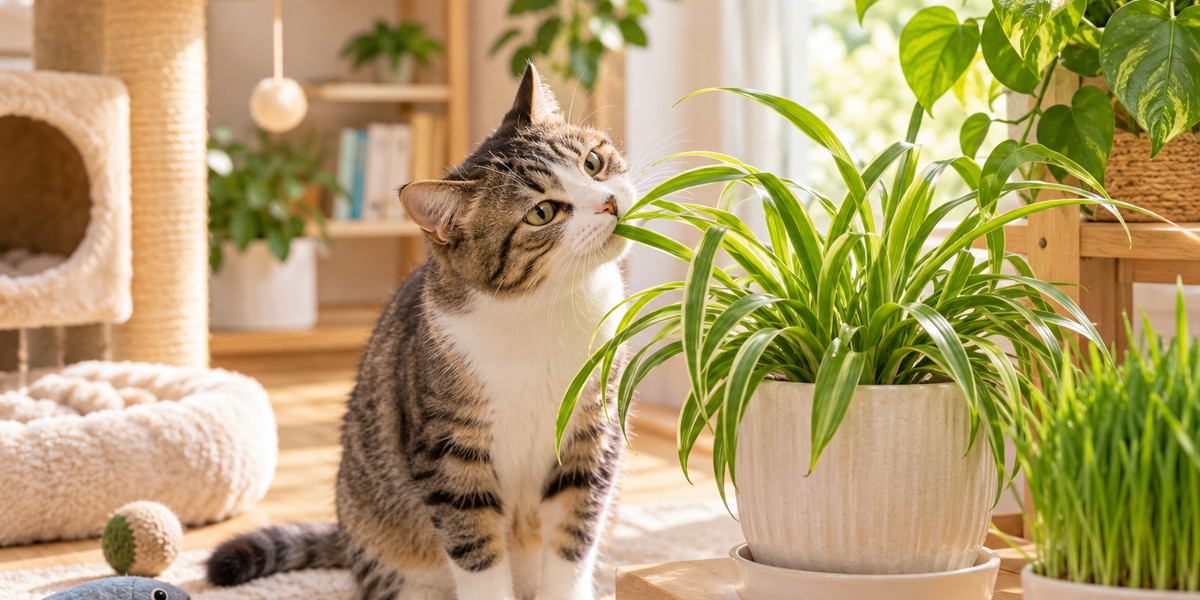
🏆 Best Overall: Spider Plant — completely non-toxic, thrives on neglect, and produces dangling baby shoots that entertain cats without harming them.
💰 Best Value: Cat Grass Kit — under $10, grows in a week, and gives your cat their own safe greens to munch on.
Introduction
You've spent months perfecting your cat room—scratching posts positioned just right, cozy nooks for napping, and carefully cat-proofed corners to keep your feline safe. But the space still feels sterile without greenery. The problem? Most popular houseplants—pothos, philodendrons, snake plants—are toxic to cats, causing everything from drooling and vomiting to serious organ damage if ingested.
We researched over 40 houseplants verified as non-toxic by the ASPCA and cross-referenced them with buyer reviews from cat owners to find species that not only keep your cat safe but also survive the inevitable nibbles, paw swipes, and 2 a.m. pot knock-overs. The plants in this guide tolerate cat interaction, require minimal fussing, and actually thrive in typical indoor cat room conditions—moderate light, fluctuating humidity, and the occasional missed watering.
Whether you're greening up a studio cat room divider setup or adding life to a dedicated catio space, these picks balance aesthetics, safety, and real-world durability. Let's dig in.
What to Look For in Cat-Safe Houseplants
✅ ASPCA Non-Toxic Verification
The ASPCA's poison control database is the gold standard. Avoid plants labeled "mildly toxic" or "causes irritation"—even if they won't kill your cat, they'll cause discomfort and vet bills. Only choose species explicitly listed as non-toxic.
🐾 Resilience to Cat Interaction
Cats bat, chew, dig, and knock things over. Plants with flexible stems (ferns, grasses) or regenerative growth (spider plants) handle this better than brittle-stemmed tropicals. Avoid plants with delicate leaves that shred on contact.
💧 Forgiving Water & Light Needs
Cat rooms aren't greenhouses. Look for species that tolerate indirect light and bounce back from a missed watering or two. High-maintenance plants that need daily misting or perfect drainage will stress you out.
🚫 Non-Toxic Doesn't Mean Digestible
Even safe plants can cause mild stomach upset if your cat eats a large volume. Offer cat grass as a decoy—most cats will leave other plants alone if they have their own greens.
📦 Size & Placement Strategy
Hanging plants (spider plants, Boston ferns) keep foliage out of reach while offering visual interest. Floor plants (palms) should be heavy enough not to tip over. Avoid small pots on shelves that become cat toys.
🌿 Air-Purifying Bonus
Many cat-safe plants (spider plants, Boston ferns, palms) also filter airborne toxins like formaldehyde and benzene—a nice bonus for enclosed cat rooms with litter boxes.
Spider Plant (Chlorophytum comosum)
| Criteria | Score |
|----------|-------|
| Cat Safety | 10/10 |
| Durability | 9/10 |
| Low Maintenance | 10/10 |
| Visual Appeal | 8/10 |
The spider plant earns its reputation as the ultimate beginner and cat-owner plant. It's completely non-toxic—your cat can chew the leaves with zero health risk beyond a possible hairball. The plant produces long, arching stems with baby plantlets (spiderettes) that dangle like natural cat toys. Most cats bat at them rather than eating them, and even aggressive nibblers cause no lasting damage since the plant regenerates quickly.
Spider plants thrive in indirect light, tolerate a range of temperatures, and bounce back from both overwatering and drought. The main challenge is browning leaf tips, usually caused by fluoride or chlorine in tap water—switch to filtered or distilled water if you see this. Verified buyer reviews consistently mention cats ignoring other plants once they discover the spider plant's dangling shoots.
✅ Pros:
- Completely safe even if eaten in large quantities
- Produces entertaining baby plants that distract cats
- Thrives in low to bright indirect light
❌ Cons:
- Leaf tips brown with poor water quality
- Can look scraggly without occasional pruning
💡 Pro Tip: Hang spider plants in macramé hangers at cat eye level—your cat gets to watch the shoots sway, but can't reach enough foliage to cause real damage.
Boston Fern (Nephrolepis exaltata)
| Criteria | Score |
|----------|-------|
| Cat Safety | 10/10 |
| Humidity Tolerance | 7/10 |
| Visual Impact | 10/10 |
| Low Maintenance | 6/10 |
Boston ferns bring lush, forest-like texture to cat rooms without any toxicity risk. The dense fronds are less appealing to cats than dangling vines—most cats walk past ferns without interaction. These plants excel in hanging baskets where their arching fronds create a dramatic canopy effect, and they naturally filter airborne pollutants.
The tradeoff is care intensity. Boston ferns need consistent moisture (never bone-dry, never waterlogged) and humidity above 50%. Dry indoor air causes frond browning and shedding. Run a humidifier nearby or mist the plant every few days. They also prefer cooler temperatures (60-75°F) and indirect light—direct sun scorches the fronds. Verified buyers in dry climates report success keeping ferns in bathrooms or kitchens where ambient humidity is higher.
✅ Pros:
- Gorgeous, full foliage that transforms a space
- Non-toxic and rarely bothered by cats
- Excellent air purifier for litter box odors
❌ Cons:
- Demands consistent watering schedule
- Drops fronds dramatically when stressed
Parlor Palm (Chamaedorea elegans)
| Criteria | Score |
|----------|-------|
| Cat Safety | 10/10 |
| Low Light Tolerance | 9/10 |
| Durability | 8/10 |
| Growth Rate | 6/10 |
Parlor palms bring tropical vibes to cat rooms without the toxic risks of sago palms or areca palms. These compact palms max out at 3-4 feet indoors, making them ideal for corners or beside cat trees. The feathery fronds are flexible—when cats bat at them, they bounce back rather than snapping. The plant tolerates low light better than most palms, making it suitable for rooms without south-facing windows.
Parlor palms prefer evenly moist soil but survive occasional dry spells better than ferns. They're slow growers, so you won't need frequent repotting. The main issue is spider mites, which thrive in dry indoor air—wipe the fronds monthly with a damp cloth and watch for webbing between leaves. Verified buyers note that cats generally ignore parlor palms after an initial investigative sniff.
✅ Pros:
- Handles low light and irregular watering
- Flexible fronds survive cat interactions
- Stays compact without aggressive pruning
❌ Cons:
- Slow growth may frustrate impatient plant parents
- Prone to spider mites in dry environments
💡 Pro Tip: Place parlor palms in heavy ceramic pots—cats can't easily knock them over, and the weight anchors the plant during play sessions.
Cat Grass Kit (Wheatgrass or Oat Grass)
| Criteria | Score |
|----------|-------|
| Cat Safety | 10/10 |
| Grow Speed | 10/10 |
| Value | 10/10 |
| Longevity | 4/10 |
Cat grass isn't a houseplant in the traditional sense—it's a fast-growing consumable that gives your cat their own designated greens to chew. Kits contain wheatgrass, oat grass, or barley seeds that sprout in 7-10 days with just water and indirect light. Most cats instinctively munch on grass to aid digestion and cough up hairballs, and offering a dedicated patch often stops them from bothering other plants.
The downside is short lifespan. Cat grass yellows and dies after 2-3 weeks of heavy grazing, so you'll need to replant frequently. Some cats also dig in the soil, creating mess. Use a heavy, shallow planter and place it away from other plants to contain the chaos. Verified buyers report that serial plant-nibblers leave spider plants and ferns alone once cat grass is available.
✅ Pros:
- Grows from seed in a week
- Distracts cats from other houseplants
- Supports digestion and hairball control
❌ Cons:
- Needs replanting every few weeks
- Can get messy if your cat digs
Calathea (Prayer Plant)
| Criteria | Score |
|----------|-------|
| Cat Safety | 10/10 |
| Visual Drama | 10/10 |
| Low Maintenance | 5/10 |
| Humidity Needs | 6/10 |
Calatheas (also called prayer plants) offer stunning, patterned foliage in shades of green, pink, and burgundy. The leaves fold upward at night in a "praying" motion, which some cat owners report deters curious cats—the movement seems to confuse or startle them. These plants are completely non-toxic and handle moderate light well.
The challenge is their fussiness. Calatheas hate tap water (fluoride and chlorine cause leaf browning), prefer distilled or rainwater, and demand humidity above 60%. They're also sensitive to temperature swings and drafts. If you're an experienced plant parent with a humidifier and patience for finicky care, calatheas reward you with Instagram-worthy foliage. Beginners should start with spider plants or palms.
✅ Pros:
- Gorgeous, variegated foliage
- Leaf movement may deter some cats
- Completely pet-safe
❌ Cons:
- Requires filtered water and high humidity
- Leaves crisp easily in dry air
Frequently Asked Questions
Are succulents safe for cats?
Most common succulents like jade plants, aloe vera, and kalanchoe are toxic to cats and should be avoided. However, some succulents are safe: Haworthia, Echeveria, and Christmas cactus are non-toxic alternatives. Always cross-check the ASPCA database before bringing any succulent into a cat room.
How do I stop my cat from digging in plant soil?
Cover the soil surface with decorative stones, large river rocks, or aluminum foil (cats dislike the texture). You can also use a soil cover disc designed for potted plants. Place cat grass nearby as a distraction—most cats will dig in their own grass pot instead.
Can I use plant fertilizer around cats?
Use organic, pet-safe fertilizers like compost tea or worm castings. Avoid synthetic fertilizers containing bone meal, blood meal, or high nitrogen concentrations—these can cause stomach upset if ingested. Always water plants thoroughly after fertilizing to prevent cats from licking concentrated residue off leaves.
Do air plants work in cat rooms?
Yes—Tillandsia (air plants) are non-toxic and don't require soil, eliminating the digging problem. However, they're small and lightweight, so cats often knock them off shelves or bat them around like toys. Mount air plants securely in wall holders or terrariums out of paw reach.
What if my cat vomits after eating a "safe" plant?
Even non-toxic plants can cause mild stomach upset if eaten in large amounts. Monitor your cat for 24 hours. If vomiting persists, they seem lethargic, or you see diarrhea, call your vet. Keep the ASPCA Poison Control number handy: (888) 426-4435.
Final Thoughts
Greening your cat room doesn't mean choosing between your plant collection and your cat's safety. The spider plant, Boston fern, parlor palm, and cat grass in this guide prove you can have both—lush, air-purifying greenery that survives (and sometimes entertains) curious cats without any toxicity risk.
Start with one or two hardy picks like the spider plant or parlor palm to test your cat's plant interaction style. If they're nibblers, keep cat grass stocked as a decoy. If they're kickers, use heavy pots and avoid delicate ferns. Match the plant to your space's light and humidity, and you'll have a thriving, cat-safe indoor jungle by spring.
💡 Pro Tip: Rotate plants seasonally—move sun-loving species to brighter spots in winter, and give fussy calatheas a bathroom humidity boost in summer. Your cats (and plants) will thank you.
Editor's Choice
Ready to add safe greenery to your cat room? Here are our top verified picks:
- Best Overall: Spider Plant — The gold standard for cat-safe, low-maintenance greenery.
- Best for Drama: Boston Fern — Lush foliage that transforms a space (if you can handle the watering).
- Best Distraction: Cat Grass Kit — Give your cat their own greens and protect your other plants.