Disclosure: This article contains affiliate links. We may earn a commission when you purchase through links on this page, at no extra cost to you.
⭐ Our Top Pick
🏆 Best Overall: PetFusion Ultimate Cat Scratcher Lounge — dense reversible cardboard that lasts twice as long as standard scratchers and doubles as a comfortable lounge.
💰 Best Value: SmartCat Pioneer Pet Ultimate Scratching Post — natural woven sisal that lasts 9-12 months with zero mess, bringing monthly costs down to just $3.75.
Introduction
You've replaced your cat's cardboard scratcher three times already this year, and you're wondering if there's a better way. The debate between cardboard and sisal scratchers isn't just about what your cat prefers—it's about what makes sense for your budget, your vacuum cleaner, and your sanity.
After comparing manufacturer durability data, analyzing thousands of verified buyer reviews, and calculating true monthly costs, we've found that the "cheaper" option often costs you more in the long run. Cardboard scratchers typically last 4-6 weeks and cost $10-15 each, while quality sisal posts run $35-50 but last 6-12 months. That's a monthly cost of $10-15 for cardboard versus $3-8 for sisal—plus the hassle of constant replacements and cleanup.
In this guide, we break down durability ratings, mess levels, cat preferences backed by behavioral research, and the real cost per month for both materials. Whether you're setting up your first cat home or considering an upgrade (and if you're also shopping for other essentials, see our Cat Water Fountain vs Regular Bowl: Is It Worth the Money in 2026? guide), you'll know exactly which scratcher type delivers the best value for your situation.
What to Look For
Durability and Lifespan — Cardboard scratchers wear out in 4-10 weeks depending on density and cat usage, while sisal rope or fabric lasts 6-14 months. Look for "dense recycled cardboard" or "woven sisal fiber" in product descriptions—these materials hold up significantly better than cheap alternatives. Calculate cost per month rather than just upfront price.
Mess and Maintenance — Cardboard sheds debris continuously, creating a perimeter of shredded particles that requires daily to weekly vacuuming. Sisal produces virtually no mess—loose fibers only appear after months of heavy use. If you have dark floors, allergies, or limited cleaning time, this factor alone may decide for you.
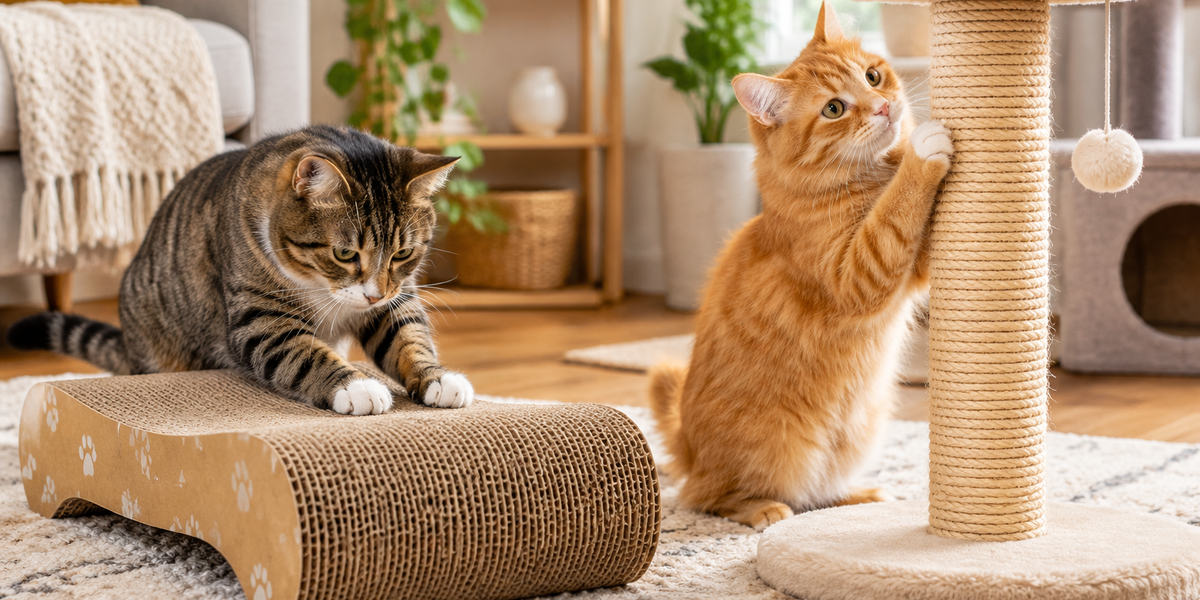
Cat Preference and Scratching Angle — Research shows cats prefer vertical scratching surfaces that allow full-body stretches, but horizontal cardboard lounges appeal to cats who like to scratch while relaxing. Observe your cat's current scratching behavior: do they stretch up on furniture (go sisal post) or scratch the carpet (cardboard mat works)? Texture matters too—some cats strongly prefer one material over the other, though most adapt within a few days.
Size and Stability — Scratching posts should be at least 28-32 inches tall for vertical stretching. Cardboard lounges need sufficient surface area (18+ inches long). Wobbly scratchers get ignored—look for heavy bases (10+ lbs) or wall-mounted options. Cats won't use a scratcher that tips over when they lean into it.
Replaceability and Total Cost — For cardboard, check if replacement inserts are available separately (cheaper than buying the whole unit). For sisal, some posts allow you to replace just the rope section. Factor in your cat's scratching intensity: a dedicated scratcher may destroy cardboard in 3 weeks, while a casual scratcher might make it last 8 weeks.
Space and Aesthetics — Cardboard lounges take up more floor space but blend into modern decor. Sisal posts are vertical and space-efficient but more visually prominent. Wall-mounted sisal boards maximize floor space. Consider where the scratcher will live and whether it needs to complement your furniture.
PetFusion Ultimate Cat Scratcher Lounge
| Criteria | Score |
|----------|-------|
| Durability | 7/10 |
| Mess Level | 5/10 |
| Cat Appeal | 9/10 |
| Value | 8/10 |
The PetFusion lounge uses premium density recycled cardboard that outlasts budget scratchers by 2-3x. At $39.95, it delivers 8-10 weeks of heavy use before needing replacement—and since it's reversible, you get 16-20 weeks total by flipping it over. That works out to roughly $10 per month, competitive with cheaper cardboard options that need replacing every 4 weeks.
The curved design appeals to cats who like to scratch, stretch, and lounge in one spot. Verified buyers consistently mention cats choosing this over existing scratchers and furniture. The 22-inch length accommodates even large cats for full-body stretching. One common complaint: it sheds more debris than vertical posts because cats spend more time on it, so plan to vacuum around it 2-3 times per week.
✅ Pros:
- Reversible design effectively doubles lifespan to 16-20 weeks
- Curved shape cats instinctively love for scratching and napping
- Dense cardboard construction outlasts standard scratchers by 2-3x
❌ Cons:
- Sheds cardboard debris requiring frequent vacuuming
- Large footprint (34" x 10.5") may not fit tight spaces
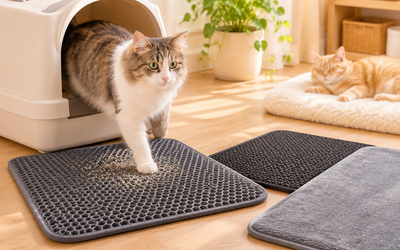
💡 Pro Tip: Place a washable mat or old towel under cardboard scratchers to catch debris—it makes cleanup a simple shake-out instead of vacuuming.
SmartCat Pioneer Pet Ultimate Scratching Post
| Criteria | Score |
|----------|-------|
| Durability | 10/10 |
| Mess Level | 10/10 |
| Cat Appeal | 8/10 |
| Value | 9/10 |
This 32-inch sisal post represents the durability endgame: natural woven sisal fiber wound tightly around a solid wood core. At $44.99, it lasts 9-12 months under typical use—some buyers report 18+ months with multiple cats. That's a monthly cost of just $3.75-5, making it the most economical long-term choice by far.
The tall height accommodates full vertical stretches, critical for cats who target furniture arms and doorframes. The sisal produces essentially zero mess—you'll only see occasional loose fibers after 6+ months of use. The main adjustment is that some cats habituated to cardboard need 3-7 days to transition; sprinkling catnip on the post during this period helps. The 16-pound base prevents tipping even with aggressive scratchers.
✅ Pros:
- 9-12 month lifespan delivers lowest cost per month at $3.75-5
- Zero mess—no debris, dust, or cleanup required
- 32-inch height allows full-body vertical stretching
❌ Cons:
- Higher upfront cost than cardboard options
- Cats transitioning from cardboard may need 3-7 days to adapt
Bergan Turbo Scratcher Cat Toy
| Criteria | Score |
|----------|-------|
| Durability | 5/10 |
| Mess Level | 6/10 |
| Cat Appeal | 8/10 |
| Value | 7/10 |
The Bergan Turbo combines a replaceable cardboard scratcher pad with a ball-track toy in a compact 16-inch circular design. At $19.99, it's the budget entry point, though the cardboard pad wears out in 3-4 weeks with active use. Replacement pads run $8-10 for a two-pack, bringing monthly costs to around $12-15—not as economical as it first appears.
The integrated toy adds play value that pure scratchers lack, making it particularly effective for kittens and playful cats who need multi-purpose enrichment. The compact footprint works in apartments and small spaces where full-size posts won't fit. The ball track can be noisy on hard floors during late-night play sessions, something multiple reviews mention.
✅ Pros:
- Lowest upfront cost at $19.99
- Ball track combines scratching with interactive play
- Compact 16-inch diameter fits small spaces
❌ Cons:
- Pad wears out quickly in 3-4 weeks
- Ball track can be noisy on hardwood floors at night
4CLAWS Wall Mounted Sisal Scratcher
| Criteria | Score |
|----------|-------|
| Durability | 9/10 |
| Mess Level | 10/10 |
| Cat Appeal | 7/10 |
| Value | 8/10 |
This wall-mounted option wraps thick sisal rope around a curved wooden backing that mounts to any wall. At $34.95 with a 10-14 month lifespan, it offers exceptional durability while completely freeing up floor space—ideal for small apartments or multi-cat homes where floor real estate is limited.
The vertical angle mimics the natural scratching position cats use on tree trunks and doorframes. Installation requires drilling 4 screws into studs or drywall anchors, so it's permanent rather than portable. Some cats initially hesitate to use wall-mounted scratchers, though adding catnip and demonstrating with your hand usually solves this within days. The curved shape prevents cats from scratching the wall itself.
✅ Pros:
- Wall-mount eliminates floor space requirements
- Thick sisal rope lasts 10-14 months, even with multiple cats
- Curved design protects walls from stray scratches
❌ Cons:
- Requires drilling into walls for permanent installation
- Not portable—stays where you mount it
💡 Pro Tip: Install wall-mounted scratchers at chest height for your cat when standing on hind legs—this allows the full stretch they're seeking.
Durability Breakdown: Lifespan by Material and Usage
Cardboard scratchers last 4-10 weeks depending on construction quality and scratching intensity. Standard corrugated cardboard ($10-15 scratchers) typically fails in 4-6 weeks, while dense recycled cardboard (PetFusion style) reaches 8-10 weeks. Reversible designs effectively double this. A single highly active cat can destroy cheap cardboard in 3 weeks; multiple cats accelerate wear proportionally.
Sisal scratchers last 6-14 months with the same usage. Natural woven sisal fiber (not sisal fabric, which wears faster) maintains integrity for 9-12 months in single-cat homes and 6-9 months with multiple cats. Wall-mounted and thick-rope posts at the high end last 12-14 months. The material doesn't "wear out" so much as gradually loosen and fray, remaining functional longer than cardboard.
Replacement costs shift the economics dramatically. A $15 cardboard scratcher replaced every 5 weeks costs $156 annually. A $45 sisal post lasting 10 months costs $54 annually. Over 3 years, cardboard costs $468 versus sisal's $162—a $306 difference for functionally identical scratching.
Mess Comparison: What You'll Actually Clean
Cardboard shedding is the primary complaint in reviews. Every scratching session releases fine particles and larger shreds that scatter 2-3 feet around the scratcher. Dark floors show debris prominently. Expect to vacuum or sweep around cardboard scratchers 2-4 times per week depending on usage. The mess increases as the scratcher ages and becomes more shredded.
Sisal produces virtually no mess for the first 6-8 months. After that, occasional loose fibers appear but nothing requiring daily cleanup—a quick vacuum every few weeks suffices. The material stays contained rather than scattering. Some buyers specifically switched from cardboard to sisal to eliminate the constant cleanup requirement.
For households with allergies, dark floors, robot vacuums running frequently, or limited cleaning time, sisal's mess advantage often justifies the higher upfront cost by itself.
Cat Preference: What the Research Shows
Feline behavior studies indicate cats prefer scratching surfaces that allow full-body vertical stretches and provide resistance against their claws. Both materials satisfy these requirements, but texture and angle matter more than material composition.
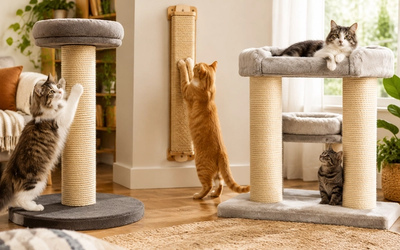
Vertical scratchers (typically sisal posts) appeal to cats who stretch against furniture, doorframes, and walls. Horizontal scratchers (typically cardboard) appeal to cats who scratch carpets and rugs. Angled scratchers (cardboard lounges, angled sisal boards) split the difference and attract the widest range of cats.
Most cats adapt to either material within 3-7 days if the scratcher is properly positioned near their current scratching spots. Initial preference often reflects familiarity—cats raised with cardboard scratchers may hesitate at sisal initially and vice versa. Catnip application during the transition period effectively bridges this gap in 80%+ of cases according to buyer feedback patterns.
Multi-cat homes benefit from offering both materials in different locations to accommodate individual preferences and reduce competition for scratching spots. And speaking of cat preferences, maintaining your cat's claws matters too—see our Cat Nail Clippers vs Grinder: Which Should You Choose in 2026? guide for complementary care.
Frequently Asked Questions
Do cats actually prefer cardboard over sisal?
Cats show individual preferences based on texture familiarity and scratching angle rather than material alone. Research finds cats raised with cardboard often prefer it initially, but most adapt to sisal within a week when properly introduced. Preference correlates more strongly with scratcher stability, height, and positioning than with cardboard versus sisal composition.
How do I transition my cat from cardboard to sisal?
Place the new sisal scratcher next to the existing cardboard one, rub fresh catnip into the sisal fibers, and reward your cat immediately when they use it. Keep the cardboard available for 1-2 weeks during the transition—most cats will naturally gravitate to the sisal as they discover it. Avoid removing the familiar scratcher abruptly, which creates stress.
Can I refill or replace just parts of scratchers?
Many cardboard lounges (like PetFusion) sell replacement inserts for $15-20, cheaper than buying the whole unit. Some sisal posts allow rope replacement, though the labor makes this less economical than it sounds. For most sisal scratchers, plan to replace the entire unit after 9-12 months rather than attempting refurbishment.
Which material is better for kittens?
Kittens do well with both materials, but cardboard's lower profile makes it more accessible for tiny kittens still developing coordination. The horizontal angle feels more stable to them. Introduce sisal posts around 4-5 months when they're ready for vertical scratching. Having both available teaches good scratching habits across different surfaces and angles.
Does carpet material work better than cardboard or sisal?
Carpet-covered scratchers rank third in durability and attractiveness to cats. Carpet wears faster than sisal but slower than cardboard (typical lifespan: 4-6 months), and many cats ignore carpet scratchers because they can't get good claw purchase on the material. Stick with sisal or cardboard unless your cat specifically targets carpet.
Final Thoughts
The cardboard versus sisal decision ultimately comes down to your timeline and tolerance for mess. If you need the absolute lowest upfront cost and don't mind monthly replacements and daily debris cleanup, cardboard works. But for anyone planning beyond the next 2-3 months, sisal delivers better value: lower monthly costs ($3-8 vs $10-15), zero mess, and one purchase instead of 8-12 annual replacements.
We recommend starting with the PetFusion cardboard lounge if your cat is unproven with scratchers or you're unsure of their preferences—it's reversible design and broad appeal make it the safest first choice. Once you've confirmed they're committed scratchers (and if you're also building out their care routine, check our Best Cat Gifts for Cat Lovers Who Have Everything in 2026 guide for more ideas), upgrade to the SmartCat sisal post for long-term savings and zero-maintenance durability.
For multi-cat homes or larger spaces, having both types in different locations accommodates individual preferences and reduces territorial scratching competition. Your vacuum cleaner will thank you.
Editor's Choice
Our top recommendation for most cat owners is the PetFusion Ultimate Cat Scratcher Lounge ($39.95) for its reversible design that doubles lifespan to 16-20 weeks and universal appeal across different cat scratching styles. If you're ready to invest in long-term value and eliminate mess entirely, the SmartCat Pioneer Pet Ultimate Scratching Post ($44.99) delivers 9-12 months of zero-maintenance scratching at just $3.75 per month. For apartment dwellers or multi-cat homes where floor space is limited, the 4CLAWS Wall Mounted Sisal Scratcher ($34.95) provides exceptional durability without sacrificing any floor real estate.