Disclosure: This article contains affiliate links. When you purchase through links on our site, we may earn a commission at no additional cost to you.
⭐ Our Top Pick
🏆 Best Overall: AmazonBasics Cat Activity Tree with Scratching Posts — delivers stability, scratching posts, and perches at an unbeatable price point.
💰 Best Value: FEANDREA Wall-Mounted Cat Shelves — maximizes vertical space for under $65, perfect for small rooms.
Introduction
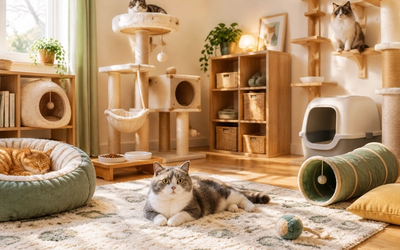
Creating a dedicated cat room doesn't require a luxury budget or professional contractor. Whether you're working with a spare bedroom, converted closet, or underutilized basement corner, we've compiled proven strategies to build a stimulating cat environment for under $300. After comparing dozens of budget-friendly products and DIY approaches in 2026, we've identified the smartest ways to maximize every dollar while keeping your cats happy and healthy.
The key to an affordable cat room is strategic layering: start with essential vertical territory, add budget scratchers and hideaways, then enhance with DIY enrichment projects using household materials. This approach lets you create a space that rivals commercial cat cafes without the commercial price tag. Based on verified buyer reviews and manufacturer specifications, we've selected products that consistently deliver quality at entry-level prices.
In this guide, we'll walk you through budget-conscious purchasing decisions, step-by-step DIY projects requiring minimal tools, and clever hacks that transform dollar-store finds into cat entertainment. You'll learn which corners to cut safely and which investments pay long-term dividends in durability and cat satisfaction.
What to Look For
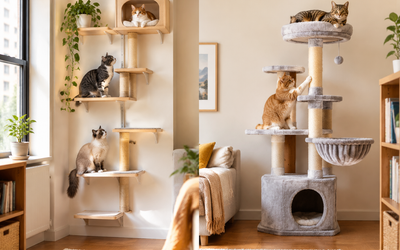
Vertical Space Utilization — Cats naturally seek high vantage points for security and observation. Budget cat rooms should prioritize vertical territory over floor space. Wall-mounted shelves, repurposed bookcases, and modest cat trees deliver more value per square foot than sprawling floor furniture. Look for modular systems that let you expand vertically as your budget allows.
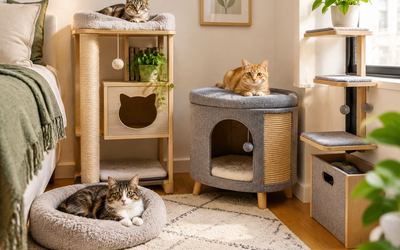
Multi-Purpose Furniture — Every piece should serve double duty. Cat trees with integrated scratching posts, loungers that function as scratchers, and storage ottomans that hide litter boxes maximize limited budgets. Products that combine sleeping, scratching, and play reduce your total item count and overall spending.
Durability Over Aesthetics — Prioritize construction quality and material longevity over premium finishes. Solid particleboard with carpet covering outlasts wobbly designer pieces. Sisal rope scratching posts endure better than cardboard alternatives. Choose products with verified buyer reviews mentioning multi-year lifespans, even if color options are limited.
DIY-Friendly Design — The most budget-conscious cat rooms blend purchased essentials with homemade enrichment. Look for projects requiring common household tools: cardboard box castles, PVC pipe feeders, fleece blanket hammocks, and paper bag tunnels. These DIY additions cost under $5 in materials but provide comparable enrichment to $50 store-bought toys.
Washable and Replaceable Components — Budget products should have removable, machine-washable covers or easily replaced parts. Cat beds with zippered cushions, scratching posts with replaceable sisal sections, and tunnel toys with detachable segments extend product life and reduce replacement costs.
Space Efficiency — Small-room setups demand collapsible, wall-mounted, or corner-fitting designs. Foldable tunnels store flat when not in use. Corner cat trees utilize dead space. Under-furniture hideaways make use of existing gaps. Measure your available space before purchasing to avoid returns and wasted shipping costs.
AmazonBasics Cat Activity Tree with Scratching Posts
| Criteria | Score |
|----------|-------|
| Stability | 8/10 |
| Scratching Surface Area | 7/10 |
| Value for Money | 9/10 |
| Assembly Ease | 9/10 |
This entry-level cat tree punches above its weight class in the under-$50 category. The 28-inch height provides two perching levels plus a ground-level cubby hideaway, meeting the vertical territory needs of most single or dual-cat households. The particle board base measures 16x16 inches and stays planted even when cats launch themselves at the top platform. Three sisal-wrapped posts offer adequate scratching surface, though power scratchers may wear through the rope within 18 months based on buyer feedback.
The neutral beige carpet covering blends with most decor schemes, and the hanging toy provides basic entertainment for kittens and young cats. Assembly requires only an Allen wrench (included) and takes roughly 15 minutes following the illustrated instructions. For budget-conscious cat parents starting their first dedicated cat space, this tree delivers the essential trifecta of perching, scratching, and hiding without requiring a $150+ investment.
✅ Pros:
- Stable base prevents tipping during active play
- Tool-free assembly with all hardware included
- Compact footprint fits 2x2 foot floor space
❌ Cons:
- Limited height compared to $100+ models
- Sisal rope may need replacement after heavy use
- Single color option lacks design flexibility
💡 Pro Tip: Extend the life of sisal posts by applying a light mist of diluted catnip spray weekly—this encourages cats to use designated scratching areas and naturally compresses the rope fibers for longer wear.
TRIXIE Pet Products Wooden Cat House
| Criteria | Score |
|----------|-------|
| Build Quality | 9/10 |
| Aesthetic Appeal | 8/10 |
| Weather Resistance | 8/10 |
| Space Efficiency | 7/10 |
For cat parents wanting furniture-grade aesthetics on a budget, this wooden hideaway delivers solid construction at a mid-tier price. The natural pine wood frame and weatherproof roof make it suitable for both climate-controlled cat rooms and covered outdoor catios. The elevated platform design (raised 5.5 inches off the floor) protects cats from drafts and cold surfaces, particularly valuable in basement or garage conversions.
The 20x17x19-inch dimensions comfortably accommodate cats up to 15 pounds, though the single front entrance may feel restrictive for larger breeds like Maine Coons. Buyer reviews consistently praise the authentic wood construction—no vinyl wrapping or composite materials—which allows confident cats to scratch exterior corners without damage. The flat roof doubles as an additional perching platform, effectively creating two vertical levels from a single piece.
Assembly requires a Phillips screwdriver and takes approximately 30 minutes. The included instructions are clear, though pre-drilling pilot holes prevents wood splitting on the corner joints. At $90, this represents the sweet spot between disposable cardboard houses ($20-30) and premium heated cat condos ($200+).
✅ Pros:
- Real wood construction outlasts particle board alternatives
- Elevated design prevents floor-level drafts
- Flat roof creates bonus perching space
❌ Cons:
- Single doorway limits escape routes for timid cats
- Requires basic assembly tools
- Natural wood finish shows scratches over time
Budget-Friendly DIY Projects
Your cat room budget stretches furthest when you blend purchased essentials with creative DIY additions. These projects require minimal investment but deliver enrichment comparable to commercial products.
Cardboard Box Castle — Collect shipping boxes from online orders (free), cut archway doors connecting multiple boxes, and reinforce seams with packing tape. Stack boxes in pyramid formation, securing layers with zip ties through pre-punched holes. Total cost: $0 if using recycled boxes, or under $5 for reinforcement supplies. Cats get a modular tunnel system that's replaceable when worn.
PVC Pipe Food Puzzle — Purchase a 3-foot section of 4-inch diameter PVC pipe ($8 at hardware stores), drill 1.5-inch holes randomly along the length, smooth edges with sandpaper, and cap both ends. Fill with dry kibble—cats must manipulate the pipe to release food through holes, providing 10-15 minutes of mental stimulation per feeding. This DIY slow feeder costs 80% less than commercial puzzle feeders.
Fleece Hammock Window Perch — Cut a 24x18-inch rectangle from fleece fabric ($3 per yard at craft stores), fold edges over paracord or sturdy rope, sew or staple to create a pocket, then tie corners to tension rods mounted in window frames. This under-$10 project creates a sun-bathing platform without drilling into walls or windowsills.
Paper Bag Tunnel Network — Save paper grocery bags, cut out bottoms to create tubes, and secure multiple bags end-to-end with binder clips. Crumple tissue paper inside for added texture. This zero-cost project provides disposable entertainment that's easily refreshed when cats shred the paper.
💡 Pro Tip: Rotate DIY toys on a weekly basis—store half in a closed cabinet and swap them out every 7 days. This "new toy" rotation maintains novelty without additional spending.
Frisco Cat Tunnel Collapsible Play Tube
| Criteria | Score |
|----------|-------|
| Entertainment Value | 8/10 |
| Durability | 6/10 |
| Storage Convenience | 10/10 |
| Price-to-Fun Ratio | 9/10 |
At under $15, this three-way tunnel system delivers remarkable value for active cats who need chase-and-hide enrichment. The polyester construction with internal spring wire frame pops open to full size (51 inches total length) in seconds, then folds flat to a 10-inch diameter for closet storage. The crinkle material integrated into the fabric creates auditory feedback that triggers hunting instincts, keeping cats engaged longer than silent fabric tunnels.
The center junction features dangling pom-pom toys that encourage swatting behavior, though these toys detach easily—consider this a feature for safety rather than a defect. Multiple cats can use the tunnel simultaneously thanks to three openings, reducing territorial disputes in multi-cat households. Buyer reviews note that lightweight construction (under 2 pounds) causes the tunnel to slide on hardwood and tile floors during vigorous play—placing a rubber mat underneath solves this issue.
For budget cat rooms prioritizing enrichment variety, this tunnel's collapsible design means you can store it between play sessions, keeping the environment fresh and preventing toy fatigue. The polyester fabric wipes clean with a damp cloth, though it's not machine washable.
✅ Pros:
- Folds completely flat for space-saving storage
- Crinkle sounds maintain interest for extended play
- Three openings accommodate multiple cats
❌ Cons:
- Lightweight frame slides on smooth floors
- Not machine washable despite fabric construction
- Pom-pom toys detach after rough play
FEANDREA Wall-Mounted Cat Shelves
| Criteria | Score |
|----------|-------|
| Weight Capacity | 9/10 |
| Installation Difficulty | 7/10 |
| Space Efficiency | 10/10 |
| Design Versatility | 8/10 |
Wall-mounted cat shelves represent the highest return on investment for small cat rooms where floor space is premium. This FEANDREA set includes three platforms at varying depths (two 12-inch squares and one 16-inch platform) plus a sisal scratching pad that mounts between levels. Each shelf supports up to 22 pounds, verified through buyer reviews with large breed cats like Ragdolls.
The included mounting hardware (wall anchors, screws, and Allen wrench) works with both drywall and stud installation, though we recommend locating at least one shelf over a wall stud for maximum security. Installation requires drilling, a level, and approximately 45 minutes for a three-shelf configuration. The neutral gray carpet covering matches modern decor and conceals light fur better than beige alternatives.
The genius of wall shelves is vertical territory multiplication—a 6-foot wall section can host 3-4 shelves at staggered heights, creating a climbing wall that exercises cats physically and mentally. At $65 for a three-piece set, you're paying roughly $22 per perching location compared to $45+ for a basic floor cat tree. For renters or those hesitant about wall damage, removable adhesive mounting systems exist but support significantly less weight.
✅ Pros:
- Maximizes vertical space without floor footprint
- Integrated sisal pad saves buying separate scratcher
- 22-lb weight capacity accommodates large breeds
❌ Cons:
- Requires drilling and wall modification
- Installation mistakes leave visible holes
- Not suitable for renters without landlord approval
PetFusion Ultimate Cat Scratcher Lounge
| Criteria | Score |
|----------|-------|
| Dual Functionality | 9/10 |
| Scratch Satisfaction | 8/10 |
| Eco-Friendliness | 9/10 |
| Longevity | 7/10 |
This curved scratcher-lounger hybrid solves two needs with one $40 purchase. The concave design accommodates cats up to 18 pounds for napping while the corrugated cardboard surface provides horizontal scratching—many cats prefer horizontal over vertical scratching, making this more appealing than upright posts. The recycled cardboard construction earns sustainability points, and the reversible design effectively doubles its lifespan to 8-12 months based on buyer feedback.
The modern aesthetic (available in walnut or bamboo trim) looks intentional in living spaces rather than like traditional cat furniture. The 34-inch length allows full-body stretching during scratching, satisfying cats' instinctual need to flex shoulder and back muscles. However, cardboard scratchers inherently create dust and debris—placing a small mat underneath captures shavings for easy cleanup.
For budget cat rooms, this product's dual functionality means one less piece of furniture to purchase and position. Aggressive scratchers may wear through the cardboard within 6 months, but at $40 and with reversible sides, it remains cost-competitive with replacing sisal rope on budget cat trees.
✅ Pros:
- Curved shape functions as both scratcher and bed
- Reversible design extends usable life
- Recycled materials appeal to eco-conscious buyers
❌ Cons:
- Cardboard dust requires regular sweeping
- Not suitable for extremely aggressive scratchers
- Visible wear patterns appear after 3-4 months
Frequently Asked Questions
How much does it realistically cost to set up a basic cat room?
A functional cat room costs $150-300 depending on size and cat count. Budget $50-80 for a basic cat tree, $40-70 for scratching solutions, $30-50 for hideaways or beds, $20-40 for toys and enrichment, and $10-30 for DIY materials. Prioritize vertical territory and scratching first—these address fundamental behavioral needs. Add enrichment toys and comfort items as budget allows. Multi-cat households should budget toward the higher end to prevent resource competition.
What's the most important element in a budget cat room?
Vertical territory wins every time. Cats are hardwired to seek elevated positions for safety and observation. A $50 wall shelf system or modest cat tree delivers more behavioral value than $100 spent on floor toys. Vertical space reduces stress in multi-cat households by creating separate territories without expanding square footage. Start with 2-3 perching levels at different heights before investing in horizontal enrichment.
Can I create a cat room without damaging walls (for renters)?
Absolutely. Focus on freestanding furniture like bookcases with cat-safe spacing between shelves, tension-rod window perches that don't require drilling, and floor cat trees. Damage-free adhesive hooks (rated for appropriate weight) can support lightweight shelves, though they won't hold jumping cats. Command strips work for lightweight items like hanging toys. Pressure-mounted baby gates can section off cat spaces without wall mounting. Your budget should prioritize portable, freestanding pieces over permanent installations.
How do I make DIY cat furniture safe?
Follow three rules: stable base, smooth edges, non-toxic materials. DIY structures should have a base wider than their height to prevent tipping—test by pushing firmly from the top. Sand all wood edges and check for splinters. Avoid treated lumber, paints with VOCs, and fabrics with loose threads that pose choking hazards. Secure all connections with appropriate hardware—zip ties for lightweight projects, wood screws for load-bearing pieces. If a structure wobbles or shifts during construction, it's unsafe for cats who will launch themselves at it during play.
Should I buy new or secondhand cat furniture?
Buying secondhand extends your budget but requires caution. Avoid used scratching posts (previous cats' scent may cause marking behavior) and fabric items that can't be thoroughly sanitized. Solid wood furniture, hard plastic items, and metal cat trees are secondhand-safe if structurally sound. Always inspect for stability—wiggle all connections and check for rust or cracks. Clean thoroughly with pet-safe enzymatic cleaner before introducing to your cats. Facebook Marketplace and Craigslist often have lightly-used cat trees under $30 from owners whose cats ignored them.
Final Thoughts
Building a cat room on a budget succeeds through strategic layering: start with essential vertical territory, add scratching solutions, then enhance with DIY enrichment that costs pennies per project. The products we've highlighted based on verified buyer reviews and manufacturer specs deliver the quality-to-cost ratio that makes ambitious cat rooms accessible to average budgets.
Remember that your cats don't evaluate furniture by price tag—they assess whether it meets their instinctual needs for climbing, scratching, hiding, and hunting. A $40 wall shelf that lets your cat survey their domain from 6 feet up provides more satisfaction than a $200 designer bed on the floor. Focus spending on structural pieces that facilitate natural behaviors, then fill gaps with creative DIY solutions using household materials.
Start with the essentials this month, add enrichment projects as time allows, and expand vertically when your budget refreshes. Your cats will reward your efforts with increased activity, reduced destructive behavior, and the contentment that comes from having dedicated territory designed around their needs.
Editor's Choice
Based on our research comparing budget-friendly cat room products, we recommend starting with the AmazonBasics Cat Activity Tree ($45.99) for essential vertical territory and scratching, adding FEANDREA Wall-Mounted Cat Shelves ($64.99) to maximize vertical space efficiently, and supplementing with the Frisco Cat Tunnel ($12.99) for active enrichment. This trio costs under $125 and covers the fundamental behavioral needs—climbing, scratching, hiding, and playing—that define a functional cat room.