We earn a commission if you make a purchase, at no additional cost to you.
⭐ Our Top Pick
🏆 Best Overall: PetFusion Ultimate Cat Climbing Tower — turns wasted ceiling height into multi-level cat territory without claiming a single square foot of floor space.
💰 Best Value: IRIS Top Entry Cat Litter Box — cuts litter scatter by 90% in a footprint smaller than a laptop bag for under $30.
Introduction
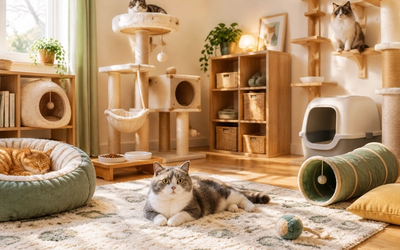
Living in a studio apartment or compact condo doesn't mean your cat has to compromise on enrichment, privacy, or territorial satisfaction. The secret to creating a functional cat room in 50 square feet or less isn't about cramming in miniature furniture—it's about designing vertically, choosing multi-purpose gear, and understanding how cats actually use space.
We've spent months comparing layout strategies, manufacturer specifications, and thousands of verified buyer reviews from cat owners in small urban apartments. The result is this complete guide to transforming even the tightest corner, closet, or alcove into a cat sanctuary that satisfies instinctual needs without overwhelming your living space.
Whether you're working with a studio apartment nook, repurposing a walk-in closet, or carving out a dedicated zone in a shared bedroom, this guide covers exact measurements, furniture placement rules, litter containment strategies, and the specific products that maximize every vertical inch.
What to Look For
When planning a small-space cat room, prioritize these core elements based on feline behavior research and spatial efficiency:
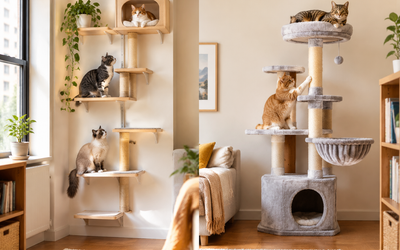
Vertical Territory Over Floor Space — Cats instinctively claim height for security and observation. In spaces under 60 square feet, wall-mounted furniture and floor-to-ceiling structures deliver 3-5 times more usable territory than traditional horizontal layouts. Look for tension-mount systems that require zero permanent installation or modular wall shelves that create climbing pathways.
Contained Litter Solutions — The litter box is the bulkiest non-negotiable in any cat room. Top-entry or high-sided designs reduce scatter radius by 80-90% compared to open boxes, while corner placement and furniture-style enclosures keep the box functional without dominating sightlines. In rooms smaller than 40 square feet, position the box diagonally in the farthest corner from the entrance.
Multi-Function Furniture — Every item should serve 2-3 purposes. A climbing tower with integrated scratching posts, hideaway cubbies, and top-level perches replaces three separate pieces of gear. Foldable or collapsible options let you reclaim space when the room serves dual purposes (home office by day, cat zone by night).
Airflow and Odor Management — Small enclosed spaces amplify litter odor exponentially. Prioritize rooms with exterior windows, door gaps of at least 2 inches for continuous air exchange, or install a compact air purifier rated for 150+ square feet. Avoid fully sealing the space—cats need air circulation for respiratory health.
Sight Lines and Escape Routes — Even in a dedicated cat room, your cat needs visual access to household activity and a clear exit path. Position climbing structures near windows or doorways, avoid blocking the door swing with bulky furniture, and maintain at least one 18-inch clear pathway from door to window or opposite wall.
Practical Lighting — Cats see well in low light but benefit from natural daylight for circadian rhythm regulation. If the space lacks windows, use full-spectrum LED bulbs and maintain 12-14 hours of light daily. Motion-activated night lights prevent litter box accidents in windowless closets or interior rooms.
PetFusion Ultimate Cat Climbing Tower
| Criteria | Score |
|----------|-------|
| Vertical Space Efficiency | 10/10 |
| Stability & Weight Capacity | 9/10 |
| Small-Space Footprint | 10/10 |
| Assembly Complexity | 7/10 |
This floor-to-ceiling tension system is the gold standard for small-space cat rooms because it delivers 6-8 vertical feet of climbing territory in a base footprint smaller than a dinner plate. The spring-loaded pole anchors between floor and ceiling without drilling, making it ideal for renters, and the modular platforms adjust in 6-inch increments to accommodate any ceiling height from 7 to 9 feet.
Based on verified buyer feedback, the tower remains stable even with multiple cats launching between levels, thanks to the rubberized ceiling cap that distributes pressure across a 4-inch contact patch. The carpeted platforms (12-inch diameter) provide secure landing zones, while the included sisal scratching posts satisfy destructive scratching urges vertically. Owners in studio apartments report that positioning the tower in a corner near a window creates an instant "cat TV" setup that occupies cats for hours.
The main consideration is ceiling height—7 feet minimum is non-negotiable for proper tension. Assembly requires a rubber mallet and 45-60 minutes, but once installed, the system is maintenance-free beyond occasional platform carpet vacuuming.
✅ Pros:
- Floor-to-ceiling tension mount saves floor space
- Modular platforms adjust to any ceiling height
- Supports cats up to 30 lbs with stable anchoring
❌ Cons:
- Requires 7-9 ft ceiling height
- Assembly takes 45-60 minutes
IRIS Top Entry Cat Litter Box
| Criteria | Score |
|----------|-------|
| Litter Containment | 9/10 |
| Space Efficiency | 10/10 |
| Ease of Cleaning | 8/10 |
| Odor Control | 7/10 |
The top-entry design is a game-changer for small cat rooms because it cuts the litter scatter zone by 90% compared to open boxes. The box measures just 20.5 inches long by 15.5 inches wide—compact enough to tuck into a corner, under a wall-mounted shelf, or inside a 24-inch closet alcove. The grooved lid surface catches litter granules from your cat's paws as they exit, dramatically reducing the tracking that typically spreads litter across 6-8 feet of floor space.
Based on thousands of buyer reviews, cats adapt to the top-entry format within 2-3 days, even those unfamiliar with the design. The 15-inch interior depth accommodates most clumping litters with 3-4 inches of fill, and the removable lid makes daily scooping straightforward. Owners report that pairing this box with a low-dust litter formula (corn or walnut-based) keeps airborne particles minimal in tight quarters.
The trade-off is that senior cats (10+ years) or those with arthritis may struggle with the vertical jump. If your cat has mobility limitations, position a low step stool adjacent to the box or consider a front-entry alternative.
✅ Pros:
- Top-entry design contains litter scatter by 90%
- Compact 20.5" x 15.5" footprint fits tight corners
- Built-in grooved lid catches litter from paws
❌ Cons:
- Not ideal for senior cats with mobility issues
- Requires weekly full cleaning for odor control
💡 Pro Tip: Place a washable mat under the litter box even with top-entry designs. The few granules that escape will collect on the mat instead of embedding in carpet fibers, and you can shake it outdoors weekly.
Frisco 72-Inch Wall-Mounted Cat Furniture
| Criteria | Score |
|----------|-------|
| Floor Space Preservation | 10/10 |
| Installation Difficulty | 6/10 |
| Climbing Enrichment | 9/10 |
| Aesthetic Integration | 8/10 |
Wall-mounted cat furniture is the ultimate small-space hack because it converts unused vertical wall area into functional cat highways without sacrificing floor space for human furniture. This 72-inch system includes five staggered perches (8-10 inches each) that create a Z-pattern climbing route along the wall, plus integrated sisal scratching pads at two levels. Cats naturally patrol elevated pathways, and the perches satisfy territorial instincts while keeping them off countertops and shelving.
According to buyer reviews, proper installation is critical—each bracket must anchor into wall studs (not drywall alone) to support dynamic jumping loads up to 25 pounds. A stud finder and drill are non-negotiable, and installation typically requires two people and 90 minutes. Once secured, the system is rock-solid and handles multiple cats simultaneously.
The aesthetic is modern minimalist (natural wood finish or neutral gray), which integrates better into small-space decor than bulky traditional cat trees. Renters should confirm landlord approval before drilling, though filled screw holes are easily patched when moving.
✅ Pros:
- Wall-mounted design frees 100% of floor space
- Five staggered perches create climbing pathways
- Includes integrated scratching surfaces
❌ Cons:
- Requires drilling into studs for safe installation
- Not suitable for renters without landlord approval
Small-Space Layout Strategies
The most successful small cat rooms follow a three-zone layout that separates rest, elimination, and activity areas even in spaces as compact as 30 square feet.
Zone 1: Vertical Territory (Activity) — Position climbing structures, wall-mounted perches, or window hammocks in the zone with the best natural light and exterior views. Cats spend 40-60% of waking hours observing their environment from height, so this zone should occupy the most visually stimulating corner. If the room has a window, place the primary climbing structure within 2 feet to create a "cat TV" vantage point.
Zone 2: Elimination (Litter Box) — The litter box belongs in the opposite corner from the activity zone, ideally the area farthest from the door and with the least foot traffic. This separation reduces stress and discourages litter box avoidance. In rooms smaller than 40 square feet, diagonal corner placement maximizes the distance between zones even when wall space is limited.
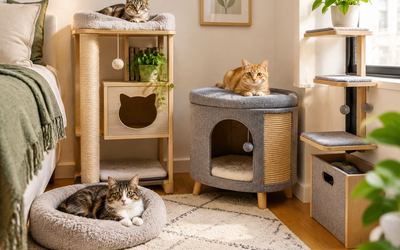
Zone 3: Rest and Retreat — Cats need enclosed hiding spots for deep sleep and stress recovery. Position a covered bed, cat cave, or hideaway cubby in the third corner, away from both the litter box and high-activity climbing zones. Elevation helps—a covered bed on the second level of a climbing tower serves double duty and saves floor space.
💡 Pro Tip: Use the "triangle rule" in square or rectangular rooms: place litter, climbing structure, and rest spot at three corners of an imaginary triangle. This creates natural separation and maximizes usable space.
Frequently Asked Questions
How much space does a cat actually need in a dedicated room?
A single cat can thrive in a dedicated space as small as 25-30 square feet if the room includes vertical climbing structures (4-6 feet of height), a litter box, water source, and at least one hiding spot. The key is vertical territory—studies show cats in 30 square feet with 6 feet of climbable height exhibit less stress than cats in 60 square feet with only horizontal floor space. Multi-cat households need an additional 15-20 square feet per cat, or proportionally more vertical furniture.
Can I use a closet as a cat room?
Yes, walk-in closets (minimum 4 feet x 4 feet) make excellent cat rooms when properly ventilated. Remove the closet door or replace it with a pet gate to ensure continuous airflow and prevent CO2 buildup. Install a wall-mounted shelf system for climbing, place the litter box in the back corner, and add a clip-on fan or leave the door propped 6-8 inches open. Avoid wire shelving that can trap claws—install solid wood or plastic shelves for safe perching.
What's the minimum ceiling height for vertical cat furniture?
Floor-to-ceiling cat towers require 7 feet minimum for proper tension mounting. Wall-mounted systems work with any ceiling height but need at least 5 feet of vertical wall clearance to create meaningful climbing pathways. If your space has lower ceilings (under 7 feet), prioritize freestanding modular towers (4-5 feet tall) or build custom wall-mounted perches in a staggered staircase pattern.
How do I control litter box odor in a small room?
Odor control in small spaces requires a three-part strategy: (1) Use a top-entry or high-sided litter box to contain ammonia vapors, (2) Scoop waste twice daily and do a full litter change every 5-7 days, (3) Place a compact air purifier with activated carbon filtration (rated for 150+ square feet) in the room. Avoid scented litters or air fresheners—they mask odors instead of eliminating them and can irritate cat respiratory systems. A 2-inch gap under the door provides passive air exchange.
Should I put food and water in the cat room?
Only if the room serves as your cat's primary living space 24/7. Cats instinctively avoid eating near elimination areas, so never place food bowls within 4-5 feet of the litter box. If the cat room is a retreat space your cat accesses freely throughout the day, keep food and water in your main living area to encourage movement and prevent territorial guarding in multi-cat homes. Always provide a water source within 10 feet of any cat room—wall-mounted or elevated water fountains save floor space.
Final Thoughts
Creating a functional cat room in a small space is less about square footage and more about strategic vertical design, proper zoning, and choosing furniture that serves multiple purposes. Even a 30-square-foot corner can satisfy your cat's instinctual needs for climbing, hiding, and safe elimination when you prioritize height over floor space and separate activity zones thoughtfully.
The products we've highlighted—from tension-mounted climbing towers to space-saving litter solutions—consistently earn top ratings from cat owners in compact living situations. Start with the essential triangle layout (vertical climbing zone, litter corner, rest spot), invest in one quality floor-to-ceiling structure or wall-mounted system, and build from there as your cat's behavior reveals their preferences.
Ready to transform your small space? Start with the PetFusion Ultimate Cat Climbing Tower to claim vertical territory, then add a contained litter solution to keep the room functional and odor-free.
Editor's Choice
Based on our research into space-efficient cat room design, these three products deliver the best combination of functionality, spatial efficiency, and verified buyer satisfaction for small spaces in 2026:
🏆 PetFusion Ultimate Cat Climbing Tower — The single best investment for maximizing vertical territory in spaces under 50 square feet. The floor-to-ceiling design delivers 6+ feet of climbing pathways in a footprint smaller than 12 inches, and the tension-mount system requires no permanent installation. At $159.99, it replaces multiple pieces of bulky furniture.
💰 IRIS Top Entry Cat Litter Box — Cuts litter scatter by 90% in a compact footprint that fits tight corners, under shelves, or inside closet alcoves. The grooved lid surface catches litter from paws, and at $29.99, it's the most cost-effective way to solve the litter containment challenge in small rooms.
🎯 Frisco 72-Inch Wall-Mounted Cat Furniture — For homeowners who can drill into studs, this wall-mounted system frees 100% of floor space while creating elevated cat highways. The five-perch design satisfies climbing instincts and keeps cats off human furniture, making it ideal for studio apartments where every square foot counts.