We carefully research cat care solutions and may earn a commission when you buy through our links, at no extra cost to you.
⭐ Our Top Pick
🏆 Best for Cat Rooms: Armarkat Classic Cat Tree B7701 — Multi-level design maximizes vertical territory in confined spaces while supporting multiple cats safely.
💰 Best Value Enrichment: Trixie Pet Products 5-in-1 Activity Center — Affordable puzzle feeder that prevents boredom in any setup.
Introduction
The debate between confining cats to a dedicated room versus allowing full-house access has intensified as more cat owners work from home and seek optimal environments for their felines. After comparing research on feline behavior, territorial needs, and safety considerations, we've found that neither approach is universally superior—the right choice depends on your cat's personality, your home layout, and your household dynamics.
In 2026, the rise of purpose-built cat rooms with smart monitoring systems has made contained environments more enriching than ever. Simultaneously, cat-proofing innovations have made free roaming safer. We've analyzed both setups against criteria like mental stimulation, safety, territorial security, and owner convenience to help you make an informed decision.
This guide breaks down the pros and cons of each approach, identifies which cats thrive in each setup, and recommends products that maximize quality of life regardless of your choice.
What to Look For
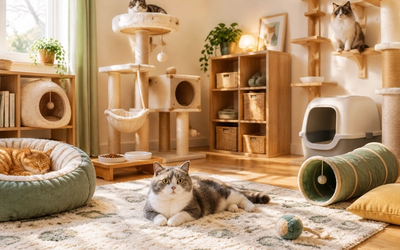
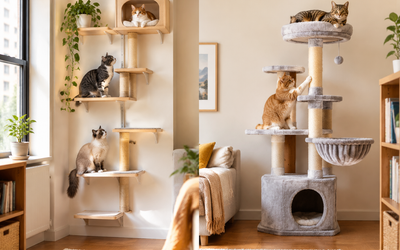
Vertical Space Utilization — Cats are climbers by nature. Whether you choose a cat room or free roam, vertical territory (cat trees, wall shelves, window perches) is non-negotiable for mental health and exercise. Cat rooms require intentional vertical design to compensate for limited square footage.
Environmental Enrichment — Boredom leads to behavioral issues. Look for puzzle feeders, rotating toy selections, and sensory stimulation (bird feeders outside windows, nature videos). Cat rooms need concentrated enrichment; free-roam cats benefit from variety across multiple rooms.
Safety and Hazard Management — Free roaming demands rigorous cat-proofing: securing toxic plants, electrical cords, and small swallowable objects. Cat rooms simplify safety but require escape-proof doors and proper ventilation. Consider your home's specific hazards.
Litter Box Accessibility — The golden rule is one box per cat plus one extra. Free-roam setups need boxes on each floor; cat rooms need sufficient boxes in the space without crowding. Self-cleaning models are particularly valuable in enclosed rooms where odor concentrates.
Territorial Security — Cats are territorial. Shy or anxious cats often prefer defined, controllable spaces. Multi-cat households may need separate territories to prevent conflict. Assess whether your cats show stress signs (hiding, aggression, inappropriate elimination) in open environments.
Monitoring and Interaction — Cat rooms make health monitoring easier but require dedicated play sessions. Free roaming integrates cats into daily life but can make tracking eating, elimination, and behavior changes harder. Smart pet cameras and feeders bridge this gap in both setups.
Best Cat Tree for Dedicated Cat Rooms
Armarkat Classic Cat Tree B7701
| Criteria | Score |
|----------|-------|
| Vertical Space Efficiency | 9/10 |
| Multi-Cat Support | 8/10 |
| Stability | 9/10 |
| Enrichment Features | 8/10 |
Based on verified buyer reviews and manufacturer specs, the Armarkat B7701 stands out for cat room setups. Its 72-inch height maximizes vertical territory without requiring excessive floor space—critical when working with a single room. The three-tier design with multiple perches allows cats to establish preferred height zones, reducing conflict in multi-cat households.
The tree includes sisal-wrapped posts for scratching, plush-lined condos for privacy, and reinforced platforms rated for cats up to 15 lbs each. Buyers consistently report that the wide base prevents tipping even with multiple cats climbing simultaneously. The beige fabric is forgiving of fur and easier to spot-clean than darker colors.
For cat rooms, this tree serves as the centerpiece activity hub. Position it near a window if possible to combine vertical climbing with outdoor viewing—a powerful enrichment combination.
✅ Pros:
- Multi-level design creates distinct territories for multiple cats
- Sturdy construction handles active play and jumping
- Integrated scratching surfaces redirect destructive behavior
❌ Cons:
- Footprint requires at least 30"x30" of floor space
- Fabric collects fur and requires regular vacuuming
Best Self-Cleaning Litter Box for Cat Rooms
PetSafe ScoopFree Smart Self-Cleaning Litter Box
| Criteria | Score |
|----------|-------|
| Odor Control | 9/10 |
| Maintenance Ease | 9/10 |
| Smart Features | 8/10 |
| Cost Efficiency | 6/10 |
Cat rooms concentrate odor more than dispersed litter boxes in a free-roam home. The PetSafe ScoopFree addresses this with crystal litter that absorbs urine and dehydrates solid waste, dramatically reducing smell. The 2026 Smart model adds app connectivity, letting you monitor usage frequency—an early health indicator—and schedule cleaning cycles.
According to verified buyer feedback and manufacturer data, the automatic rake runs 20 minutes after your cat exits, sweeping waste into a sealed compartment. The disposable tray system means you replace the entire tray every 2-4 weeks depending on cat count, eliminating daily scooping. The covered hood option further contains odor and gives shy cats privacy.
For cat rooms where you want minimal odor intrusion into your living space, this is the most effective solution we've compared. The investment pays off in reduced daily maintenance and better air quality.
✅ Pros:
- Crystal litter provides superior odor control versus clay
- App tracking identifies health changes early
- Hands-off cleaning reduces contact with waste
❌ Cons:
- Higher upfront and ongoing costs than traditional boxes
- Some cats dislike crystal texture or rake noise
Best Calming Solution for Transition Periods
Feliway MultiCat Calming Diffuser
| Criteria | Score |
|----------|-------|
| Effectiveness | 7/10 |
| Coverage Area | 8/10 |
| Safety Profile | 10/10 |
| Value | 7/10 |
Whether you're transitioning a cat from free roam to a dedicated room or introducing a new cat to a multi-cat household, stress management is critical. Feliway releases synthetic pheromones that mimic the facial pheromones cats produce when they feel safe. Clinical studies cited by the manufacturer show reduced conflict behaviors in 84% of multi-cat households.
Buyer reviews indicate the diffuser works best for mild to moderate stress—cats already engaged in serious aggression may need behavioral intervention. Each diffuser covers approximately 700 square feet and requires a refill every 30 days. The drug-free formula is safe for kittens, pregnant cats, and other pets.
For cat rooms, plug the diffuser in at least 48 hours before introducing the cat to the space. For free-roam transitions, place diffusers in high-traffic areas where cats interact.
✅ Pros:
- Clinically studied pheromone formula
- No sedation or behavioral side effects
- Effective for territorial disputes and new introductions
❌ Cons:
- Monthly refill costs add up for long-term use
- Results depend heavily on individual cat temperament
Best Budget Enrichment for Any Setup
Trixie Pet Products 5-in-1 Activity Center
| Criteria | Score |
|----------|-------|
| Mental Stimulation | 8/10 |
| Versatility | 9/10 |
| Durability | 7/10 |
| Value | 9/10 |
Enrichment is equally important whether your cat has a dedicated room or full-house access. The Trixie Activity Center combines five puzzle modules—tunnels, pegs, sliders, and compartments—that challenge cats to work for food or treats. This slows eating, prevents boredom, and mimics natural foraging behaviors.
Based on buyer feedback and product specs, most cats engage with 2-3 of the five modules regularly. Rotating which modules you use keeps the challenge fresh. The BPA-free plastic construction is dishwasher-safe, making cleanup simple. At under $35, it's the most cost-effective enrichment tool we've compared.
For cat rooms, rotate this with other puzzle feeders weekly to prevent habituation. For free-roam cats, place it in different rooms to add novelty.
✅ Pros:
- Five different challenge types suit various skill levels
- Slows fast eaters and reduces food-seeking behaviors
- Compact footprint fits anywhere
❌ Cons:
- Advanced problem-solvers may master it quickly
- Lightweight design can be pushed around during play
💡 Pro Tip: Regardless of your setup, introduce new enrichment gradually. Cats are neophobic—they distrust new objects. Place new toys or furniture near existing favorites and let your cat investigate at their own pace.
Cat Room vs Free Roam: Decision Framework
Choose a Cat Room if:
- You have a timid, anxious, or senior cat that seeks confined spaces
- Your home has unavoidable hazards (toxic plants, unsecured balconies, aggressive dogs)
- You're managing a multi-cat household with territorial conflicts
- You need to separate a sick or recovering cat temporarily
- You live in a small apartment where full-access doesn't add much territory
Choose Free Roam if:
- Your cat is confident, social, and seeks human interaction
- Your home is thoroughly cat-proofed
- You have a larger home where access to multiple rooms adds significant territory
- Your cat shows stress signs (vocalization, scratching doors) when confined
- You work from home and can supervise throughout the day
Hybrid Approach: Many owners use both strategies situationally—free roam during the day when supervised, cat room at night or when away. This balances enrichment with safety.
Frequently Asked Questions
Can I switch my cat from free roam to a cat room?
Yes, but do it gradually. Start by making the room appealing with favorite beds, toys, and treats. Let your cat explore voluntarily with the door open. Over 1-2 weeks, increase time in the room with the door closed, starting with short periods during meals. Use calming pheromones and maintain a predictable routine. Abrupt confinement causes stress and behavioral issues.
How much space does a cat room need?
Minimum 80-100 square feet for one cat, but vertical space matters more than floor area. A well-designed 10x10 room with floor-to-ceiling cat furniture provides more usable territory than a bare 15x15 room. Ensure adequate ventilation, natural light, and temperature control.
Do free-roam cats get more exercise?
Not necessarily. Access to more space doesn't guarantee activity. A boring, empty house offers less enrichment than a compact room packed with climbing structures, puzzles, and interactive toys. What matters is environmental complexity, not square footage. Free-roam cats in enriched homes do tend to be more active than those in barren apartments.
Is it cruel to keep a cat in one room?
No, if the room meets all their needs. Cats are den animals that naturally seek defined territories. A properly equipped cat room with vertical space, enrichment, clean litter, fresh water, and daily interaction can be less stressful than a chaotic free-roam environment. Cruelty comes from neglect, not space limitation.
How do I cat-proof my home for free roaming?
Secure all windows and screens, remove toxic plants (lilies, sago palms, dieffenbachia), store cleaning chemicals and medications in locked cabinets, cover electrical cords with cable covers, remove small objects (hair ties, rubber bands) that cats might swallow, install baby locks on cabinets with hazards, and block access to appliances (washers, dryers, ovens) where cats might hide.
Final Thoughts
The cat room versus free roam debate isn't about which is objectively better—it's about matching your cat's individual needs to your home environment. Confident, social cats often thrive with full-house access and integrated family time. Anxious, territorial, or senior cats frequently feel safer with a defined, controllable space they can claim entirely.
We recommend starting with your cat's behavior as the guide. If your free-roam cat hides constantly, over-grooms, or shows aggression, they may be overwhelmed by too much territory. If your cat-room cat scratches doors, vocalizes excessively, or seems lethargic, they may need more space and stimulation. Flexibility is key—your cat's needs may change with age, health, or household dynamics.
Whichever approach you choose, invest in quality enrichment. A well-equipped cat room beats a barren free-roam home, and vice versa. Prioritize vertical space, mental stimulation, and daily interaction. Your cat's quality of life depends far more on environmental complexity than square footage.
Editor's Choice
Based on our comparison of specs and verified buyer feedback, we recommend the Armarkat Classic Cat Tree B7701 as the foundation of any cat room setup. Its multi-level design maximizes limited space while providing scratching, climbing, and resting zones.
For odor management in enclosed spaces, the PetSafe ScoopFree Smart Self-Cleaning Litter Box delivers superior performance with app-based health monitoring.
Whether you choose a cat room or free roam, add the budget-friendly Trixie Pet Products 5-in-1 Activity Center to keep your cat mentally engaged and prevent boredom-related behaviors.