We earn a commission if you make a purchase, at no additional cost to you.
⭐ Our Top Pick
🏆 Best Overall: Nature's Miracle Hard Floor Cleaner — enzymatic formula eliminates biological odors and stains with veterinarian-trusted effectiveness.
💰 Best Value: Simple Green Cat Safe Cleaner — non-toxic multi-purpose cleaner that handles routine carrier maintenance on a budget.
Introduction
Your cat carrier takes a beating during vet visits. Between stress-induced accidents, drool, dander, and potential exposure to pathogens in the waiting room, that carrier needs thorough cleaning before it goes back into storage. But many cat owners skip proper disinfection, letting bacteria multiply and odors set in—creating an unpleasant experience for the next trip.
We researched veterinarian-recommended cleaning protocols and compared the most effective pet-safe cleaning products to give you a complete carrier sanitation system. Whether you're dealing with urine stains, vomit, or just general grime, this guide walks you through the exact process veterinary professionals use to keep carriers clean and safe.
If you travel frequently with your cat, you'll also want to check our guide on choosing a cat carrier for airplane travel, where proper carrier hygiene becomes even more critical in confined spaces.
What to Look For
Enzymatic cleaners for biological stains — Urine, vomit, and feces contain proteins that regular soap can't break down. Enzymatic cleaners digest these organic compounds at the molecular level, eliminating odors rather than masking them. Look for products specifically labeled for pet accidents.
Veterinary-grade disinfectants — Not all disinfectants are safe around cats. Avoid phenol-based cleaners (like Lysol) and bleach solutions stronger than 1:32 dilution. Accelerated hydrogen peroxide (AHP) and quaternary ammonium compounds are safer options that still kill common pathogens like feline calicivirus and parvovirus.
Hard vs soft carrier materials — Hard plastic carriers can withstand stronger cleaning solutions and submersion washing. Soft-sided carriers require gentler methods and thorough drying to prevent mold. Match your cleaning intensity to your carrier's construction.
Removable liners and bedding — Carriers with removable trays, pads, or fabric inserts make cleaning dramatically easier. You can soak components separately and ensure every surface gets sanitized without awkward angles or missed spots.
Drying time and storage prep — Moisture trapped in carriers breeds bacteria and mold. Plan for 24-48 hours of air drying before storage, especially for soft-sided models. Rushing this step negates your entire cleaning effort.
Frequency based on exposure — Routine vet visits require basic cleaning; sick pet appointments or multi-cat waiting rooms demand full disinfection. Scale your effort to the contamination risk.
Step 1: Remove All Loose Debris and Bedding
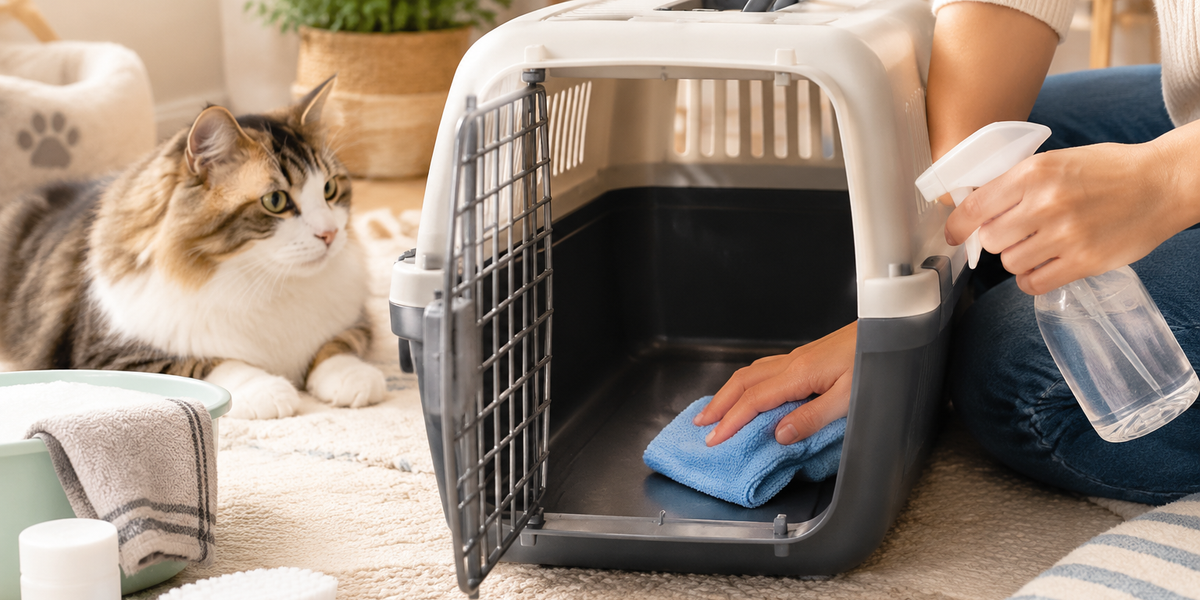
Start by taking your carrier outside or to a garage. Remove any bedding, pads, disposable liners, or toys. Shake out loose fur, litter, and debris. For hard carriers, remove the top section if possible—this gives you full access to corners where waste accumulates.
Use a vacuum with a hose attachment to pull fur from crevices and ventilation slots. A stiff-bristled brush helps dislodge stuck-on material from textured plastic surfaces. For soft carriers, turn them inside-out if the design allows, exposing all interior seams.
💡 Pro Tip: Wear disposable gloves during this step. Vet clinic waiting rooms expose carriers to countless pathogens, and bare-hand contact increases your risk of zoonotic disease transmission.
Step 2: Pre-Treat Stains and Soiled Areas
Before general cleaning, target visible stains with an enzymatic cleaner. These biological accidents need specialized treatment that soap and water can't provide.
Nature's Miracle Hard Floor Cleaner
| Criteria | Score |
|----------|-------|
| Stain Removal | 9/10 |
| Odor Elimination | 9/10 |
| Pet Safety | 10/10 |
| Value | 8/10 |
This enzymatic formula specifically targets the proteins in urine, vomit, and feces. Saturate the stained area completely—enzymes need moisture to work. Let it sit for 10 minutes, then blot (don't wipe) with paper towels. The formula continues working as it dries, breaking down odor-causing compounds that regular cleaners leave behind. Based on verified buyer reviews and veterinary recommendations, this product consistently outperforms general-purpose cleaners on biological messes.
✅ Pros:
- Enzymatic action eliminates odors at the molecular level
- Safe for use around cats when dried
- Works on both hard and soft carrier materials
❌ Cons:
- Requires 10-minute contact time for full effectiveness
- May need repeat applications for old, set-in stains
Rocco & Roxie Professional Strength Stain & Odor Eliminator
| Criteria | Score |
|----------|-------|
| Stain Removal | 9/10 |
| Odor Elimination | 10/10 |
| Pet Safety | 9/10 |
| Value | 7/10 |
When standard enzymatic cleaners aren't cutting it, this professional-grade formula delivers stronger odor elimination. It's the choice for carriers that have been stored dirty or have multiple layers of accidents. The formula penetrates porous materials like fabric and unsealed plastic, reaching odor sources regular spray-and-wipe products miss. Buyer reviews consistently note its effectiveness on "impossible" smells other products couldn't touch.
✅ Pros:
- Professional-strength enzyme concentration
- Certified safe by veterinary toxicologists
- Effective on both fresh and old stains
❌ Cons:
- Higher price point than standard cleaners
- Strong initial scent (dissipates as it dries)
Step 3: Wash the Entire Carrier
With stains pre-treated, wash every surface. For hard plastic carriers, fill a bathtub or large utility sink with warm water and add a small amount of pet-safe dish soap. Submerge the carrier and scrub all surfaces with a sponge or soft brush. Pay special attention to corners, ventilation holes, and the door mechanism where grime accumulates.
For soft-sided carriers, check the manufacturer's tag—many are machine washable on gentle cycle with cold water. If not machine-safe, hand-wash with pet-safe soap in a tub, working the fabric gently to avoid damage.
Simple Green Cat Safe Cleaner
| Criteria | Score |
|----------|-------|
| Cleaning Power | 7/10 |
| Pet Safety | 10/10 |
| Multi-Surface Use | 9/10 |
| Value | 9/10 |
This non-toxic, biodegradable cleaner handles general carrier washing without the enzymatic action needed for biological stains. It's ideal for routine maintenance cleanings when your cat didn't have an accident—removing dirt, dander, and light grime. Mix according to bottle directions and apply with a sponge or cloth. The formula rinses clean without residue, and buyer reviews confirm cats show no aversion to carriers cleaned with this product.
✅ Pros:
- Non-toxic formula safe for daily use
- Multi-purpose for other pet gear
- Budget-friendly for regular maintenance
❌ Cons:
- Not enzymatic—won't eliminate biological odors
- Requires physical scrubbing for stuck-on messes
Step 4: Disinfect to Kill Pathogens
Cleaning removes visible dirt; disinfection kills invisible pathogens. This step is especially critical after sick pet visits or if your carrier contacted other animals in the vet office.
Rescue Disinfectant Wipes
| Criteria | Score |
|----------|-------|
| Pathogen Kill Rate | 10/10 |
| Ease of Use | 9/10 |
| Pet Safety | 9/10 |
| Value | 7/10 |
Used in veterinary clinics nationwide, these wipes kill feline calicivirus, panleukopenia, and other common pathogens within one minute of contact. Wipe down all carrier surfaces, ensuring they stay visibly wet for the full contact time. The wipes are safe for use on plastic, metal, and sealed wood, though not on unsealed fabrics. Let the carrier air dry completely—the disinfectant is only safe for cats once fully dried. According to veterinary protocols, this product meets hospital-grade disinfection standards.
✅ Pros:
- Kills 99.9% of pathogens in one minute
- Convenient pre-moistened wipes
- No mixing or dilution needed
❌ Cons:
- Must air dry completely before cat contact
- More expensive per use than spray disinfectants
Alternatively, you can make a 1:32 bleach solution (½ cup bleach per gallon of water). Spray or wipe on all surfaces, let sit for 10 minutes, then rinse thoroughly with clean water. Bleach is highly effective but requires complete rinsing to avoid fumes that irritate cats' sensitive respiratory systems.
💡 Pro Tip: Never mix cleaning products. Using bleach after an enzymatic cleaner creates toxic fumes. If you pre-treated with enzymes, rinse thoroughly before applying bleach disinfectant.
Step 5: Rinse and Dry Thoroughly
Residual cleaning products can irritate your cat's skin and respiratory system. Rinse hard carriers under running water until no soap or cleaner smell remains. For soft carriers, rinse in clean water or run through an extra washing machine rinse cycle.
Drying is where most people rush and create problems. Hard carriers can air dry upside-down in sunlight (UV helps kill remaining bacteria) for 12-24 hours. Soft carriers need 24-48 hours in a well-ventilated area, preferably with a fan to prevent mold growth in fabric layers.
Check all fabric components by pressing firmly—if you feel any dampness, keep drying. Putting away a damp carrier guarantees mold and mildew odors that are nearly impossible to remove.
When to Replace Instead of Clean
Some damage goes beyond what cleaning can fix. Replace your carrier if you see:
- Deep cracks in plastic where bacteria can hide
- Tears in soft-sided fabric that compromise structure
- Persistent odors after multiple enzymatic treatments (indicates deep material saturation)
- Rust on metal components (especially door latches)
- Mold or mildew stains in fabric that don't respond to cleaning
Carriers typically last 5-7 years with regular use and proper maintenance. If yours is showing age-related wear beyond cosmetic scratches, replacement is safer than continued use.
Frequently Asked Questions
Can I use regular household cleaners on my cat carrier?
Avoid ammonia-based cleaners (trigger cat urine marking), phenol-based disinfectants like Lysol (toxic to cats), and strongly scented products (deter carrier use). Stick to pet-specific or explicitly pet-safe cleaners. When in doubt, check the ASPCA's list of pet-safe cleaning products.
How often should I deep clean my cat carrier?
Deep clean after every vet visit or anytime your cat has an accident inside. Between trips, wipe down monthly with a damp cloth and pet-safe cleaner. Carriers used for travel more than once monthly should get quarterly deep cleans even without accidents.
My carrier still smells after cleaning—what am I missing?
Lingering odors mean urine or other biological material soaked into porous surfaces. Apply enzymatic cleaner directly to the smell source (not diluted), let it sit for 30 minutes, then rinse. For fabric carriers, a second wash cycle with enzymatic additive often eliminates stubborn smells. If odor persists after two enzymatic treatments, the material may be permanently saturated.
Can I put my cat carrier in the dishwasher?
Hard plastic carriers without electronic components (like those with built-in scales) can go in commercial-size dishwashers on high heat. Standard home dishwashers usually can't accommodate carrier size. The high heat provides sanitization, but you'll still need to pre-treat stains with enzymatic cleaner first.
Is it safe to use essential oils to freshen my carrier?
No. Essential oils like tea tree, eucalyptus, citrus, and peppermint are toxic to cats. Their livers can't metabolize certain compounds in these oils, leading to poisoning with prolonged exposure. Stick to odor elimination through proper cleaning rather than scent masking.
Final Thoughts
A clean carrier protects your cat's health and makes vet visits less stressful for everyone. The key is treating biological accidents with enzymatic cleaners before general washing, then following up with proper disinfection and thorough drying. Skip any of these steps and you're left with a carrier that looks clean but harbors odors and pathogens.
Invest in quality enzymatic cleaners and veterinary-grade disinfectants—they're the only products proven to eliminate (not just mask) the biological messes cats create under stress. Your extra effort means a clean, safe space your cat won't dread entering on the next trip.
Editor's Choice
Based on veterinary protocols and verified buyer reviews, we recommend Nature's Miracle Hard Floor Cleaner for enzymatic stain and odor elimination, and Rescue Disinfectant Wipes for pathogen-killing disinfection. For routine maintenance between vet visits, Simple Green Cat Safe Cleaner offers budget-friendly, non-toxic cleaning without the enzymatic price premium. Together, these three products give you complete carrier sanitation at every level.