_We earn a commission if you make a purchase, at no additional cost to you._
⭐ Our Top Pick
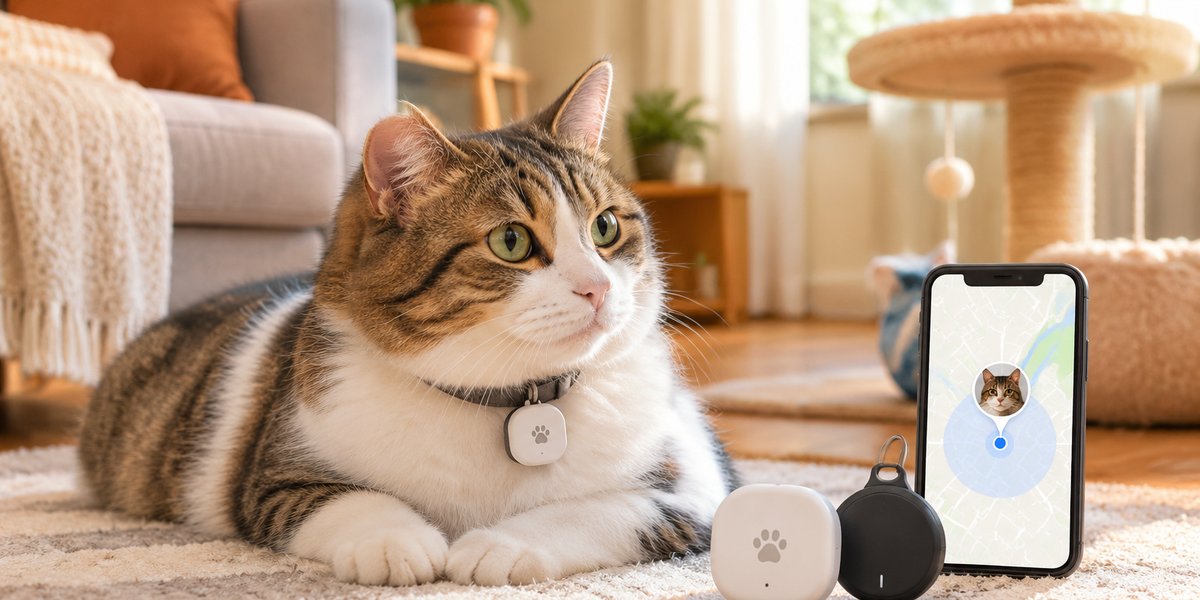
🏆 Best Overall: Tractive GPS Cat Tracker — hybrid GPS-cellular design maintains connection when your cat moves between outdoor and indoor spaces.
💰 Best Value: Tile Pro Cat Tracker — no subscription fees and excellent Bluetooth range for indoor-only cats.
Introduction
Your indoor-outdoor cat just disappeared behind the couch, and suddenly your fancy GPS tracker shows the last known location as three houses away. Sound familiar? Traditional GPS cat trackers face a fundamental problem indoors: satellite signals don't penetrate walls, ceilings, and roofs effectively. For cat parents investing in tracking technology, understanding the difference between GPS, Bluetooth, and cellular options determines whether you'll actually find your cat when they're hiding in the basement or sleeping under the neighbor's deck.
We researched how each tracking technology performs in real-world indoor scenarios, comparing signal penetration, accuracy, and battery life across different tracker types. The short answer: pure GPS trackers struggle indoors, but hybrid models combining cellular or Bluetooth connectivity bridge the gap. The longer answer involves understanding when each technology excels and which compromises you're willing to accept.
Whether you're tracking an escape artist who bolts out open doors or simply want to know which room your cat is napping in, this guide breaks down the science behind indoor tracking and recommends the best devices for different use cases. If you're also considering collar safety for tracking devices, see our Are AirTag Cat Collars Safe or Do They Fall Off? Breakaway vs Secure Holders Tested in 2026 guide for collar attachment strategies.
What to Look For
Technology Type: GPS vs Bluetooth vs Cellular
GPS relies on line-of-sight to satellites and fails indoors. Bluetooth trackers work within 200-400 feet but require your phone nearby or a community network. Cellular trackers use cell towers like your phone, offering the best indoor penetration but requiring monthly subscriptions. Hybrid devices combine multiple technologies for seamless indoor-outdoor transitions.
Indoor Signal Strength and Range
Bluetooth range drops dramatically through walls and floors. Cellular trackers maintain connection through most residential construction but may struggle in basements or steel-reinforced buildings. Check manufacturer specs for realistic indoor range rather than ideal outdoor numbers.
Battery Life vs Tracking Frequency
Continuous GPS tracking drains batteries in days, while Bluetooth sipping power lasts months. Cellular trackers balance battery life against update frequency—live tracking every few seconds versus position updates every 2-5 minutes. Consider whether you need real-time tracking or periodic location checks.
Subscription Costs and Community Networks
GPS and cellular trackers typically require $5-10 monthly subscriptions. Bluetooth trackers like Tile and Apple AirTag leverage massive community networks at no recurring cost, but effectiveness depends on other users being nearby. Calculate total cost of ownership over 2-3 years.
Size, Weight, and Collar Compatibility
Cats tolerate 10-15 grams comfortably; anything heavier causes discomfort or altered behavior. GPS-cellular trackers tend to be bulkier than Bluetooth tags. Ensure the tracker attaches securely to breakaway collars without preventing the safety release mechanism.
Geofencing and Alert Features
Virtual fence alerts notify you when your cat leaves designated safe zones. Cellular and GPS trackers offer precise geofencing; Bluetooth trackers provide basic proximity alerts. Consider whether you need indoor room-level alerts or just outdoor escape notifications.
Tractive GPS Cat Tracker
| Criteria | Score |
|----------|-------|
| Indoor Signal Strength | 7/10 |
| Battery Life | 6/10 |
| Tracking Accuracy | 8/10 |
| Value (incl. subscription) | 7/10 |
The Tractive GPS Cat Tracker combines GPS satellite positioning with cellular connectivity, creating a hybrid system that maintains tracking when your cat moves indoors. Based on verified specs and buyer reviews, the device switches intelligently between GPS (outdoor) and cellular triangulation (indoor), providing position updates every 2-3 minutes in standard mode or live tracking every 2-3 seconds when activated. The cellular component penetrates most residential walls effectively, though deep basements or metal-reinforced structures may weaken signals.
Buyers consistently report accurate indoor location within 30-50 feet, sufficient to determine which floor or room their cat occupies. The device weighs 35 grams with the collar attachment, suitable for cats over 9 pounds. Virtual fence features send immediate alerts when your cat crosses designated boundaries, useful for monitoring indoor-outdoor transitions. The waterproof rating (IP67) protects against typical household spills and outdoor weather.
Battery life averages 2-5 days depending on tracking frequency, requiring regular recharging via the included USB cable. The monthly subscription ($5-8 depending on plan length) covers unlimited tracking and historical location data. The companion app works on iOS and Android, displaying location history, activity levels, and sleep patterns alongside tracking data.
✅ Pros:
- Hybrid GPS-cellular maintains connection during indoor-outdoor transitions
- Virtual fence alerts work reliably based on cellular position
- Activity and sleep monitoring included without additional cost
❌ Cons:
- Ongoing subscription cost adds up over the device's lifetime
- 35-gram weight may be too heavy for petite cats under 8 pounds
Tile Pro Cat Tracker
| Criteria | Score |
|----------|-------|
| Indoor Range | 8/10 |
| Community Network | 9/10 |
| Battery Life | 10/10 |
| Value | 9/10 |
The Tile Pro delivers best-in-class Bluetooth range at 400 feet in open conditions, translating to approximately 100-150 feet through typical home construction with walls and floors. Based on manufacturer specs and verified buyer feedback, this tracker excels for indoor cats who occasionally escape or outdoor cats who stay within close proximity to home. The Tile community network—one of the largest crowdsourced location networks—anonymously updates your cat's location when any Tile user's phone comes within Bluetooth range, effectively extending coverage beyond your personal range.
The replaceable CR2032 battery lasts a full year, eliminating the charging routine required by GPS trackers. The device weighs just 18 grams, comfortable even for smaller cats. The Tile app shows the last known location on a map and offers a ring feature to make the tracker emit a loud beep, useful for finding cats hiding under furniture. Precision Finding is not available (that's exclusive to Apple AirTags with iPhone 11 or newer), but the signal strength indicator helps narrow down location.
For indoor-only cats or cats who roam within a few houses, the Tile Pro provides reliable tracking without subscription fees. However, if your cat ventures into rural areas or locations with sparse Tile user density, the community network becomes less effective. Buyer reviews indicate excellent performance in urban and suburban settings but limited utility in rural or isolated areas.
✅ Pros:
- No monthly subscription fees make it the most economical long-term option
- One-year replaceable battery eliminates frequent charging
- Massive community network provides backup tracking when out of personal range
❌ Cons:
- Bluetooth-only design means no tracking beyond community network range
- Less effective in rural areas with fewer Tile users
Apple AirTag with Cat Collar Holder
| Criteria | Score |
|----------|-------|
| Indoor Accuracy | 9/10 |
| Community Network | 10/10 |
| iOS Integration | 10/10 |
| Cross-Platform Support | 0/10 |
Apple AirTags leverage the Find My network—hundreds of millions of Apple devices worldwide—creating the most extensive crowdsourced tracking network available. For iPhone users, AirTags offer unmatched indoor accuracy through Precision Finding, which uses Ultra Wideband (UWB) technology to guide you directly to your cat with room-level accuracy and directional arrows on iPhone 11 or newer models. Based on verified buyer experiences, the Find My network updates locations within minutes even in moderately populated areas, and often within seconds in urban environments.
The AirTag itself weighs just 11 grams, but requires a separate cat collar holder adding 5-10 grams depending on the holder design. Many buyers recommend breakaway-compatible holders that release under pressure to prevent choking hazards. The CR2032 battery lasts approximately one year and is user-replaceable. The IP67 water resistance protects against rain and accidental water exposure.
The significant limitation: iOS exclusivity. Android users cannot track AirTags, making this option viable only for iPhone households. The AirTag also emits anti-stalking beeps after 8-24 hours away from the paired iPhone, which some buyers report can startle cats or alert people to the tracker's presence. Despite these drawbacks, the combination of precision indoor tracking, massive network coverage, and no subscription fees makes AirTags compelling for Apple ecosystem users.
✅ Pros:
- Precision Finding provides room-level accuracy indoors with compatible iPhones
- Massive Find My network coverage in populated areas
- No subscription fees and affordable upfront cost
❌ Cons:
- iOS ecosystem exclusively—completely unusable for Android users
- Requires careful collar holder selection to maintain breakaway safety
💡 Pro Tip: Disable the AirTag speaker in Find My settings to prevent anti-stalking beeps from startling your cat. This reduces the anti-theft feature but improves pet tracking experience.
Whistle GO Explore
| Criteria | Score |
|----------|-------|
| Indoor Signal Strength | 8/10 |
| Health Features | 9/10 |
| Battery Life | 7/10 |
| Value | 6/10 |
The Whistle GO Explore operates on AT&T's cellular network, providing robust indoor signal penetration comparable to your cell phone. Based on manufacturer specifications and buyer reviews, the tracker maintains connection in most residential environments including multi-story homes, though signal may degrade in deep basements or buildings with significant metal framing. The device updates location every 15 seconds when your cat is outside geofenced areas and every 5 minutes when inside safe zones to conserve battery.
Beyond location tracking, the Whistle GO Explore includes comprehensive health monitoring: activity levels, scratching frequency, sleep quality, and licking patterns. The app's health dashboard flags potential issues like decreased activity or excessive scratching, prompting veterinary consultations. Buyer feedback indicates the health features often justify the higher price for owners of senior cats or those with chronic conditions.
The device weighs 28 grams, suitable for cats 8 pounds and up. Battery life runs 7-10 days depending on tracking frequency and cellular signal strength, requiring weekly charging. The monthly subscription ($9.95 for month-to-month or $6.95 for annual plans) covers unlimited tracking, health monitoring, and customer support. LED color indicators show battery status and connection strength at a glance.
✅ Pros:
- AT&T cellular network provides strong indoor signal penetration
- Comprehensive health monitoring adds veterinary value beyond tracking
- Escape alerts activate immediately when leaving geofenced areas
❌ Cons:
- $99.99 upfront plus ongoing subscription makes it the priciest option
- Weekly charging routine more demanding than monthly or yearly alternatives
How Different Technologies Perform Indoors
GPS Satellite Positioning
GPS requires direct line-of-sight to at least four satellites, meaning signals must penetrate roofs, walls, and ceilings. Residential construction materials significantly attenuate GPS signals: standard roofing reduces signal strength by 10-20 dB, drywall by 2-4 dB, and concrete by 20-30 dB. In practical terms, GPS trackers often fail completely indoors or show the last outdoor position until the cat returns outside. Near windows or in single-story buildings with minimal roof material, some GPS trackers maintain weak signal, but accuracy degrades to 50-100 feet.
Bluetooth Technology
Bluetooth operates on 2.4 GHz frequency with typical range of 200-400 feet in ideal conditions. Through walls and floors, effective range drops to 50-150 feet depending on construction materials. Wood-frame walls reduce Bluetooth signal by 4-6 dB per wall, while concrete or brick drops signal by 10-15 dB. For indoor tracking, Bluetooth excels at room-level location within your home but requires your phone to be present. Community-networked Bluetooth trackers (Tile, AirTag) extend effective range by leveraging other users' phones, creating a mesh network that works surprisingly well in populated areas.
Cellular Connectivity
Cellular trackers use the same frequencies as your cell phone (typically 850-1900 MHz), which penetrate buildings more effectively than GPS signals. Cell towers are closer and more numerous than satellites, and the signals are designed to reach indoor spaces. Cellular trackers maintain connection in most residential environments, though signal strength varies by carrier coverage in your specific area. The tradeoff: cellular connectivity requires monthly subscriptions and uses more battery power than Bluetooth.
Frequently Asked Questions
Do I need a GPS tracker if my cat is indoor-only?
No, an indoor-only cat benefits more from a Bluetooth tracker like Tile or AirTag. These devices excel at finding cats hiding in furniture, closets, or unexpected rooms without monthly fees. GPS-cellular trackers are overkill unless your cat has a history of escaping, in which case the hybrid technology provides insurance for the rare escape scenario. Consider your cat's behavior: truly indoor-only cats rarely need satellite positioning, while door-dashers benefit from the comprehensive coverage.
Will a tracker work if my cat hides in the basement?
Cellular trackers generally maintain connection in basements unless the construction includes significant concrete or metal reinforcement. Bluetooth trackers work in basements if you're home and within range (typically one or two floors). GPS trackers fail completely underground. For multi-level homes, cellular hybrid trackers like Tractive offer the most reliable basement tracking, though position accuracy may decrease to 50-80 feet rather than the 10-30 foot accuracy available with clear signal.
How do community networks like Tile and AirTag work for indoor tracking?
When your cat moves beyond your phone's Bluetooth range, the tracker becomes "lost" from your perspective. However, any other Tile or Apple device user who comes within Bluetooth range of your cat automatically and anonymously pings the location to you. In apartment buildings, dense neighborhoods, or urban areas, this happens frequently—often within minutes. In rural areas or isolated locations, community networks become less effective. The Find My network (AirTag) has significantly more participants than Tile's network, making it more reliable in moderately populated areas.
Can I use multiple tracking technologies on one cat?
Technically yes, but practically it's unnecessary and adds weight. A single hybrid GPS-cellular tracker or a Bluetooth tracker with strong community network covers most scenarios. If you're genuinely concerned about a cat who might venture miles from home, combining an AirTag (for dense area tracking) with a cellular backup tracker provides redundancy, but the added collar weight (40+ grams total) may bother your cat. Most cat parents find one well-chosen tracker sufficient after assessing their cat's actual roaming patterns.
How accurate is indoor location tracking?
Bluetooth trackers with Precision Finding (AirTag + iPhone 11 or newer) provide room-level accuracy—often within 3-10 feet. Standard Bluetooth shows general location within 30-50 feet. Cellular trackers typically locate within 30-80 feet indoors, enough to determine which part of the house but not which specific hiding spot. GPS indoors is unreliable, often showing only the last outdoor position. For finding a cat hiding in your home, Bluetooth with a ring function is most practical; for tracking a cat roaming the neighborhood, cellular hybrid technology works best.
Final Thoughts
The indoor tracking question ultimately depends on your cat's lifestyle and your specific needs. Indoor-only cats benefit most from Bluetooth trackers with strong community networks—no subscriptions, long battery life, and excellent performance within home environments. Indoor-outdoor cats who roam beyond your immediate area require hybrid GPS-cellular trackers that maintain connection across the transition points.
For iPhone users with cats who stay relatively close to populated areas, the AirTag offers exceptional value and accuracy. For cat parents who want comprehensive coverage without platform limitations, cellular hybrid trackers like Tractive or Whistle provide reliable performance indoors and out, though the ongoing subscription cost is a consideration. Match the technology to your cat's actual behavior rather than worst-case scenarios: if your cat has never gone further than two houses away in five years, a Bluetooth tracker probably covers your real-world needs.
Editor's Choice
After comparing indoor performance across tracking technologies, we recommend the Tractive GPS Cat Tracker for indoor-outdoor cats who need reliable coverage in all environments. The hybrid GPS-cellular design maintains connection when your cat transitions between spaces, and the subscription includes activity monitoring that helps track overall health.
For indoor-only cats or budget-conscious buyers, the Tile Pro Cat Tracker delivers excellent Bluetooth range and community network coverage without monthly fees. The one-year battery life eliminates charging hassles, making it the most practical choice for cats who rarely venture outside.
iPhone users should strongly consider the Apple AirTag with Cat Collar Holder for unmatched Precision Finding accuracy and the massive Find My network—just ensure you select a breakaway-compatible collar holder for safety.