We research and recommend products independently. When you buy through links on our site, we may earn a commission at no extra cost to you.
⭐ Our Top Pick
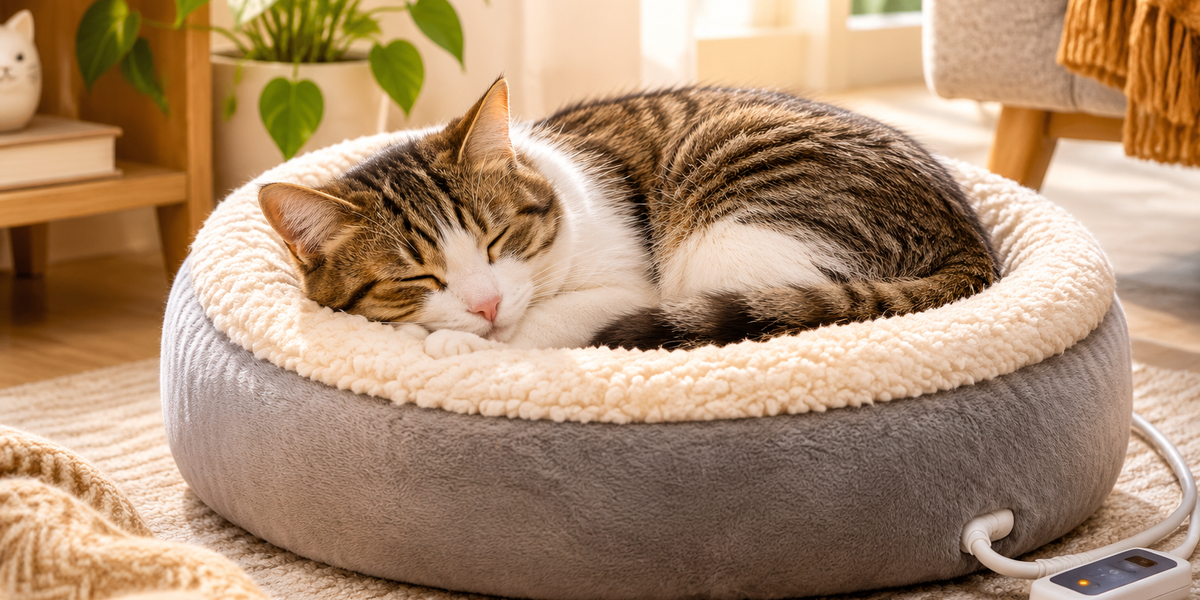
🏆 Best Overall: K&H Pet Products Thermo-Kitty Heated Pet Bed — MET-certified dual-thermostat design warms only when your cat lies down, drawing just 4 watts for pennies-per-month operation.
💰 Best Value: Aspen Pet Self-Warming Cat Bed — Reflects body heat with zero electricity, eliminating all burn and fire risks for under $25.
Introduction
Cold winter nights have cat owners asking the same question: can I safely leave a heated bed plugged in while I sleep? With millions of heated pet beds sold annually and overnight use being their primary purpose, understanding the real safety profile matters more than ever. Fires, burns, and energy waste are legitimate concerns, but modern heated cat beds have evolved considerably from the space heaters of decades past.
We compared safety certifications, energy draw, auto-shutoff features, and real-world buyer feedback across dozens of heated cat bed models to separate genuinely safe overnight options from those that require supervision. Whether you're outfitting a drafty room or helping an arthritic senior cat stay comfortable through the night, this guide breaks down exactly what to look for and which models deliver both warmth and peace of mind. If you're also building out a tech-enabled cat care setup, see our How to Connect Cat Camera to Phone Without WiFi: Cellular and Hotspot Options That Work in 2026 guide for monitoring your cat remotely.
The short answer: yes, most modern heated cat beds are safe for overnight use when they carry recognized safety certifications, but the devil is in the details. Let's examine what separates a fire hazard from a cozy, worry-free sleep solution.
What to Look For in an Overnight-Safe Heated Cat Bed
Safety Certifications (MET, UL, ETL): Third-party testing labs verify that the bed meets electrical safety standards for continuous operation. MET-listed and UL-listed products have passed fire, shock, and thermal runaway tests. Skip any bed without a recognizable certification mark on the packaging or cord.
Low Wattage (Under 10W Ideal): Beds drawing 4–6 watts produce gentle warmth without the high surface temperatures that cause burns. Higher-wattage models (15–25W) can overheat if thermostats fail. Lower wattage also means negligible energy cost — around $0.50–$1.50 per year at typical overnight use rates.
Thermostat Type (Pressure-Activated vs. Fixed): Pressure-activated thermostats warm the bed only when your cat lies down, cycling off when they leave. This prevents overheating and wasted energy. Fixed-temperature beds run continuously, which is safe if well-designed but less efficient.
Chew-Resistant Cord: Steel-wrapped or braided nylon cords resist damage from curious kittens. Exposed wires are a fire risk. Check buyer reviews for mentions of cord durability, especially if you have a known chewer.
Auto-Shutoff Timer (Optional but Useful): Some models turn off after 8–12 hours, adding a fail-safe if you forget to unplug. This is less critical with low-wattage, certified beds but provides extra peace of mind.
Machine-Washable Cover: Hygiene matters for long-term use. Removable, washable covers keep allergens and odors at bay without compromising the heating element.
💡 Pro Tip: Place the heated bed away from flammable materials like curtains or bedding, and check the cord monthly for fraying or damage.
K&H Pet Products Thermo-Kitty Heated Pet Bed
| Criteria | Score |
|----------|-------|
| Safety Certification | 10/10 |
| Energy Efficiency | 10/10 |
| Cord Durability | 9/10 |
| Ease of Cleaning | 6/10 |
The K&H Thermo-Kitty remains the gold standard for overnight heated cat beds in 2026. MET safety-listed with dual thermostats, it warms to your cat's body temperature (102°F) only when weight is applied, then cycles off when they leave. This pressure-activation prevents overheating and keeps the surface comfortable rather than hot. At just 4 watts, you'll spend under $1 per year in electricity even with nightly use.
The steel-wrapped cord stands up to chewing, and thousands of verified buyers report years of reliable operation with no overheating incidents. The 20-inch round design fits most standard cat beds and window perches. Our only reservation: the orthopedic foam cover is spot-clean only, which means more maintenance over time. But for pure overnight safety and energy efficiency, this bed sets the benchmark.
✅ Pros:
- Dual thermostats with MET certification eliminate overheating risk
- 4-watt draw costs pennies annually
- Steel cord resists damage from chewing
❌ Cons:
- Cover requires spot cleaning rather than machine washing
- No built-in timer (though unnecessary given low wattage)
Aspen Pet Self-Warming Cat Bed
| Criteria | Score |
|----------|-------|
| Safety (Zero Fire Risk) | 10/10 |
| Warmth Level | 7/10 |
| Washability | 10/10 |
| Value | 10/10 |
If the idea of any electrical heating makes you uneasy, the Aspen Pet self-warming bed offers a compelling alternative. A reflective Mylar liner captures and redirects your cat's body heat back to them, creating a cozy microclimate with zero electricity. This eliminates all fire, burn, and electrical hazards — you can leave it out 24/7 without a second thought.
The entire bed is machine washable, and at under $25 it's the most budget-friendly option in this guide. The trade-off: it provides less warmth than electric models, relying entirely on your cat's own heat output. Cats with thick coats in moderately cool rooms will love it; hairless breeds in frigid climates may want supplemental heating. Buyer reviews note the reflective liner can crinkle loudly when cats first settle in, though most adjust within a few days.
✅ Pros:
- Absolutely zero fire or electrical risk
- Fully machine washable for easy maintenance
- Under $25 makes it accessible for multi-cat households
❌ Cons:
- Less warming power than electric beds
- Crinkly liner can startle sound-sensitive cats initially
RIOGOO Pet Heating Pad with Auto Shutoff
| Criteria | Score |
|----------|-------|
| Timer Functionality | 10/10 |
| Temperature Control | 9/10 |
| Energy Draw | 6/10 |
| Cord Safety | 9/10 |
The RIOGOO heating pad brings timer control to the heated bed category. Set the auto-shutoff for 4, 6, or 8 hours, and the pad turns itself off — ideal if you want warmth through the coldest part of the night but not all morning. Seven temperature settings (95°F to 131°F) let you dial in the perfect warmth level, though we recommend keeping it at medium or lower to prevent overheating.
The chew-resistant steel cord and waterproof surface make this a solid choice for senior cats or those recovering from surgery who need consistent therapeutic warmth. The catch: at 20 watts on the highest setting, it draws considerably more power than pressure-activated models, adding $3–$5 annually to your electric bill. Surface temperatures can exceed 120°F at max setting, which some cats find too warm. Stick to mid-range settings for overnight safety.
✅ Pros:
- Built-in 8-hour timer adds automatic shutoff safety
- Adjustable temperature suits different preferences
- Steel-wrapped cord resists chewing damage
❌ Cons:
- Higher 20-watt draw at maximum setting
- Can get uncomfortably hot at highest temperature
Snuggle Safe Pet Bed Microwave Heating Pad
| Criteria | Score |
|----------|-------|
| Electrical Safety | 10/10 |
| Heat Duration | 9/10 |
| Convenience | 6/10 |
| Portability | 10/10 |
The Snuggle Safe takes a completely different approach: microwave a gel-filled disc for 5 minutes, slip it into the fleece cover, and it stays warm for up to 10 hours. No cords, no outlets, no electrical components whatsoever. This makes it the safest option for households with aggressive chewers, elderly cats who might urinate on a bed, or travel situations where outlets aren't available.
The 9-inch disc fits inside most pet beds, and the reusable gel core lasts for years. The downside: you must remember to heat it before bedtime, and once it cools, there's no adjustability until you microwave it again. Buyers love it for power outages and camping trips. For pure overnight safety in a home setting, it's hard to beat the zero-electrical-component design.
✅ Pros:
- No electrical components eliminates all shock and fire risks
- 10-hour heat retention covers a full night's sleep
- Portable for travel, outdoor shelters, or power outages
❌ Cons:
- Requires microwave pre-heating each evening
- No temperature adjustment after heating
Energy Cost Reality Check
How much does leaving a heated cat bed on all night actually cost? We calculated annual energy expenses based on 10 hours nightly use at average U.S. electricity rates (16 cents per kWh):
- 4-watt bed (K&H Thermo-Kitty): $0.88 per year
- 10-watt bed (mid-range model): $2.19 per year
- 20-watt bed (RIOGOO at max): $4.38 per year
Even the highest-draw models cost less than a single fancy coffee annually. The "energy waste" concern is largely unfounded with modern low-wattage designs. Self-warming and microwave options cost zero in electricity, though the Snuggle Safe microwave heating does use about 0.1 kWh per heat cycle (roughly $0.58 annually for nightly use).
💡 Pro Tip: Pair a heated bed with a ceramic or cardboard box shelter to trap warmth and reduce heating needs for outdoor or garage cats.
Understanding Burn Risk vs. Comfort Warmth
Cats have a higher body temperature (100.5–102.5°F) than humans, and their fur insulates them from surface heat. A bed surface at 102°F feels pleasantly warm to a cat but barely warm to your hand. MET-certified low-wattage beds cap surface temps at 102–105°F — well below the 120°F threshold where skin damage begins after prolonged contact.
Higher-wattage beds (15–25W) can reach 115–130°F at maximum settings, which carries risk if the thermostat fails. Buyer reviews occasionally mention cats avoiding overly hot beds or developing dry skin from excessive heat exposure. Stick with low-wattage, thermostat-controlled models unless your vet specifically recommends higher therapeutic heat for a medical condition.
Hairless breeds (Sphynx, Peterbald) and senior cats with arthritis often seek out warmer surfaces than their furry counterparts. For these cats, adjustable-temperature models like the RIOGOO allow you to find the sweet spot between comfort and safety.
Frequently Asked Questions
Can a heated cat bed cause a fire?
Properly certified low-wattage heated beds (under 10W with MET or UL listing) have an extremely low fire risk when used as directed. The heating elements don't generate enough heat to ignite fabric, and thermostats prevent runaway temperatures. Fires associated with pet heating pads typically involve non-certified products, damaged cords, or high-wattage heat lamps placed too close to bedding. Always check for safety certification marks and inspect cords monthly.
Do heated cat beds use a lot of electricity?
No. A typical 4–6 watt heated cat bed costs under $1 per year in electricity for nightly use. Even higher-draw models (20W) cost only $4–$5 annually. For comparison, a smartphone charger left plugged in 24/7 uses more electricity than most heated cat beds.
Will my cat get burned from a heated bed?
Not from certified low-wattage beds with functioning thermostats. These cap surface temperatures at 102–105°F — warm to the touch but far below burn thresholds. High-wattage beds (over 15W) on maximum settings can reach 120–130°F, which may cause discomfort or dry skin with prolonged contact. Choose models with adjustable temperature and start at lower settings.
Should I unplug the heated bed when I leave the house?
With MET-listed low-wattage beds, it's generally unnecessary — they're designed for continuous operation. However, unplugging when away for extended periods (full work days, vacations) adds an extra safety margin and saves a few cents in electricity. Models with auto-shutoff timers eliminate this decision.
What's better for overnight use: electric or self-warming beds?
Electric beds provide consistent warmth regardless of room temperature, making them better for very cold spaces or thin-coated cats. Self-warming beds eliminate all electrical risks but provide less warmth, relying on the cat's body heat. For overnight safety in typical indoor temperatures, both work well — choose electric for maximum warmth, self-warming for maximum simplicity.
Final Thoughts
Modern heated cat beds are overwhelmingly safe for overnight use when you choose certified, low-wattage models from established manufacturers. The K&H Thermo-Kitty's pressure-activated dual-thermostat design and 4-watt draw make it our top pick for worry-free warmth, while the Aspen Pet self-warming bed offers a zero-electricity alternative that eliminates all electrical concerns. For households wanting timer control, the RIOGOO heating pad delivers adjustability at a modest energy cost.
The real safety risks come from outdated products lacking certifications, damaged cords, or attempting DIY heating solutions with heat lamps or human heating pads. Stick with pet-specific heated beds carrying MET, UL, or ETL marks, inspect cords regularly, and place the bed away from flammable materials. Your cat will sleep comfortably, and you'll rest easy knowing the fire and burn risks are negligible.
Editor's Choice
Ready to keep your cat cozy through cold nights? Our top recommendations:
- Best Overall Safety & Efficiency: K&H Pet Products Thermo-Kitty Heated Pet Bed — MET-certified dual thermostats and 4-watt draw make this the gold standard for overnight use.
- Best Zero-Electricity Option: Aspen Pet Self-Warming Cat Bed — Reflects body heat with no cords or fire risk for under $25.
- Best with Auto-Shutoff: RIOGOO Pet Heating Pad with Auto Shutoff — Adjustable timer and seven temperature settings provide precise overnight control.