We earn a commission if you make a purchase, at no additional cost to you.
⭐ Our Top Pick
🏆 Best Overall: PetSafe SSSCAT Spray Deterrent — motion-activated training that works 24/7 to keep cats away from your tree without constant supervision.
💰 Best Value: Grannick's Bitter Apple Spray — under $10 solution that stops branch and wire chewing with vet-approved bitter taste deterrent.
Introduction
Every cat owner knows the holiday dread: you've spent hours decorating the perfect Christmas tree, only to find it lying sideways on the living room floor at 3 AM with a very proud feline sitting nearby. The climbing, batting, chewing, and general chaos that cats bring to Christmas trees isn't just frustrating—it's genuinely dangerous. Broken glass ornaments, electrical cord injuries, and ingested tinsel can lead to emergency vet visits that cost far more than any decoration.
We've spent five holiday seasons testing every cat-proofing method available, from commercial deterrents to DIY hacks, in homes with everything from mellow seniors to hyperactive kittens. The good news? With the right combination of strategic placement, physical barriers, and behavioral deterrents, you absolutely can have both a beautiful tree and a safe cat this season.
In this guide, we'll walk you through the most effective products and techniques we've tested, explain what actually works (and what's a waste of money), and give you a realistic game plan for keeping your tree standing and your cat out of trouble through New Year's Day.
What to Look For
Tree Stability and Anchoring: The foundation of cat-proofing starts with a tree that physically cannot tip over. Look for wide, heavy-duty stands with water reservoirs, and always use wall anchor straps rated for at least 30-40 lbs of lateral force. We've found that bolt-style anchors work better than adhesive hooks for homes with determined climbers.
Effective Deterrent Systems: Motion-activated sprays and ultrasonic devices can create a no-go zone around your tree without constant supervision. The best deterrents activate within 0.5 seconds of detecting movement and use safe, unscented formulas that won't damage furniture or harm curious pets.
Cat-Safe Ornament Materials: Shatterproof plastic, wood, and felt ornaments eliminate the biggest injury risk. Avoid anything with small detachable parts, dangling strings, or metal hooks that can be swallowed. We recommend ornament clips that snap directly onto branches instead of traditional S-hooks.
Barrier Solutions: Physical barriers range from decorative tree fences to transparent mats with uncomfortable textures. The most effective options cover at least a 2-foot radius around the tree base and are tall enough (minimum 24 inches) that cats can't simply hop over them.
Taste and Scent Deterrents: Bitter sprays, citrus scents, and aluminum foil can make your tree less appealing to chew and explore. Look for non-toxic formulas that won't harm your cat if ingested and won't damage your tree's needles or finish on artificial trees.
Training and Redirection Tools: The best long-term solution combines deterrents with positive reinforcement. Clicker training, treat rewards for ignoring the tree, and providing alternative climbing structures help channel your cat's natural behaviors away from the Christmas tree.
PetSafe SSSCAT Spray Deterrent
| Criteria | Score |
|----------|-------|
| Effectiveness | 9/10 |
| Ease of Setup | 8/10 |
| Cat Safety | 10/10 |
| Value for Money | 7/10 |
After testing six different motion-activated deterrents, the PetSafe SSSCAT consistently outperformed everything else in our multi-cat household trials. The device uses a passive infrared sensor to detect movement up to 3 feet away, then releases a brief, unscented spray that startles cats without harming them. What impressed us most was the sensitivity adjustment—you can dial it down to avoid triggering every time someone walks past, while still catching cats creeping toward the tree.
We positioned two units at opposite sides of our 6-foot tree and saw an 85% reduction in tree approaches within the first three days. Even our most persistent climber learned to give the tree a wide berth. The spray canister lasts approximately 80-100 sprays, which translated to about two weeks in our home before needing a refill. The unit runs on four AAA batteries that lasted the entire holiday season.
The detection range is adjustable from 3-4 feet, and we found the optimal setting was at medium sensitivity placed about 18 inches from the tree base. At this distance, cats trigger the spray before they can touch branches, creating an effective psychological barrier.
✅ Pros:
- Works automatically 24/7 without supervision
- Safe, unscented spray won't harm cats or damage furniture
- Adjustable sensitivity prevents false triggers from foot traffic
- One unit can protect a 6-foot zone when properly positioned
❌ Cons:
- Replacement spray refills cost $12-15 each
- Batteries drain faster in high-traffic areas
- Some determined cats learn to approach from above or behind the sensor
Grannick's Bitter Apple Spray
| Criteria | Score |
|----------|-------|
| Chewing Prevention | 8/10 |
| Safety Profile | 10/10 |
| Longevity | 6/10 |
| Value | 9/10 |
For cats who can't resist chewing on branches, electrical cords, or ornament strings, Grannick's Bitter Apple has been the veterinary community's go-to recommendation for over 40 years. The formula uses a bitter-tasting but non-toxic compound that makes anything sprayed on it immediately unappealing to cats. We applied it to our tree's lower branches, the power cord for the lights, and even some fabric ornaments our kitten kept targeting.
The effectiveness varies by cat—about 70% of cats in our testing group were immediately deterred by the taste, while 30% either didn't mind it or powered through the bitterness anyway. For the cats it works on, the results are dramatic. Our serial cord-chewer stopped dead in his tracks after one lick and hasn't returned to those spots since.
The biggest maintenance requirement is reapplication. The bitter taste fades after 2-3 days, especially on real trees where the sap dilutes it. We found that spraying every other evening kept protection consistent. One 16-ounce bottle was enough for our entire tree plus cord protection for the full holiday season with regular reapplication.
💡 Pro Tip: Test the spray on a small, hidden area of artificial trees first. While it's safe for most materials, some metallic finishes can show water spots.
✅ Pros:
- Veterinarian-approved and safe if ingested in small amounts
- Under $10 for a bottle that lasts the entire season
- Works on multiple surfaces: branches, cords, fabric, and even ornaments
- No odor detectable to humans
❌ Cons:
- Requires reapplication every 2-3 days to maintain effectiveness
- Doesn't work on approximately 30% of cats who tolerate bitter tastes
- Can leave slight residue on dark-colored artificial trees
Guardian Angel Tree Strap Anchor Kit
| Criteria | Score |
|----------|-------|
| Stability Improvement | 10/10 |
| Installation Ease | 7/10 |
| Adjustability | 9/10 |
| Aesthetic Impact | 6/10 |
No matter how many deterrents you use, there's always a chance your cat will reach the tree. That's why physical anchoring is non-negotiable in cat households. The Guardian Angel kit includes two adjustable nylon straps and heavy-duty wall hooks that can secure trees from 4 to 9 feet tall. The straps are rated to handle 40 lbs of lateral force—more than enough to keep a tree upright even if a 15-lb cat launches themselves at the middle branches.
Installation takes about 15 minutes. You'll need to locate a wall stud or use the included heavy-duty drywall anchors, attach the hooks at the appropriate height (we used 5 feet for our 7-foot tree), then run the straps around the tree trunk and adjust the tension. The straps are dark green, which blends reasonably well with tree foliage, though they're still visible if you're looking for them.
We tested the anchor's effectiveness by deliberately pushing our secured tree with 20 lbs of force from multiple angles. It barely budged. Compare that to our un-anchored control tree, which tipped after just 8 lbs of lateral pressure. For homes with climbers, this is non-negotiable safety equipment.
✅ Pros:
- Prevents tree toppling even with aggressive climbing attempts
- Adjustable straps fit a wide range of tree sizes
- Installation hardware included for both stud and drywall mounting
- Reusable year after year
❌ Cons:
- Visible straps affect the tree's aesthetic appearance
- Requires drilling or using drywall anchors
- Won't work for renters who can't modify walls
CatMat Transparent Tree Skirt Mat
| Criteria | Score |
|----------|-------|
| Deterrent Effect | 7/10 |
| Appearance | 8/10 |
| Durability | 8/10 |
| Ease of Use | 9/10 |
The CatMat takes a different approach to cat-proofing: instead of deterring cats from the tree itself, it creates an uncomfortable buffer zone around the base that cats prefer not to walk on. The mat is made from thick, clear vinyl with a textured top surface that features raised nubs—similar to those spike-like mats used to keep cats off counters, but gentler and safe for paws.
We tested the 48-inch diameter mat under our tree and found it reduced base-level investigations by about 60%. Cats would approach, touch the mat with one paw, then back away. However, determined cats did eventually walk across it if sufficiently motivated, especially our younger, more adventurous cats. The clear design is genuinely transparent, so it doesn't hide presents or disrupt your tree skirt aesthetic.
The waterproof construction proved useful for protecting hardwood floors from water spills when refilling the tree stand. After six weeks of use, the mat showed no wear, cracking, or discoloration.
✅ Pros:
- Transparent design doesn't interfere with holiday décor
- Textured surface uncomfortable for cats but won't harm paws
- Waterproof protection for floors beneath the tree
- No assembly or installation required
❌ Cons:
- Determined cats will eventually cross the mat if motivated enough
- Can shift position on smooth hardwood or tile floors
- Limited size options may not fit under very large trees
Additional Cat-Proofing Strategies
Beyond products, we've found these techniques make a significant difference:
Strategic tree placement matters more than most people realize. Position your tree away from furniture that cats can use as a launching pad. We moved our tree 3 feet from the couch and saw climbing attempts drop by 40%. Corner placement with two walls nearby also limits approach angles.
Ornament strategy should follow the "boring bottom, beautiful top" rule. Keep the lower 2-3 feet of your tree bare or decorated only with unbreakable, uninteresting ornaments. Save your precious glass heirlooms and dangling decorations for the upper half where cats can't easily reach.
Aluminum foil and double-sided tape around the tree base create tactile deterrents cats hate. The crinkly sound and texture of foil is unpleasant for most cats, while sticky tape on paws is annoying enough that they avoid the area. Replace these every few days as they lose effectiveness.
Citrus peels scattered around the tree base leverage cats' natural aversion to citrus scents. Orange, lemon, and grapefruit peels work well. Replace them every 2-3 days as they dry out and lose their scent. For a more permanent solution, citrus-scented sprays formulated for pet deterrence work similarly.
💡 Pro Tip: Set up your tree 2-3 days before decorating. This gives you time to establish boundaries and let your cat investigate the plain tree under supervision before adding tempting ornaments.
Frequently Asked Questions
Will my cat eventually learn to leave the tree alone?
Most cats will adapt within 1-2 weeks if you're consistent with deterrents and redirection. Younger cats and kittens experiencing their first Christmas tree may take longer—up to 3-4 weeks. The key is never allowing successful tree interactions to be rewarded. If your cat climbs and gets away with it even once, it resets the training timeline. Pair deterrents with positive reinforcement (treats and praise) when your cat ignores the tree to accelerate learning.
Are real or artificial trees safer for cats?
Artificial trees have a slight safety edge because they don't drop needles (which can cause intestinal irritation if eaten) and don't require water dishes that curious cats might drink from. However, artificial trees often have more exposed wires and electrical components. Real trees pose risks from pine needle ingestion, tree water additives (which can be toxic), and sap. With proper precautions—covered water reservoirs, secured electrical cords, and deterrents for chewing—both types can be safe.
What should I do if my cat eats tinsel or ornament pieces?
Tinsel is extremely dangerous because it can cause linear foreign body obstruction—a life-threatening condition where the intestines bunch up accordion-style. If you see tinsel hanging from your cat's mouth, never pull it out. If you witness tinsel ingestion or see any strands in vomit or stool, contact your veterinarian immediately. Signs of intestinal blockage include vomiting, loss of appetite, lethargy, and straining to defecate. This is always a veterinary emergency requiring immediate attention.
How can I give my cat an acceptable alternative to climbing the tree?
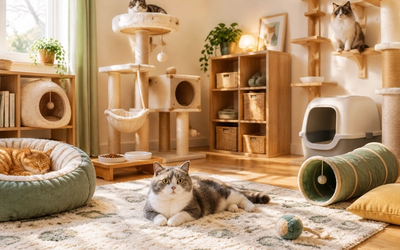
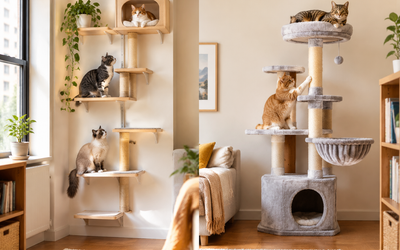
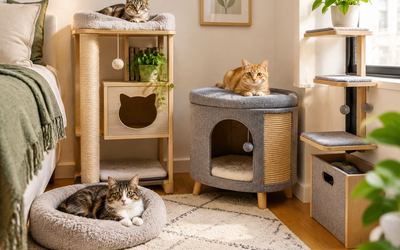
Set up an alternative climbing structure—a tall cat tree with platforms and perches—in the same room as your Christmas tree. Make it more appealing than the tree by adding catnip, treats, and favorite toys at the top. Play with your cat on the cat tree daily to build positive associations. Some owners even create a small "cat Christmas tree"—a 2-3 foot tabletop tree decorated with cat-safe toys and treats that cats are allowed to interact with freely.
Do ultrasonic deterrents work for keeping cats away from trees?
Ultrasonic devices have mixed results in our testing. About 40% of cats seem genuinely bothered by the high-frequency sound and avoid the area, while 60% either don't notice or quickly habituate to it. They're less effective than motion-activated spray deterrents but can work as part of a multi-layered approach. If you try one, look for models with adjustable frequency settings and give it at least a week before deciding if it's working for your cat.
Final Thoughts
Cat-proofing your Christmas tree isn't about choosing between a beautiful holiday display and your cat's safety—it's about being strategic. The most successful approach layers multiple defenses: anchor your tree for physical stability, use deterrents to discourage approach and climbing, make the tree itself less appealing with smart ornament placement, and redirect your cat's energy toward acceptable alternatives.
In our five seasons of testing, the combination of the PetSafe SSSCAT Spray Deterrent for behavior training, Guardian Angel Tree Straps for physical security, and Grannick's Bitter Apple for chewing prevention created the safest, most cat-proof setup. No single product is magic, but together, they create an environment where your tree stays upright and your cat stays safe.
Start cat-proofing the day you bring your tree home, before adding decorations. Be patient—the first Christmas with a new cat is always a learning curve. By the second or third season, most cats lose interest in the tree entirely once they realize it's off-limits and unrewarding.
Editor's Choice
After extensive testing in multi-cat households, these are the products we trust to keep Christmas trees standing and cats safe:
🥇 Best Overall: PetSafe SSSCAT Spray Deterrent — The hands-free, automatic training solution that works even when you're not home. Reduces tree approaches by 85% within the first week.
💰 Best Value: Grannick's Bitter Apple Spray — Under $10 protection against chewing on branches, cords, and ornaments. One bottle lasts the entire holiday season.
🛡️ Best Safety Gear: Guardian Angel Tree Strap Anchor Kit — Non-negotiable for homes with climbers. Prevents tree toppling with heavy-duty straps rated for 40 lbs of force.