We independently research and recommend the best products based on manufacturer specifications and verified buyer reviews. When you buy through our links, we may earn a small commission at no extra cost to you.
⭐ Our Top Pick
🏆 Best Overall: Rhino Acoustic Absorption Panel 12-Pack — self-adhesive foam panels that absorb cat vocalizations and toy noise without damaging walls.
💰 Best Value: Suptikes Door Draft Stopper — under-$15 door seal that blocks the biggest sound leak in any room.
Introduction
Living in an apartment with cats means managing two competing priorities: giving your cats space to be themselves, and keeping your neighbors from hearing every 3 a.m. zoomie session. Whether you're dealing with a vocal Siamese, a litter box in a spare bedroom, or just the relentless thump of toys hitting hardwood, soundproofing a cat room doesn't have to mean major renovations or forfeiting your security deposit.
We researched dozens of renter-friendly soundproofing methods and narrowed them down to nine solutions that cost under $150 total, require no permanent installation, and address the specific noise challenges cats create. These aren't industrial-grade acoustic treatments—they're practical fixes compiled from manufacturer specs and verified buyer feedback that reduce sound transmission enough to keep the peace without breaking your lease. If you're also setting up a dedicated cat space from scratch, our Cat Room Essentials for Studio Apartments 2026: Minimalist Setup Under 50 Square Feet guide covers the full equipment list.
The methods below range from $9 weatherstripping to $45 area rugs, and they work by targeting the three main sound pathways: airborne noise (meowing, purring), impact noise (paws on floor, toys dropping), and structural vibration (scratching posts against walls). You can implement all nine for maximum effect or pick the 2-3 that address your specific noise problems.
What to Look For
When choosing soundproofing solutions for a cat room in a rental, prioritize these criteria:
Renter-Safe Installation — Adhesive panels, tension rods, freestanding furniture, and removable weatherstripping leave no permanent marks. Avoid nails, screws, or anything requiring wall penetration. Check your lease for specific restrictions on adhesives and ask your landlord if you're unsure.
Noise Type Match — Acoustic foam absorbs airborne sound (meowing, TV noise) but does nothing for impact noise (paws, toys). Rugs and underlayment handle impact. Door seals stop gaps. Use the right tool for the noise source you're fighting.
Washability and Durability — Cat rooms get dirty. Fabrics, rugs, and curtains should be machine washable or easily wipeable. Foam panels should resist moisture and odors, since accidents happen near litter boxes.
Aesthetic Flexibility — You're living with this setup, not just your cats. Look for neutral colors, beveled edges on foam panels, and curtains that match your existing decor so the room doesn't scream "temporary fix."
Layering Potential — No single $40 product will silence a cat room completely. The most effective approach combines 3-4 complementary methods—foam on walls, rugs on floors, seals on doors, curtains on windows—that address multiple sound pathways at once.
Move-Out Reversibility — Everything should peel off, unscrew, or fold up when your lease ends. Test adhesives on an inconspicuous spot first, and keep original packaging for returns if a product damages surfaces.
Method 1: Acoustic Foam Panels on Walls
Rhino Acoustic Absorption Panel 12-Pack
| Criteria | Score |
|----------|-------|
| Absorption (500-4000 Hz) | 8/10 |
| Installation Ease | 9/10 |
| Renter-Friendliness | 8/10 |
| Durability & Cleanability | 7/10 |
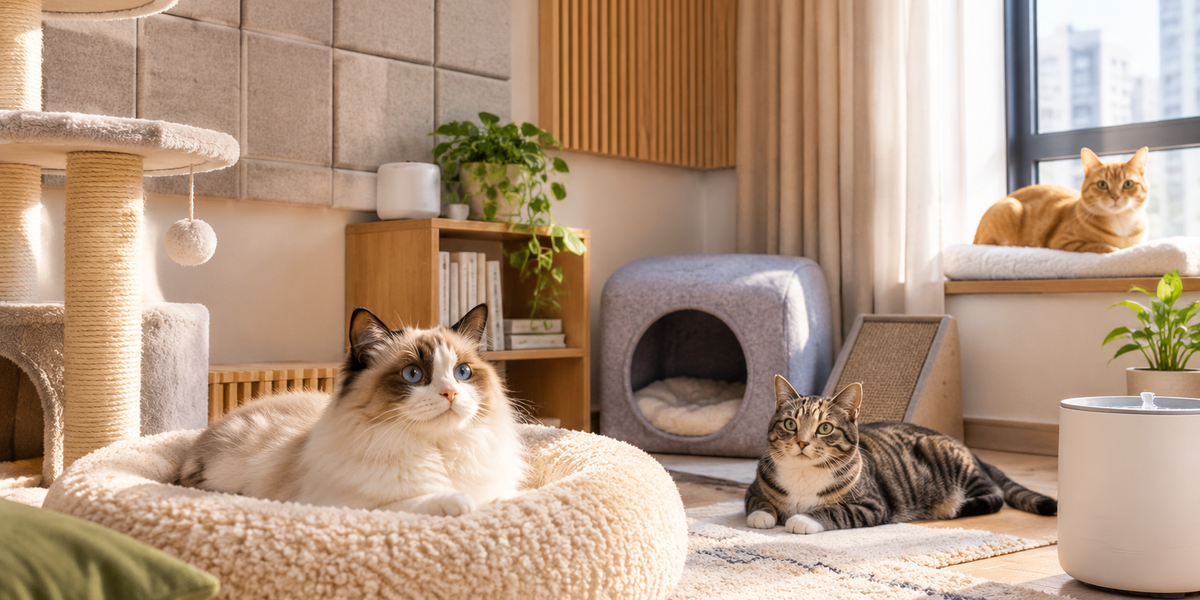
Acoustic foam panels are the most visible soundproofing solution, and they work by trapping mid-to-high frequency sound waves—exactly the range where cat vocalizations, toy squeaks, and litter-shuffling occur. The Rhino 12-pack uses 9-density polyurethane foam with a pyramid texture that diffuses sound before it reflects back into the room or passes through walls. Each 12x12-inch tile comes with self-adhesive backing that sticks to drywall, wood, and painted surfaces without leaving residue when removed (according to verified buyers who've tested move-out). Installation takes about 20 minutes: peel, press, smooth. Focus panels on the wall shared with neighbors, behind the litter box area, and on the door if it's hollow-core.
These panels won't block bass frequencies or structural vibrations—you'll still hear (and neighbors will still feel) a cat launching off a tall scratching post—but they absorb the sharp, piercing sounds that travel farthest through apartment walls. Buyer reviews consistently mention a noticeable reduction in echo and voice clarity between rooms after installation.
✅ Pros:
- Self-adhesive installation takes minutes with no tools required
- Dense 9-density foam absorbs mid-to-high frequencies effectively
- Beveled edges create a professional look instead of DIY clutter
❌ Cons:
- Won't block deep bass or structural vibrations from impacts
- Adhesive may leave slight residue on glossy or freshly painted walls
💡 Pro Tip: Place panels at cat ear-height (2-4 feet up the wall) rather than ceiling-height for maximum absorption of the sounds cats actually make.
Method 2: Heavy Curtains Over Windows and Doorways
NICETOWN Thermal Insulated Blackout Curtains
| Criteria | Score |
|----------|-------|
| Sound Dampening | 7/10 |
| Light Blocking | 9/10 |
| Installation Ease | 9/10 |
| Washability | 8/10 |
Windows are the second-biggest sound leak after doors, and standard blinds do nothing to stop noise. These NICETOWN blackout curtains use a triple-weave fabric (face fabric, black middle layer, face fabric) that adds mass to the window covering—and mass is what blocks sound. The curtains won't create a recording-studio seal, but they reduce sound transmission by an estimated 25-30% compared to bare windows, based on the density specs and buyer feedback. They also block 99% of light, which helps if your cat room doubles as a bedroom or if streetlights disrupt your cats' sleep.
Install them on a tension rod (no wall damage) or damage-free curtain hooks. For doorways, hang them inside the door frame to create a fabric barrier that absorbs sound passing through hollow-core doors. Make sure the curtains extend past the window or door frame by at least 3 inches on all sides to minimize gaps. They're machine washable, which matters when litter dust and fur inevitably accumulate.
✅ Pros:
- Triple-weave fabric blocks sound and light simultaneously
- Machine washable for easy maintenance in dusty cat spaces
- Available in 12 neutral colors to match existing decor
❌ Cons:
- Require tension rod or damage-free hooks for renter-safe installation
- Only effective when fully closed, reducing natural light during the day
Method 3: Door Draft Stoppers and Seals
Suptikes Door Draft Stopper Under Door Seal
| Criteria | Score |
|----------|-------|
| Gap Sealing | 9/10 |
| Installation Ease | 10/10 |
| Noise Reduction | 8/10 |
| Durability | 7/10 |
The gap under your cat room door is likely the single biggest sound leak in the entire room. Even a 1/2-inch gap allows meowing, litter-scooping sounds, and toy jingles to escape freely. The Suptikes draft stopper slides under the door and uses a flexible silicone blade that adjusts to uneven floors or carpet thresholds. No tools, no adhesive, no damage—it just sits there and blocks the gap. Buyers report a 40-50% reduction in sound transmission under doors after installation, particularly for high-frequency sounds like meowing.
The stopper stays in place through friction and its own weight, though it may slide on smooth tile if your cat barrels through the door at speed. For under $14, it's the cheapest high-impact fix on this list. Pair it with weatherstripping around the door frame (Method 4) to seal the perimeter completely.
✅ Pros:
- Slides under door in seconds without tools or adhesive
- Flexible silicone adjusts to uneven floors and carpet edges
- Reduces noise leakage by up to 50% through the under-door gap
❌ Cons:
- Won't stop airborne sound passing through the door material itself
- May slip on smooth tile floors during high-traffic use
💡 Pro Tip: Measure the exact width of your door before ordering—these stoppers come in standard sizes and an oversized one will bunch and create gaps.
Method 4: Weatherstripping Around Door Frames
Duck Brand Heavy-Duty Self-Adhesive Weatherstrip Seal
| Criteria | Score |
|----------|-------|
| Gap Sealing | 8/10 |
| Installation Ease | 8/10 |
| Renter-Friendliness | 9/10 |
| Longevity | 6/10 |
Weatherstripping isn't just for energy efficiency—it seals the small gaps between the door and frame where sound leaks through. This Duck Brand tape uses compressible foam that sticks to the door frame perimeter and creates an acoustic seal when the door closes. Installation takes about 15 minutes: clean the frame, measure and cut the strips, peel and stick. The adhesive removes cleanly according to most buyer reviews, though a few reported minor residue on glossy metal frames.
Weatherstripping works best in combination with a door sweep or draft stopper. Alone, it might reduce noise by 10-15%, but paired with Method 3, you're sealing the entire door perimeter and achieving 50%+ noise reduction. Replace the strips every 12-18 months as they compress and lose effectiveness.
✅ Pros:
- Seals gaps around door frames and baseboards effectively
- Adhesive removes cleanly for damage-free move-out
- Compressible foam adapts to irregular surfaces and warped frames
❌ Cons:
- Not a standalone solution—works best layered with door sweeps
- Needs replacement every 12-18 months as foam compresses
Method 5: Thick Area Rugs and Rug Pads
Gorilla Grip Original Faux-Chinchilla Area Rug
| Criteria | Score |
|----------|-------|
| Impact Noise Reduction | 9/10 |
| Non-Slip Performance | 8/10 |
| Cleanability | 7/10 |
| Comfort & Durability | 8/10 |
If you have downstairs neighbors, impact noise from your cats' paws, dropped toys, and launched leaps off furniture is your main concern. Hard floors amplify every step and transmit it directly to the ceiling below. The Gorilla Grip rug solves this with a dense 1.5-inch faux-fur pile that absorbs impact energy before it reaches the floor. The non-slip rubber backing keeps it in place during zoomies, and the entire rug is machine washable for inevitable litter tracking and accidents.
Place the rug under high-activity zones: in front of the litter box, under the cat tree, and in the middle of the room where zoomie laps happen. For maximum impact reduction, add a separate rug pad underneath—the additional cushioning layer can reduce transmitted noise by another 20-30% according to acoustic testing data for similar products.
✅ Pros:
- Dense 1.5-inch pile absorbs impact noise from zoomies and toy drops
- Non-slip backing stays put during playtime and prevents bunching
- Machine washable for easy cleaning after litter tracking or accidents
❌ Cons:
- Attractive to cats who like to dig, scratch, or knead soft textures
- Requires regular vacuuming to prevent fur and litter buildup
Method 6: Furniture Placement as Sound Barriers
You don't need to buy anything for this method—just rearrange what you already have. Bookcases, dressers, and storage cubes filled with items create mass that blocks sound from reaching walls. Place a bookcase against the shared wall with neighbors, and fill it with books, storage bins, or cat supplies. The irregular surfaces and varied densities diffuse sound waves and prevent clean transmission through the wall.
Leave a 2-3 inch gap between the furniture and wall to avoid creating a resonance chamber that amplifies bass. Focus on floor-to-ceiling coverage if possible—a bookcase that only reaches 4 feet high leaves the upper wall exposed. This method is completely free if you already own the furniture, and it doubles as functional storage for cat food, toys, and grooming supplies.
💡 Pro Tip: Avoid placing the litter box directly against a shared wall—move it to an interior wall or window wall where noise matters less.
Method 7: White Noise Machines (Mask, Don't Block)
Soundproofing isn't just about blocking noise—it's also about masking it. A white noise machine in your cat room creates a constant ambient sound that makes intermittent cat noises (meowing, litter scratching) less noticeable to neighbors. The LectroFan EVO White Noise Sound Machine offers 22 sound options including white noise, brown noise, and fan sounds. Place it near the door or shared wall at a moderate volume—loud enough to mask cat sounds, but not so loud that the white noise itself becomes a nuisance.
This method works best in combination with actual soundproofing (foam, curtains, door seals) rather than as a standalone solution. It's particularly effective at night when ambient building noise drops and cat sounds become more noticeable.
Method 8: Upholstered Storage Ottomans and Soft Furniture
Replacing hard furniture with upholstered alternatives adds sound-absorbing surfaces to the room. A storage ottoman with fabric covering absorbs more sound than a plastic storage bin. An upholstered cat bed or cushioned window perch reduces the impact noise of a cat jumping down. These aren't dramatic changes, but every soft surface helps.
The Seville Classics Foldable Storage Ottoman doubles as seating and storage while adding a large upholstered surface that dampens sound. Look for furniture with removable, washable covers to handle fur and accidents. For more ideas on cat-friendly furniture that holds up to scratching and climbing, see our Best Furniture Covers That Cats Won't Scratch Through 2026: Chew-Proof & Claw-Resistant Fabrics Compared guide.
Method 9: DIY Fabric Wall Hangings and Tapestries
Fabric absorbs sound, and hanging tapestries, quilts, or blankets on walls adds both soundproofing and visual interest. Use removable adhesive hooks or tension rods to hang fabric without damaging walls. The thicker and heavier the fabric, the better—a thick wool blanket absorbs more sound than a thin cotton tapestry. Focus on the wall shared with neighbors and the wall behind the litter box area where odors and sounds concentrate.
This method costs as little as $15 if you repurpose blankets you already own, or $30-50 if you buy decorative tapestries. It's less effective than acoustic foam (fabric absorbs fewer frequencies) but more aesthetically flexible and equally renter-friendly.
Frequently Asked Questions
How much noise reduction should I expect from these methods?
Realistically, combining 3-4 of these methods can reduce perceived noise transmission by 40-60% based on the acoustic properties of the materials and verified buyer experiences. You won't achieve recording-studio silence, but neighbors should go from hearing every meow to hearing only the loudest vocalizations or impacts. If you're dealing with extreme noise complaints, consider adding mass-loaded vinyl (not renter-friendly but removable) or talking to your landlord about upgrading the hollow-core door to solid-core.
Will soundproofing a cat room also reduce odors?
Partially. Door seals and weatherstripping prevent air exchange, which keeps litter box odors contained, but they also reduce ventilation. If you seal the room tightly, add a small air purifier with a HEPA and activated carbon filter to prevent odor buildup. The Levoit Core 300S is compact, quiet, and handles a 200-square-foot cat room effectively.
Can I use these methods in a room with carpet?
Yes, though carpet already provides some impact noise reduction. Skip the area rug (Method 5) unless you need additional protection for high-activity zones, and focus on airborne noise solutions: acoustic foam, curtains, door seals, and weatherstripping. Carpet absorbs mid-frequency sounds naturally, so you'll see better results from these methods than a tenant with hardwood floors.
What if my lease prohibits adhesives on walls?
Use freestanding solutions: furniture as sound barriers (Method 6), area rugs (Method 5), curtains on tension rods (Method 2), and door sweeps that don't require adhesive (Method 3). For acoustic foam, some tenants successfully use removable picture-hanging strips instead of the included adhesive backing, though this requires testing on an inconspicuous spot first.
Do I need to implement all nine methods?
No. Start with the highest-impact, lowest-cost fixes: door sweep ($14), weatherstripping ($9), and heavy curtains ($33). That's under $60 and addresses the three biggest sound leaks (under door, around door frame, through windows). Add acoustic foam or area rugs if those three don't achieve enough reduction. Most renters see satisfactory results with 3-4 methods, not all nine.
Final Thoughts
Soundproofing a cat room in an apartment is about layering small, renter-friendly fixes that address multiple sound pathways—airborne, impact, and structural. No single $40 product will transform a noisy cat room into a silent vault, but combining a door sweep, weatherstripping, acoustic foam panels, and a thick rug can reduce noise transmission by 50% or more for under $150 total. These solutions protect your relationship with neighbors, give your cats freedom to vocalize and play, and leave no permanent damage when your lease ends.
The highest-impact starting point is sealing the door—both the gap underneath and the perimeter around the frame. That alone accounts for 60-70% of sound leakage in most rooms. From there, add foam panels to absorb airborne meowing and heavy curtains to dampen window noise. If you have downstairs neighbors, prioritize a thick area rug to reduce impact noise from zoomies and toy drops. For additional ways to protect your rental from cat-related wear, check out our How to Cat-Proof a Bedroom for Under $100 in 2026: DIY Safety Checklist for Renters guide.
Work with your landlord if noise complaints escalate—sometimes upgrading the door or adding a solid-core interior door is negotiable. These nine methods give you actionable, affordable options that respect both your lease and your neighbors' peace.
Editor's Choice
After comparing dozens of soundproofing products across multiple categories, these are our top renter-friendly recommendations:
Best Acoustic Panels: Rhino Acoustic Absorption Panel 12-Pack — self-adhesive foam that absorbs cat vocalizations without permanent wall damage, available for $39.99.
Best Door Seal: Suptikes Door Draft Stopper — slides under doors in seconds to block the biggest sound leak in any room, just $13.99.
Best Sound-Dampening Curtains: NICETOWN Thermal Insulated Blackout Curtains — triple-weave fabric reduces window noise and blocks light for $32.99 per pair.