We may earn a commission from affiliate links in this article, at no extra cost to you.
⭐ Our Top Pick
🏆 Best Overall: Soltech Vita LED Grow Light — elegant full-spectrum design that nourishes cat grass while enhancing your cat room's aesthetic.
💰 Best Value: GE BR30 LED Grow Light Bulb — affordable bulb that retrofits existing fixtures to support healthy grass growth.
Introduction
Your cat room lighting serves two critical functions: creating a comfortable environment for your feline and supporting the lush cat grass they love to nibble. In 2026, the debate between maximizing natural light and supplementing with grow lamps has evolved beyond simple preference—it's about understanding how different light sources affect both feline wellbeing and plant health.
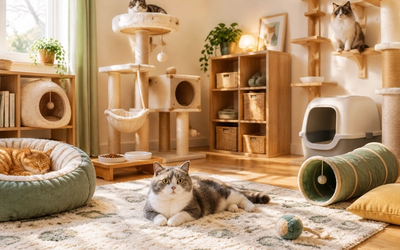
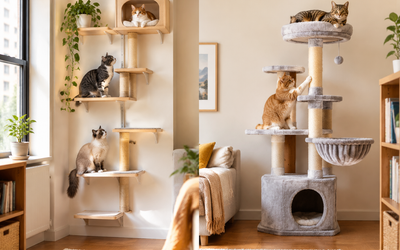
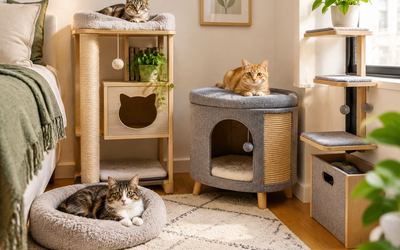
We researched lighting solutions across the spectrum, comparing manufacturer specifications and verified buyer experiences with natural light optimization, full-spectrum grow lamps, and hybrid approaches. Whether you're establishing a dedicated cat sanctuary or enhancing an existing space, the right lighting strategy balances your cat's circadian needs with the photosynthetic requirements of fresh grass. If you're also planning the broader layout, see our How to Set Up a Multi-Level Cat Room for Vertical Territory in 2026 guide for comprehensive space design.
This guide breaks down the science behind light quality, practical solutions for various room configurations, and specific product recommendations that address both needs without compromise.
What to Look For
Light Spectrum Quality — Cats benefit from natural daylight cycles (blue-enriched light during day, warmer tones at dusk), while cat grass requires red and blue wavelengths for photosynthesis. Full-spectrum grow lights rated 5000K-6500K mimic natural sunlight and serve both purposes effectively.
Intensity and Coverage — South or west-facing windows provide 10,000+ lux, ideal for both cats and grass near the source. Supplemental grow lights should deliver 2000-4000 lux for wheatgrass and oat grass varieties, measured at plant canopy level. Consider your room's square footage and whether grass trays are centralized or distributed.
Daily Light Duration — Cats thrive with 12-16 hours of daylight exposure to maintain healthy circadian rhythms. Cat grass requires 8-12 hours of direct light for optimal growth. Programmable timers ensure consistency without daily intervention, particularly important if natural light is limited or inconsistent.
Heat Output and Safety — Traditional grow lights generate significant heat that can create uncomfortable warm spots cats avoid. Modern LED grow lights run cool to the touch, preventing burns if curious cats investigate fixtures, and won't overheat enclosed cat room spaces.
Installation Flexibility — Bulbs that retrofit existing fixtures require no rewiring, while dedicated grow light panels offer more intensity but need mounting. Consider your room's electrical layout and whether you're supplementing window light or replacing it entirely in windowless spaces.
Aesthetic Integration — Your cat room is still part of your home. Newer grow lights feature warm white LEDs instead of the harsh purple glow of older models, maintaining a pleasant atmosphere while supporting plant growth. Look for designs that complement your decor rather than announcing themselves as agricultural equipment.
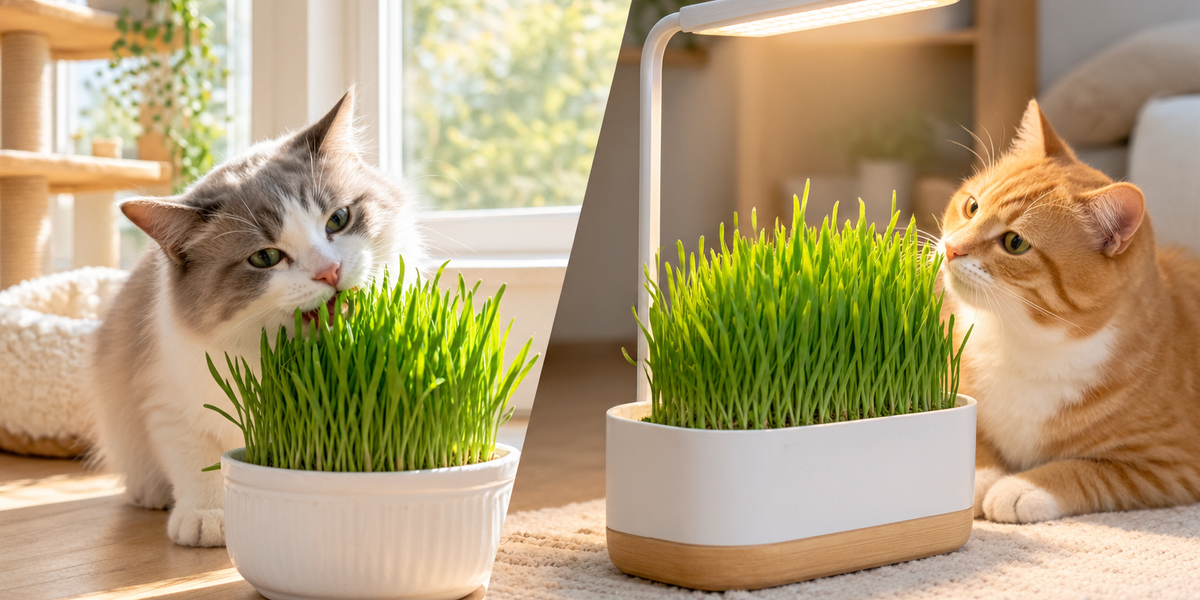
💡 Pro Tip: Position cat grass trays within 12-18 inches of grow lights for optimal growth, but ensure cats have shaded retreat areas where they can escape bright light when desired—just like they'd seek shade under a bush outdoors.
Natural Light: The Gold Standard with Limitations
Natural sunlight remains unmatched for feline wellbeing—it regulates melatonin production, supports vitamin D synthesis through grooming, and provides the full spectrum of wavelengths cats evolved alongside. A cat room with southern exposure and large windows creates an ideal baseline environment where cats can bask in warm patches throughout the day.
For cat grass specifically, direct sunlight for 6-8 hours daily produces the most robust growth with deep green color and sturdy blades. Window-adjacent placement works beautifully in spring and summer, though you'll need to rotate trays to prevent uneven growth as plants lean toward the light source.
However, natural light comes with constraints. Northern climates experience short winter days with weak, low-angle sunlight that struggles to support grass growth. Urban apartments may face buildings that block direct sun, leaving rooms with only diffuse light. Interior cat rooms lack windows entirely. Even optimal window placement creates uneven light distribution—bright near glass, dim in corners—forcing you to choose between locating grass where it thrives versus where cats prefer to lounge.
✅ Pros:
- Zero operating costs and no equipment needed
- Full spectrum including beneficial UV wavelengths
- Natural circadian rhythm support for cats
- Authentic sunbeam experience cats instinctively seek
❌ Cons:
- Inconsistent availability (seasonal, weather-dependent, geographic)
- Uneven room coverage requires strategic furniture placement
- Window heat gain in summer; cold drafts in winter
- Cannot support grass in windowless rooms or north-facing spaces
Soltech Vita LED Grow Light: Best Overall for Balanced Lighting
| Criteria | Score |
|----------|-------|
| Light Spectrum Quality | 9/10 |
| Cat-Friendly Design | 10/10 |
| Cat Grass Growth Support | 8/10 |
| Aesthetic Integration | 10/10 |
The Soltech Vita bridges the gap between functional grow lighting and living space aesthetics. Its warm white full-spectrum LEDs (5000K) mimic natural daylight, providing wavelengths that support cat grass photosynthesis while maintaining the inviting ambiance of a room cats actually want to occupy. Unlike industrial grow panels, the Vita's minimalist pendant design resembles a modern light fixture—you'd never identify it as agricultural equipment.
Based on verified buyer reviews, cat grass trays positioned 12-15 inches beneath the Vita show consistent growth rates comparable to sunny window placement, with the advantage of year-round reliability. The built-in timer function maintains 12-hour light cycles automatically, eliminating the daily on/off routine. At 20 watts, it runs cool enough that cats investigating the fixture won't burn themselves, though most reviews note cats quickly lose interest in the light itself and focus on the grass it nourishes.
The Vita covers approximately 2 square feet effectively—ideal for 1-2 standard cat grass trays. Multiple units can be installed if you're growing grass in different lounge areas across your cat room. The adjustable cord length (up to 6 feet) provides installation flexibility for various ceiling heights and shelf configurations.
✅ Pros:
- Full-spectrum light mimics natural sunlight for feline wellbeing
- Elegant design fits any decor without screaming "grow light"
- Timer function for consistent light cycles without manual intervention
- Cool-running LEDs safe around curious cats
❌ Cons:
- Higher upfront cost than basic bulbs ($98 vs $18)
- Single plant coverage area requires multiple units for large rooms
- Pendant style requires overhead mounting point
GE BR30 LED Grow Light Bulb: Budget-Friendly Retrofitting
| Criteria | Score |
|----------|-------|
| Light Spectrum Quality | 7/10 |
| Cat-Friendly Design | 8/10 |
| Cat Grass Growth Support | 7/10 |
| Value for Money | 9/10 |
The GE BR30 Grow Bulb transforms any existing floor lamp or clamp light into a functional grow light station without rewiring or new fixtures. At under $18, it's the most accessible entry point for cat owners testing whether supplemental lighting improves their grass-growing success before committing to dedicated systems.
This balanced spectrum bulb emits red and blue wavelengths optimized for plant growth, though buyer reviews note the visible purple-pink hue is more pronounced than natural light alternatives. In practice, this means the bulb works best in dedicated cat rooms rather than shared living spaces where the color might feel intrusive. Cats themselves show no preference or aversion to the light color based on owner observations—they care about the grass it produces, not the photon wavelength.
The 9-watt LED draws minimal power and generates negligible heat, making it safe for cats who might brush against the fixture. Growth results match what you'd expect from moderate indirect sunlight—adequate for maintaining healthy grass, though not as robust as high-intensity dedicated systems. Plan to position the bulb within 6-12 inches of your grass tray for best results, which typically means a desk lamp or clamp fixture rather than overhead room lighting.
✅ Pros:
- Fits standard E26 fixtures requiring zero installation
- Budget-friendly entry point at $17.98
- Balanced red and blue spectrum supports steady grass growth
- Low power draw and heat output
❌ Cons:
- Visible purple hue may not suit all spaces aesthetically
- Less powerful than dedicated fixtures—requires closer placement
- Limited coverage area per bulb
Spider Farmer SF1000: Commercial-Grade for Serious Growers
| Criteria | Score |
|----------|-------|
| Light Spectrum Quality | 10/10 |
| Cat-Friendly Design | 6/10 |
| Cat Grass Growth Support | 10/10 |
| Coverage Area | 9/10 |
For dedicated cat rooms with ambitious grass-growing operations—think multiple trays, vertical wall planters, or continuous succession planting—the Spider Farmer SF1000 delivers commercial greenhouse intensity in a residential form factor. This is overkill for a single tray on the windowsill, but exactly right for cat parents treating fresh grass as a cornerstone of their feline enrichment strategy.
The SF1000 uses Samsung LM301B diodes with full spectrum output including infrared wavelengths, creating growth rates that noticeably exceed natural window light according to verified grower experiences. The dimmable driver allows you to dial intensity down for seedling establishment, then increase as grass matures—a level of control unnecessary for simple maintenance but valuable for optimizing growth cycles. At 100 watts, it covers approximately 2x2 feet in vegetative growth mode, adequate for 4-6 standard grass trays.
The industrial aesthetic is the tradeoff for this performance. The SF1000 looks like what it is: a serious grow light. It mounts overhead with included hardware and works best in dedicated cat rooms where function trumps decor. Reviews confirm cats show zero concern about the bright white light—they simply enjoy the abundant grass it produces. The fanless design runs silent, preventing any humming that might disturb sensitive cats.
✅ Pros:
- High-intensity output for larger grass patches and vertical gardens
- Energy-efficient Samsung diodes with 50,000+ hour lifespan
- Dimmable for different growth stages and seedling establishment
- Extensive coverage area reduces units needed for large rooms
❌ Cons:
- Industrial appearance doesn't suit aesthetic-focused spaces
- Overkill for small single-tray setups—buy the right size for your needs
- Requires overhead mounting and planning for permanent installation
Barrina T5 Grow Light Strips: Versatile Under-Shelf Solution
| Criteria | Score |
|----------|-------|
| Light Spectrum Quality | 8/10 |
| Cat-Friendly Design | 9/10 |
| Cat Grass Growth Support | 8/10 |
| Installation Versatility | 10/10 |
The Barrina T5 4-Pack excels in multi-level cat room configurations where grass trays sit on different shelves, platforms, or custom-built cat furniture. Each 2-foot strip links to others, allowing you to create continuous lighting runs that follow your room's unique layout rather than forcing grass location around fixed pendant lights.
These strips mount with included clips and screws, tucking under shelves to illuminate trays below while remaining visually unobtrusive. The low-profile design means cats navigating overhead shelves won't knock into fixtures, and the cool-running LEDs prevent burns if a cat happens to touch the strip during acrobatic shelf transitions. Based on buyer feedback, the full-spectrum output supports healthy grass growth comparable to natural window light when strips are mounted 4-8 inches above trays.
The linkable feature is the standout advantage—one power connection can run up to 8 strips, minimizing outlet requirements in rooms where electrical access is limited. This makes the Barrina system particularly valuable if you're outfitting a cat room with grass stations distributed across vertical territory, as discussed in our multi-level cat room design guide. At $54.99 for four strips, the value proposition for coverage area is exceptional.
✅ Pros:
- Linkable strips for custom layouts following unique room geometry
- Low-profile mounting under shelves integrates into existing furniture
- Excellent value for coverage area ($13.75 per strip)
- Cool-running and cat-safe in multi-level environments
❌ Cons:
- Requires mounting hardware and basic DIY installation
- Basic on/off switch only—no built-in timer (add external timer plug)
- Individual strips less powerful than concentrated fixtures
Hybrid Approach: Combining Natural and Artificial Light
The most effective cat room lighting strategy leverages both natural and artificial sources, compensating for each method's limitations. Windows provide the authentic sunlight experience cats crave for basking and circadian regulation, while supplemental grow lights ensure grass thrives year-round regardless of season or weather.
Position primary cat lounging areas—beds, perches, favorite nap spots—near windows where natural light is strongest. This preserves the sunbeam experience that contributes to feline contentment and vitamin D synthesis. Reserve windowless corners and interior walls for grass cultivation under dedicated grow lights, freeing up premium window real estate for cats themselves.
In practice, this might mean a Soltech Vita over a corner grass station while window perches remain plant-free, or Barrina strips under interior shelving while south-facing window trays rely on sunlight alone. Timer-controlled artificial lights extend effective "daylight" in winter when natural sunset occurs at 4:30 PM but your cat's activity cycle expects illumination until 7 PM.
💡 Pro Tip: Set grow light timers to activate during morning and evening hours when natural light is weakest, allowing windows to carry midday duties. This conserves electricity while ensuring 12+ hour total light exposure for both cats and grass.
Frequently Asked Questions
Can grow lights harm my cat's eyes or skin?
Modern LED grow lights pose no eye or skin hazard to cats under normal exposure conditions. Unlike UV tanning beds or welding equipment, the light intensity from residential grow lights is comparable to bright outdoor shade—cats evolved to handle full midday sun, which is far more intense. Cats will naturally move away from lights that are uncomfortably bright, just as they'd seek shade outdoors. Ensure your cat room includes dimmer resting areas so cats can self-regulate their light exposure.
Do I need different lights for cat grass versus catnip or cat mint?
Cat grass (wheatgrass, oat grass, barley grass) and catnip/catmint have similar light requirements—6-12 hours of direct light daily with full-spectrum wavelengths. Any grow light rated for vegetative growth supports both equally well. The main difference is growth intensity: catnip and catmint are perennial herbs that benefit from slightly higher intensity (3000-4000 lux) compared to fast-growing annual grasses (2000-3000 lux). If growing both, position perennials closer to your light source.
How do I prevent cat grass from growing toward the light and tipping trays?
Phototropism (plants growing toward light) is strongest when light comes from a single direction. Overhead grow lights eliminate this issue by illuminating evenly from above. If using directional lights like the GE BR30 bulb, rotate trays 180 degrees every 2-3 days to balance growth. Alternatively, position two lights on opposite sides of the tray for symmetrical illumination, though this doubles equipment costs for marginal benefit.
Will artificial light disrupt my cat's sleep schedule?
Cats are crepuscular (most active at dawn and dusk) but adapt their schedules to household routines. As long as your cat room has a clear light/dark cycle—12-16 hours lit, 8-12 hours dark—your cat's circadian rhythm will entrain to that schedule regardless of whether light is natural or artificial. The critical factor is consistency: timer-controlled lights actually create more predictable cycles than natural light, which varies with weather and season. Ensure the room has complete darkness during designated "night" hours for optimal melatonin production and restful sleep.
Can I use regular LED bulbs instead of specialized grow lights?
Standard white LED bulbs provide insufficient red wavelengths (600-700nm) for optimal photosynthesis, resulting in slow, spindly grass growth with pale color. While grass will survive under regular LEDs near a window, it won't thrive independently of natural light. Full-spectrum or dedicated grow LEDs cost only marginally more than standard bulbs—the GE BR30 costs $18 versus $8 for a regular BR30—but deliver dramatically better results. If budget is the concern, invest in one quality grow light rather than multiple inadequate regular bulbs.
Final Thoughts
The best cat room lighting strategy recognizes that you're designing for two distinct but complementary needs: feline wellbeing and plant health. Natural light remains the gold standard for cats themselves, providing full-spectrum illumination that supports healthy circadian rhythms and that prized sunbeam nap experience. For cat grass, supplemental grow lights eliminate the constraints of weather, season, and room orientation, ensuring fresh greens year-round regardless of your window situation.
Your specific solution depends on your room's natural light access and how central fresh grass is to your cat enrichment strategy. A sunny south-facing cat room might need only a single GE BR30 bulb to support a backup tray in a shaded corner. A windowless interior space benefits from the aesthetic excellence of the Soltech Vita providing both ambient room light and grass cultivation. Multi-level cat rooms with distributed grass stations make the most of Barrina strips' linkable versatility.
Start by maximizing whatever natural light your room offers—windows are free and cats love them. Then supplement strategically with grow lights where needed, using timers to maintain consistent cycles your cats can rely on. The combination creates an environment where both felines and their fresh greens genuinely thrive.
Editor's Choice
After comparing specifications and verified buyer experiences across natural light optimization and supplemental lighting solutions, we recommend the Soltech Vita LED Grow Light for cat owners who want a single elegant solution that supports both feline wellbeing and healthy grass growth. Its full-spectrum output mimics natural daylight while the refined design maintains the aesthetic comfort of a space cats will actually want to occupy.
For budget-conscious cat parents or those testing supplemental lighting before committing to premium fixtures, the GE BR30 LED Grow Light Bulb retrofits existing lamps at minimal cost while delivering adequate light for consistent grass growth. It's the practical choice for single-tray setups or supplementing existing window light.
Cat owners building dedicated multi-level cat sanctuaries with grass stations across vertical territory should consider the Barrina T5 Grow Light Strip 4-Pack for its linkable versatility and exceptional value per square foot of coverage. The low-profile strips integrate seamlessly into complex cat furniture layouts, ensuring every platform can support fresh greens without dominating the visual space.