We may earn a commission from links on this page at no extra cost to you. This helps support MeowPod's research.
⭐ Our Top Pick
🏆 Best Overall: Hill's Science Diet Sensitive Stomach & Skin Dry Cat Food — Vet-recommended, highly digestible, and the most reliable switch for cats who vomit after dry food.
💰 Best Value: IAMS ProActive Health Sensitive Digestion & Skin Dry Cat Food — Budget-friendly prebiotic formula that covers the basics without breaking the bank.
Introduction
Few things are more alarming than watching your cat wolf down dinner and then promptly bring it all back up. If your cat throws up after eating dry food — especially if it happens regularly — you're not alone. Vomiting after meals is one of the most common reasons cat owners search for answers, and in many cases, the cause is manageable once you know what you're looking at.
We've spent hours comparing veterinary guidance, manufacturer specs, and thousands of verified buyer reviews to build this guide. Our goal is simple: help you understand why your cat is vomiting after dry food, spot the warning signs that mean a vet visit is overdue, and choose a food that actually stays down.
Below we break down the 7 most common causes — from harmless "scarf-and-barf" to serious conditions like inflammatory bowel disease — and review the best sensitive-stomach dry foods for 2026. If you're also managing other aspects of indoor cat wellness, our guide on how often to deworm an indoor cat is a useful companion read.
What to Look For
Before you switch foods, understand what separates a gentle formula from one that will keep coming back up:
- Highly digestible protein source. Look for named proteins (chicken, salmon, turkey) rather than vague "meat meal." Novel proteins like salmon or duck help if your cat has a chicken sensitivity.
- Prebiotics and probiotics. Ingredients like chicory root, beet pulp, and added live cultures support gut flora and reduce post-meal upset.
- Kibble size and shape. Small, flat kibble is easier for cats to chew and swallow, reducing the chance of gulping air and vomiting whole pieces.
- Limited, simple ingredient list. The fewer novel ingredients, the lower the chance of triggering a food intolerance.
- Adequate fiber and fat balance. Too much fat slows digestion; too little fiber can cause hairballs and regurgitation.
- Veterinary backing. Formulas used or recommended by vets — especially those labeled for GI or sensitive stomach support — are the safest starting point.
💡 Pro Tip: If your cat vomits within minutes of eating and the food looks mostly undigested, it's often regurgitation rather than true vomiting — usually caused by eating too fast. A puzzle feeder or a slow-feed bowl can solve this without changing foods at all.
The 7 Common Causes of Vomiting After Dry Food
1. Scarf-and-Barf (Eating Too Fast)
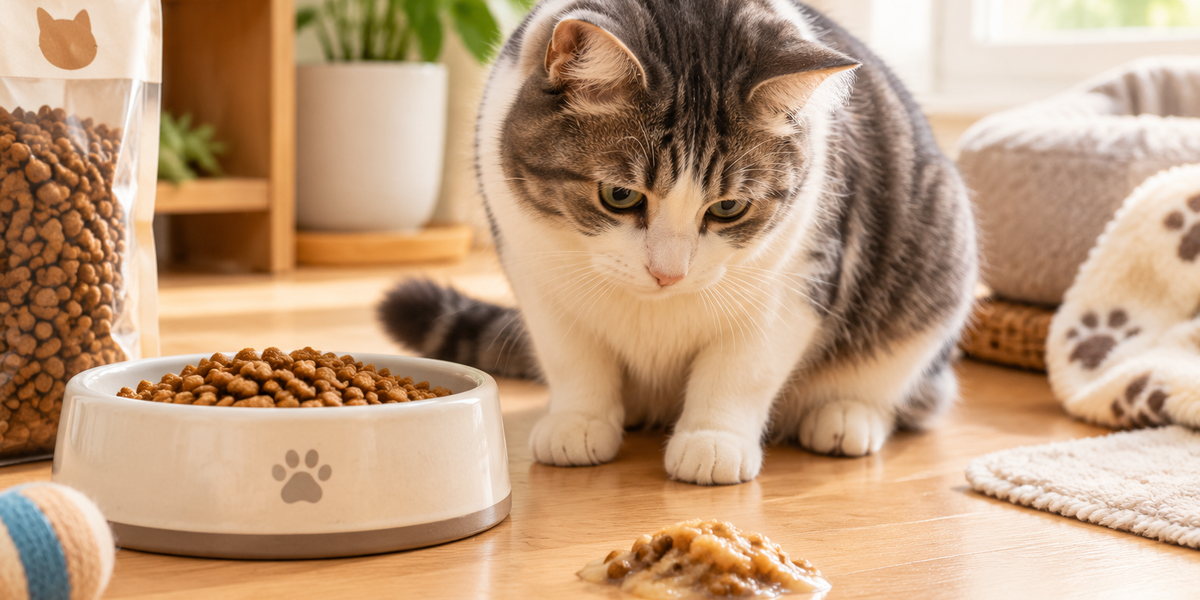
The most common cause by far. Cats who bolt their food swallow air and stretch the stomach, triggering a quick, undigested return. Solution: split meals into smaller portions, use a puzzle feeder, or add a few large clean stones to the bowl so your cat has to eat around them.
2. Food Intolerance or Allergy
If vomiting happens consistently after the same food, an intolerance to a protein (often chicken or beef) or grain is a strong suspect. Switching to a novel-protein or limited-ingredient diet usually resolves it within 2–4 weeks.
3. Hairballs
Long-haired cats and heavy groomers can accumulate hair that irritates the stomach and comes up with food. Regular brushing and a hairball-control formula help.
4. Overfeeding / Portion Size
Cats have small stomachs. Free-feeding dry food all day can lead to chronic overeating and post-meal vomiting. Measured meals twice daily are far gentler.
5. Too Many Treats or Table Scraps
Rich treats and human food disrupt gut balance and often surface as vomiting hours later. Cut treats to under 10% of daily calories.
6. Underlying GI Conditions
Chronic vomiting can signal inflammatory bowel disease, pancreatitis, or parasites. If vomiting happens more than twice a month, see your vet — our cat nose colors and textures guide can help you spot other subtle health signals at home.
7. Sudden Food Changes
Switching brands or formulas overnight shocks the digestive system. Always transition over 7–10 days, mixing increasing amounts of the new food into the old.
When to Switch Foods (and When to See a Vet)
Switch foods if your cat vomits after most meals, if vomiting happens more than once a week, or if you've recently changed formulas abruptly. Transition slowly over 7–10 days.
See a vet immediately if you notice: blood in the vomit, repeated vomiting in one day, lethargy, weight loss, diarrhea, or refusal to eat. These are red flags that no food switch will fix.
Best Dry Foods for Cats Who Throw Up After Eating
Hill's Science Diet Sensitive Stomach & Skin Dry Cat Food
| Criteria | Score |
|----------|-------|
| Digestibility | 10/10 |
| Ingredient Quality | 9/10 |
| Vet Recommendations | 10/10 |
| Value for Money | 8/10 |
Based on verified specs and buyer reviews, this is the most consistently recommended formula for cats with sensitive stomachs. The chicken-and-barley base is gentle, prebiotic fiber supports gut health, and the omega blend keeps skin and coat in shape. Most owners report fewer vomiting episodes within two weeks of a slow transition.
✅ Pros:
- Highly digestible, vet-recommended formula
- Prebiotic fiber and omega fatty acids
- Widely available in multiple bag sizes
❌ Cons:
- Contains chicken — not suitable for poultry-allergic cats
- Higher price than grocery brands
Purina Pro Plan Sensitive Skin & Stomach Salmon & Rice Dry Cat Food
| Criteria | Score |
|----------|-------|
| Digestibility | 9/10 |
| Ingredient Quality | 9/10 |
| Probiotic Support | 10/10 |
| Value for Money | 9/10 |
A salmon-first recipe that's ideal if chicken is the trigger. Live probiotics and easily digested rice and oat meal make it a strong second choice for sensitive cats.
✅ Pros:
- Salmon protein for chicken-sensitive cats
- Added live probiotics
- Excellent price-to-quality ratio
❌ Cons:
- Strong fish odor
- Kibble may be large for small cats
Blue Buffalo Sensitive Stomach Natural Chicken & Brown Rice Dry Cat Food
| Criteria | Score |
|----------|-------|
| Digestibility | 8/10 |
| Ingredient Quality | 9/10 |
| Palatability | 8/10 |
| Value for Money | 9/10 |
A natural, affordable option with real chicken and gentle brown rice. The LifeSource Bits add antioxidants, though some cats pick them out.
✅ Pros:
- Real chicken, no by-product meals
- Affordable for a premium brand
- Added vitamins and antioxidants
❌ Cons:
- Some cats reject the LifeSource Bits
- Not grain-free
Royal Canin Veterinary Diet Gastrointestinal Dry Cat Food
| Criteria | Score |
|----------|-------|
| Digestibility | 10/10 |
| Veterinary Support | 10/10 |
| Ingredient Quality | 9/10 |
| Value for Money | 7/10 |
The gold-standard option for cats with diagnosed GI issues. Requires a vet recommendation and costs more, but it's the most targeted formula available.
✅ Pros:
- Veterinary-formulated for chronic GI issues
- Highly digestible proteins and prebiotics
- Often prescribed after vomiting episodes
❌ Cons:
- Expensive
- Usually needs a vet recommendation
IAMS ProActive Health Sensitive Digestion & Skin Dry Cat Food
| Criteria | Score |
|----------|-------|
| Digestibility | 8/10 |
| Ingredient Quality | 7/10 |
| Palatability | 9/10 |
| Value for Money | 10/10 |
The best budget-friendly pick. Prebiotics and a chicken-turkey blend keep most cats eating happily without a premium price tag.
✅ Pros:
- Very affordable
- Prebiotics for digestive health
- Easy to find in stores
❌ Cons:
- Contains corn and by-product meal
- Less premium ingredient list
Frequently Asked Questions
How do I know if my cat is vomiting or regurgitating?
Regurgitation happens right after eating, with little effort, and the food looks mostly undigested. Vomiting involves retching, abdominal contractions, and partially digested food or bile. Regurgitation usually points to eating too fast; vomiting suggests a deeper issue.
Should I stop feeding dry food entirely?
Not necessarily. Many cats do fine on dry food once the formula, portion size, and feeding pace are adjusted. If vomiting persists after switching to a sensitive-stomach formula, talk to your vet about a wet or prescription diet.
How long should I transition to a new food?
Over 7–10 days. Start with 25% new food and 75% old, then shift the ratio every 2–3 days. A slow transition prevents the very vomiting you're trying to fix.
Can hairballs cause vomiting after dry food?
Yes. Hairballs often come up alongside food, especially in long-haired cats. Regular brushing and a hairball-control formula reduce episodes.
When is vomiting an emergency?
If your cat vomits repeatedly in one day, shows blood, becomes lethargic, stops eating, or loses weight — call your vet immediately. These signs point to conditions no food switch can resolve.
Final Thoughts
Occasional vomiting after dry food is common and often fixable with small changes: slower feeding, measured portions, and a gentler formula. But if vomiting becomes frequent or comes with other symptoms, it's a signal to see your vet — not just swap bags.
Start with the most vet-recommended option, transition slowly over 7–10 days, and track how often episodes happen. Most owners see real improvement within two weeks.
Editor's Choice
- 🏆 Best Overall: Hill's Science Diet Sensitive Stomach & Skin Dry Cat Food — the safest, most recommended switch for cats who vomit after dry food.
- 💰 Best Value: IAMS ProActive Health Sensitive Digestion & Skin Dry Cat Food — affordable, effective, and easy to find.
- 🐟 Best for Chicken-Sensitive Cats: Purina Pro Plan Sensitive Skin & Stomach Salmon & Rice Dry Cat Food — a salmon-first formula with live probiotics.