Disclosure: As an Amazon Associate, MeowPod earns from qualifying purchases. We research manufacturer specs and verified buyer reviews — we don't test products hands-on.
⭐ Our Top Pick
🏆 Best Overall: PetSafe Happy Cat Feliway Calming Diffuser Kit — It's the lowest-effort way to dial down the ambient tension that fuels jealous-cat aggression during the separation phase.
💰 Best Value: PetFusion Ultimate Cat Scratcher Lounge — A single $40 purchase that gives both cats their own territory marker and resting spot.
Introduction
Bringing a new cat home when you already have a resident cat who rules the roost is one of the most emotionally charged moments in cat ownership. The resident cat hisses, hides, or swats; the newcomer cowers in a corner; and within 48 hours you're wondering whether you've made a terrible mistake. You haven't. What you're seeing is normal feline territorial behavior, and the fix is less about "making them get along" and more about a deliberate, slow, structured introduction.
We researched the published guidance from feline behavior organizations, manufacturer specs, and hundreds of verified buyer reviews to build a realistic 10-day timeline you can actually follow. The core idea is simple: separate first, introduce scent before sight, and only allow supervised face-to-face contact once both cats are calm. Rushing this process is the number-one cause of fighting that turns into a long-term grudge.
This guide walks you through the room-separation strategy day by day, explains what gear genuinely helps, and flags the warning signs that mean you should slow down. If your new cat arrives with a sensitive stomach from the stress of rehoming, our best cat food for sensitive stomachs and vomiting 2026 guide is worth a read before you change their diet mid-introduction.
What to Look For
- A dedicated base camp room. The new cat needs a closed door, a litter box, food, water, a hiding spot, and a scratching post. A spare bedroom or bathroom works; a room the resident cat can't access is non-negotiable.
- Pheromone support. A plug-in calming diffuser in the base camp room (and one in the resident cat's main area) lowers baseline stress without sedation. Look for vet-recommended feline facial pheromone products.
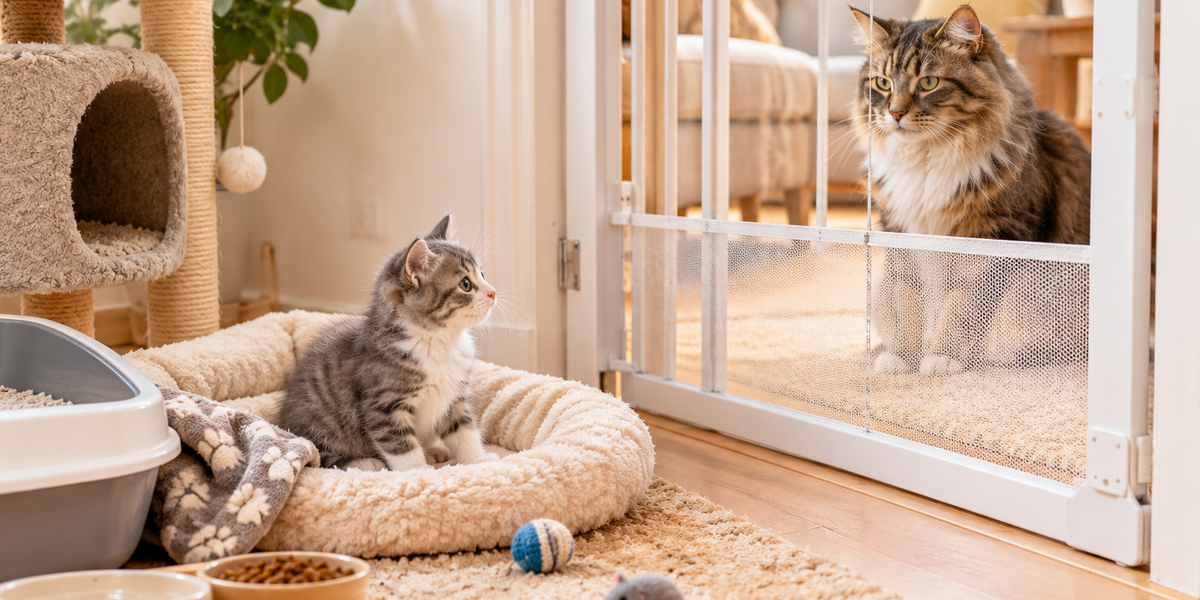
- A see-through barrier. A mesh screen or baby gate that fits the doorway lets cats see and smell each other without contact — critical for days 4–6.
- A secure carrier. You'll need it for controlled introductions and vet visits. Clamshell or top-loading carriers reduce stress versus a hard-sided box.
- Duplicate resources. Two litter boxes, two feeding stations, two scratching posts, and two water bowls. Resource competition is the root of most jealous-cat conflict.
The 10-Day Room-Separation Timeline
Days 1–3: Full Separation
Keep the new cat in the base camp room with the door closed. Do not let the cats see each other. Spend 20–30 minutes in the room with the newcomer several times a day so they bond with you. Feed the resident cat on the other side of the closed door so both cats associate the door with something pleasant. Plug in a calming diffuser in each cat's main area.
💡 Pro Tip: Swap bedding between the two cats on day 2. Place a blanket the new cat slept on near the resident cat's food bowl, and vice versa. This is scent introduction without any visual pressure.
Days 4–6: Scent and Sight Through a Barrier
Install a mesh screen or baby gate in the doorway. Feed both cats on opposite sides of the barrier at the same time — this is called counter-conditioning, and it teaches them that the other cat's presence predicts food. Keep sessions short (5–10 minutes) and end on a calm note. If either cat hisses persistently, back up to full separation for a day.
Days 7–9: Supervised Face-to-Face
Open the barrier for short, supervised sessions with both cats in the same room. Keep a carrier nearby in case you need to separate them quickly. Watch body language: relaxed ears, slow blinks, and curious sniffing are good signs. Flattened ears, a puffed tail, and low growling mean the session is over. Never punish a hiss — it's communication, not aggression.
Day 10: Supervised Coexistence
By day 10, most cats can share a room for 20–30 minutes under supervision. Leave the base camp room available to the newcomer so they always have a retreat. Full unsupervised access usually comes at week two or three, depending on the individual cats. Some pairs take a month; that's normal.
Product Deep-Dives
PetSafe Happy Cat Feliway Calming Diffuser Kit
| Criteria | Score |
|----------|-------|
| Stress Reduction | 9/10 |
| Coverage Area | 8/10 |
| Ease of Use | 10/10 |
| Value | 8/10 |
This plug-in diffuser releases a synthetic copy of the feline facial pheromone that cats leave when they rub their cheeks on furniture. Based on manufacturer specs and verified buyer reviews, it's the most consistently recommended drug-free tool for multi-cat tension. It won't fix a fight, but it lowers the ambient stress that makes fights more likely. Buyers report the biggest benefit in the first two weeks — exactly when you need it.
✅ Pros:
- Drug-free and safe around both cats
- Plug-and-play setup with no training required
- Widely recommended by feline behavior professionals
❌ Cons:
- Refills cost roughly $15–20 every 30 days
- A minority of cats show no measurable response
PetFusion Ultimate Cat Scratcher Lounge
| Criteria | Score |
|----------|-------|
| Durability | 8/10 |
| Territory Value | 9/10 |
| Cat Appeal | 9/10 |
| Value | 8/10 |
A reversible cardboard scratcher that doubles as a resting perch. The real value during an introduction is territorial: each cat gets its own marked surface, which reduces the need to compete over the resident cat's existing scratchers. Verified buyers consistently praise the size and the fact that cats use it as a bed, not just a scratcher.
✅ Pros:
- Reversible design roughly doubles usable life
- Large enough for most adult cats to lounge on
- Encourages scratching away from furniture
❌ Cons:
- Cardboard sheds over time and needs vacuuming
- Takes up more floor space than a flat scratcher
Jackson Galaxy Cat Daddy Comfy Clamshell Backpack
| Criteria | Score |
|----------|-------|
| Security | 9/10 |
| Ventilation | 8/10 |
| Comfort | 8/10 |
| Value | 7/10 |
A clamshell-opening carrier that makes it easy to place a nervous cat inside without a wrestling match. It's the carrier we'd recommend keeping on hand during days 7–9, when you may need to separate cats quickly. Buyer reviews highlight the sturdy base and the visibility the mesh panels provide.
✅ Pros:
- Top-loading clamshell reduces handling stress
- Ventilated mesh on multiple sides
- Stable base won't tip during transport
❌ Cons:
- Pricier than a basic hard carrier
- Tight fit for cats over 15 lbs
Pawaboo Cat Door Mesh Screen Separator
| Criteria | Score |
|----------|-------|
| Ease of Install | 10/10 |
| Barrier Strength | 6/10 |
| Visibility | 9/10 |
| Value | 9/10 |
A tension-mounted mesh screen that turns any doorway into a see-through barrier. It's the cheapest way to execute days 4–6 of the timeline. Reviews note it's easy to install without tools, though determined climbers can defeat it — supervise all barrier sessions.
✅ Pros:
- Installs in minutes with no drilling
- Lets cats see and smell each other safely
- Budget-friendly
❌ Cons:
- Mesh can sag with repeated use
- Not escape-proof for athletic cats
Catit Senses 2.0 Multi Feeder
| Criteria | Score |
|----------|-------|
| Anti-Gulping Design | 9/10 |
| Multi-Cat Utility | 8/10 |
| Ease of Cleaning | 9/10 |
| Value | 8/10 |
A multi-compartment puzzle feeder that lets you feed both cats side by side without one guarding the bowl. Slower eating reduces the frantic competition that fuels jealousy. Buyer reviews praise the dishwasher-safe parts and the fact that it keeps fast eaters occupied.
✅ Pros:
- Slows fast eaters and reduces food guarding
- Multiple compartments for parallel feeding
- Dishwasher-safe
❌ Cons:
- Bulky footprint in a small kitchen
- Some cats solve the puzzle quickly
Frequently Asked Questions
How long should I keep the new cat separated?
Plan for a minimum of 7–10 days of structured separation, with full unsupervised access only after both cats show relaxed body language around each other. Some pairs need three to four weeks. Slower is always safer than faster.
Why is my resident cat hissing at the new cat?
Hissing is normal territorial communication, not a sign of failure. It usually fades as scent familiarity builds. If hissing escalates to lunging or blocking access to litter or food, return to full separation for a few days.
Can I just let them "work it out"?
No. Free-for-all introductions are the leading cause of long-term feline feuds and stress-related illness. The room-separation strategy exists because cats are territorial by nature and need gradual, controlled exposure.
What if my new cat won't eat during the introduction?
Stress-related appetite loss is common in the first 48 hours. Offer strong-smelling wet food and keep meals in the base camp room. If your cat stops eating or drinking for more than 24 hours, or if you notice excessive thirst, see our guide to why your cat drinks so much water and contact your vet.
Do calming diffusers actually work?
They're not magic, but the majority of verified buyer reviews and feline behavior guidance support their use as a low-risk stress reducer. They work best as one part of a broader strategy that includes separation, scent swapping, and gradual exposure.
Final Thoughts
Introducing a new cat to a jealous resident cat is a test of patience, not a test of love. Follow the 10-day timeline, respect the base camp room, and let scent do the heavy lifting before sight. The cats will set the pace — your job is to keep every interaction calm enough that neither cat builds a lasting negative association with the other.
Start with the PetSafe Happy Cat Feliway Calming Diffuser Kit in both cats' main areas before your newcomer arrives, and have the Pawaboo mesh screen ready for day 4. Slow and boring is exactly what a successful introduction looks like.
Editor's Choice
- Best Overall: PetSafe Happy Cat Feliway Calming Diffuser Kit — the lowest-effort way to reduce baseline tension during separation.
- Best Value: PetFusion Ultimate Cat Scratcher Lounge — one purchase that gives both cats their own territory marker.
- Best for Barrier Sessions: Pawaboo Cat Door Mesh Screen Separator — the budget doorway barrier that makes days 4–6 possible.