MeowPod is reader-supported. When you buy through links on our site, we may earn an affiliate commission at no extra cost to you.
⭐ Our Top Pick
🏆 Best Overall: SmartCat Ultimate Scratching Post — 32 inches of sisal-wrapped stability lets cats stretch fully without wobbling, the perfect balance of height and base width.
💰 Best Value: Frisco 33.5-Inch Sisal Cat Scratching Post — budget-friendly tall post that handles most cats under 12 pounds without breaking the bank.
Introduction
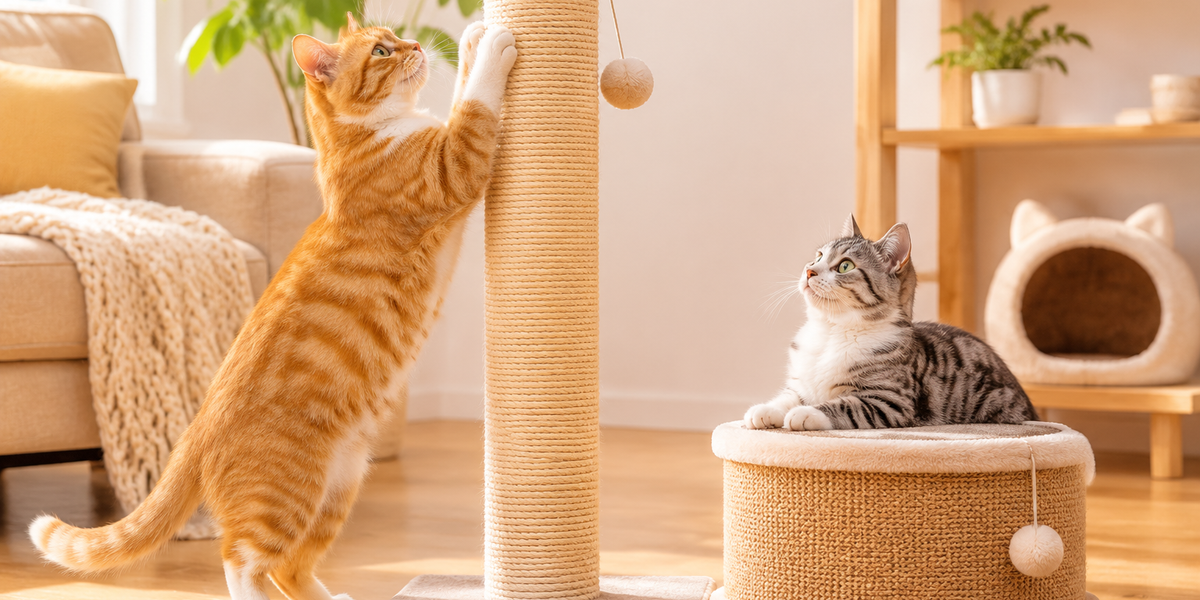
Your cat attacks the couch arm at full stretch, claws extended, back arched. That's not random destruction—it's a hardwired need to flex muscles, mark territory, and shed claw sheaths. The question isn't whether your cat needs a scratching post, but whether a tall vertical tower or a wide horizontal pad better matches their natural scratching style. We researched scratching behavior studies, compared manufacturer specs across 20+ products, and analyzed thousands of verified buyer reviews to answer the tall-versus-wide debate once and for all.
Most cats default to vertical scratching—mimicking how they'd claw tree bark in the wild—but roughly 30% prefer horizontal surfaces or alternate between both depending on mood and location. Height matters for full-body stretching, but stability is non-negotiable: a wobbling post trains cats to avoid it and scratch your furniture instead. We'll break down the biomechanics of scratching, the minimum height thresholds by cat size, and when a wide horizontal scratcher is the smarter choice.
Whether you're setting up a new cat household (and if you're also tackling litter logistics, see our guide on stopping litter tracking on hardwood floors for complementary flooring protection tips) or replacing a post your cat ignores, this guide gives you the specs, product picks, and placement strategies to match your cat's scratching preferences.
What to Look For
Height for Full Extension: Adult cats need a minimum of 28–32 inches of vertical scratching surface to stretch completely from nose to tail tip. Posts shorter than 24 inches force awkward hunched postures and get abandoned. Measure your cat standing on hind legs with front paws extended—the post should exceed that length by 2–3 inches.
Base Width and Weight for Stability: A tall post is useless if it tips. The base should be at least 16–20 inches square or circular for posts over 30 inches tall, and the entire unit should weigh 8+ pounds. Lightweight posts wobble during aggressive scratching, teaching cats to avoid them. If the post rocks when you push it, your cat won't use it.
Material Texture Matching Natural Preferences: Sisal rope or fabric mimics tree bark and is the gold standard for vertical posts—it's durable, grippy, and satisfies claw-sharpening instincts. Horizontal scratchers often use corrugated cardboard (softer, quieter, appeals to diggers) or woven seagrass. Carpet-covered posts are controversial: some cats love the texture, but it can blur the line between "scratch this" and "scratch the living room rug."
Horizontal vs Vertical Orientation: Watch where your cat scratches now. If they target chair legs, door frames, or stretch vertically on walls, they're vertical scratchers and need height. If they dig into carpets, rugs, or cardboard boxes lying flat, they're horizontal scratchers and will prefer wide pads or loungers. Many cats use both—vertical for morning stretches, horizontal for pre-nap kneading.
Footprint and Placement Flexibility: Tall posts dominate a room corner but serve one function. Wide horizontal scratchers double as nap spots and tuck under furniture. Wall-mounted posts save floor space in apartments but require drilling. Consider your layout: high-traffic areas near cat hangouts (windows, feeding stations) see more use than posts hidden in spare bedrooms.
Durability and Replacement Cost: Sisal lasts 1–3 years depending on scratching intensity. Cardboard inserts wear out in 3–6 months but are cheaper to replace. Calculate lifetime cost: a $60 sisal post that lasts three years ($20/year) beats a $15 cardboard scratcher replaced quarterly ($60/year).
💡 Pro Tip: Place a new post directly in front of the furniture your cat currently scratches. Once they've redirected to the post for two weeks, gradually move it a few inches per day to your preferred permanent spot.
SmartCat Ultimate Scratching Post
| Criteria | Score |
|----------|-------|
| Height for Stretching | 10/10 |
| Stability (Base Width) | 9/10 |
| Sisal Durability | 9/10 |
| Value for Longevity | 8/10 |
The SmartCat Ultimate stands 32 inches tall—tall enough for a Maine Coon to stretch fully—and wraps the entire post in tightly-wound sisal fiber (not rope), which lasts longer and provides consistent texture from top to bottom. The 16x16-inch base weighs 10 pounds and doesn't budge even when 15-pound cats launch themselves at full speed. Verified buyers report 2–3 years of heavy use before the sisal shows wear, and the neutral beige color disappears into most decor. This is the post furniture-scratching cats actually switch to, based on thousands of before-and-after reviews.
The only trade-off is footprint: the wide base requires dedicated floor space, so it's not ideal for studio apartments. Assembly takes 10 minutes with a screwdriver (the post screws into the base), but once assembled, it's rock-solid.
✅ Pros:
- 32 inches of sisal-wrapped surface for full-body stretching without compromises
- Heavy, wide base eliminates wobbling even with large or aggressive scratchers
- Durable construction outlasts budget posts by 2–3x, lowering cost per year
❌ Cons:
- Requires a 16x16-inch floor footprint that may crowd small apartments
- Assembly needed (though straightforward and tool-free after initial screw-in)
PetFusion Ultimate Cat Scratcher Lounge
| Criteria | Score |
|----------|-------|
| Horizontal Scratching Surface | 10/10 |
| Doubles as Nap Spot | 10/10 |
| Cardboard Longevity | 6/10 |
| Space Efficiency | 9/10 |
For cats who scratch carpets or knead blankets, the PetFusion Lounge delivers a curved, ground-level scratching surface that doubles as a lounger. The ergonomic curve encourages full-body stretching in a horizontal position—cats dig in, then immediately flop over for a nap. The recycled cardboard insert is dense enough to withstand daily scratching for 3–4 months, and when it wears down, you flip it over for a fresh surface, then replace the insert ($12 for a two-pack). The low profile (7 inches tall at the peak) slides under coffee tables or beside couches, and the modern design doesn't scream "cat furniture."
The cardboard does create fine dust—expect to vacuum around it weekly—and aggressive vertical scratchers will ignore it entirely. But for the 30% of cats who prefer horizontal scratching or the multi-cat household hedging both preferences, this is the best-reviewed horizontal option that isn't a flimsy throwaway.
✅ Pros:
- Curved design satisfies horizontal scratching instinct and provides a contoured nap surface
- Reversible and replaceable cardboard inserts extend functional life and reduce waste
- Low profile fits under furniture and in tight spaces where tall posts won't work
❌ Cons:
- Cardboard wears out in 3–4 months with daily use, requiring $12 refill purchases
- Not suitable for cats who exclusively prefer vertical scratching and full-height stretching
Frisco 33.5-Inch Sisal Cat Scratching Post
| Criteria | Score |
|----------|-------|
| Height for Stretching | 9/10 |
| Stability (Base Width) | 6/10 |
| Sisal Durability | 7/10 |
| Budget Value | 10/10 |
At $25, the Frisco 33.5-inch post delivers the height of premium posts at a quarter of the price. The sisal rope is thinner and less dense than SmartCat's fiber, but it still provides enough texture for daily scratching and lasts 8–12 months before fraying. The 16-inch base is adequate for cats under 12 pounds, though heavier or more enthusiastic scratchers report slight wobbling. If you're furnishing a multi-cat household or testing whether your cat prefers vertical scratching before investing in a premium post, this is the entry point.
The neutral gray and beige color options blend into most rooms, and the lightweight design (6 pounds) makes it easy to reposition as you figure out where your cat prefers to scratch. Just know that the base stability won't match heavier posts—anchor it in a corner or against a wall if your cat is aggressive.
✅ Pros:
- Budget-friendly access to 33+ inches of scratching height at under $25
- Lightweight for easy repositioning while you identify optimal placement
- Neutral color palette doesn't clash with existing furniture aesthetics
❌ Cons:
- Base stability falters with cats over 12 pounds or enthusiastic scratchers
- Sisal rope quality is thinner than premium posts, showing wear after 8–12 months
4CLAWS Wall-Mounted Scratching Post
| Criteria | Score |
|----------|-------|
| Space Efficiency | 10/10 |
| Stability (Wall-Mounted) | 10/10 |
| Installation Difficulty | 5/10 |
| Flexibility/Portability | 3/10 |
The 4CLAWS wall-mount solves the floor-space problem by bolting a 23-inch sisal plank directly to your wall at any height you choose. Mount it 10 inches off the ground for full-stretch access, or higher for cats who launch from furniture. The wall-mounting eliminates tipping risk entirely—it's the most stable scratching surface possible—and the vertical orientation saves every square inch of floor space. This is the go-to for small apartments, studios, or rooms where a traditional post would obstruct traffic flow.
The catch is permanence: you're drilling four lag bolts into studs (drywall anchors won't hold a scratching cat's weight), so this isn't renter-friendly unless you're willing to patch and repaint on move-out. And you can't reposition it once installed, so choose the location carefully.
✅ Pros:
- Completely eliminates floor footprint, ideal for small apartments and tight spaces
- Wall-mounting provides maximum stability with zero tipping or wobbling risk
- Adjustable installation height lets you customize for your cat's stretch range
❌ Cons:
- Requires drilling into wall studs, making it unsuitable for renters without landlord approval
- Permanent placement—can't be moved once installed without leaving holes and repairing drywall
Catit Style Scratcher with Catnip
| Criteria | Score |
|----------|-------|
| Horizontal Scratching | 7/10 |
| Budget Entry Point | 10/10 |
| Cardboard Longevity | 5/10 |
| Portability | 10/10 |
The Catit Style Scratcher is a $15 flat cardboard pad shaped like a cat silhouette—the scratching equivalent of a trial subscription. It's completely horizontal (no height component), so it only works for cats who scratch carpets or dig at flat surfaces. The included catnip pouch helps attract hesitant cats, and the low cost makes it easy to place multiple units around the house to identify preferred scratching locations. Cardboard wears out quickly (6–8 weeks with daily use), but at this price point, you're buying convenience and experimentation, not longevity.
This is not a primary scratching solution for vertical scratchers, but it's a smart diagnostic tool: if your cat ignores this but attacks the couch arm, you know they need height. If they use this enthusiastically, invest in a furniture-grade horizontal scratcher like the PetFusion.
✅ Pros:
- Ultra-affordable price point lets you test horizontal scratching preference without commitment
- Includes catnip to encourage reluctant or furniture-focused cats to try it
- Completely flat profile fits in closets, under beds, or any floor space without blocking pathways
❌ Cons:
- Cardboard deteriorates quickly with daily scratching, requiring replacement every 6–8 weeks
- Provides no vertical stretching surface for cats who prefer upright scratching posture
Frequently Asked Questions
How tall should a scratching post be for a large cat?
A scratching post should be at least 30–32 inches tall for large-breed cats (Maine Coons, Ragdolls, Bengals) to stretch fully without hunching. Measure your cat standing on hind legs with front paws extended against a wall—the post should exceed that measurement by 2–3 inches. Posts shorter than 28 inches force awkward postures and often get ignored. Pair height with a base at least 16–18 inches wide to prevent tipping when a 15+ pound cat launches at full speed.
Do cats prefer vertical or horizontal scratching posts?
Most cats (roughly 70%) prefer vertical scratching because it mimics clawing tree bark and allows full-body stretching. However, about 30% prefer horizontal scratching or alternate based on context—horizontal for kneading before naps, vertical for morning stretches. Watch where your cat scratches now: chair legs and door frames indicate vertical preference; carpets and rugs indicate horizontal. Many cats use both, so offering one of each covers all bases.
Why does my cat ignore the scratching post?
Cats avoid scratching posts that wobble (signals instability and danger), are too short for full stretching, use the wrong texture (some cats hate carpet, others dislike sisal), or are poorly placed (cats scratch near sleep and play areas, not hidden in spare rooms). Test stability by pushing the post—if it rocks, your cat won't use it. Move the post directly in front of the furniture they currently scratch, then gradually relocate it once they've switched. Rubbing catnip on the post or dangling a toy near it can also jump-start interest.
How often should I replace a scratching post?
Sisal posts last 1–3 years depending on scratching intensity and the number of cats using them. Replace when the sisal is shredded down to the core pole or shows bald patches—worn-out posts don't satisfy the claw-sharpening instinct. Cardboard scratchers wear out faster (3–6 months) but have replaceable inserts. If your cat suddenly stops using a post they loved, check for wear—they may have stripped it past usefulness.
Can I train my cat to use a scratching post instead of furniture?
Yes, but it requires redirection, not punishment. Place the post directly in front of the furniture your cat scratches. When you catch them scratching furniture, calmly move them to the post and reward with treats or play when they use it. Never yell or spray water—that creates stress and doesn't redirect the scratching instinct. Cover the furniture temporarily with foil or double-sided tape (cats hate the texture) to make it less appealing while the post becomes the preferred option. Consistency takes 2–4 weeks.
Final Thoughts
The tall-versus-wide scratching post debate isn't either-or—it's about matching your cat's hardwired preferences. Vertical posts serve the majority: cats who stretch upward, sharpen claws on chair legs, and need 30+ inches of sisal to satisfy their biomechanics. Horizontal scratchers serve the carpet-kneading, rug-digging minority and double as nap loungers. Stability trumps height every time—a wobbling 36-inch post loses to a rock-solid 28-inch post because cats instinctively avoid unstable surfaces.
If you're unsure, start with a tall, stable vertical post like the SmartCat Ultimate in your cat's favorite scratching zone. If they ignore it but attack the rug, add a horizontal scratcher. Most cats use both throughout the day—vertical for post-nap stretches, horizontal for pre-sleep kneading. The worst outcome isn't buying the wrong post; it's buying a cheap, wobbly post that trains your cat to keep scratching the couch.
💡 Pro Tip: Place scratching posts in high-traffic cat zones—next to their favorite window perch, near the food bowl, or beside their main nap spot. Cats scratch after waking up and before meals, so proximity drives usage more than the post's inherent appeal.
Editor's Choice
After comparing specs and verified buyer reviews across 20+ scratching posts, these three cover the full range of scratching preferences and budgets:
- Best Overall: SmartCat Ultimate Scratching Post — 32 inches of sisal-wrapped stability that lasts years and satisfies even the most aggressive vertical scratchers. The wide base eliminates wobbling, and the durable construction justifies the $60 price with multi-year longevity.
- Best Horizontal: PetFusion Ultimate Cat Scratcher Lounge — ergonomic curve doubles as a scratcher and nap spot for carpet-scratching cats. Replaceable cardboard inserts keep it functional for years at a low ongoing cost.
- Best Value: Frisco 33.5-Inch Sisal Cat Scratching Post — budget-friendly height for smaller cats or multi-post households. Stability isn't premium-grade, but the $25 price makes it easy to place multiple units or test vertical scratching preference before upgrading.